 Back
General Biology: Foundations, Themes, and Scientific Inquiry
Study Guide - Smart Notes
 Tailored notes based on your materials, expanded with key definitions, examples, and context.
Course Overview and Structure
Course Logistics
This course introduces students to the fundamental principles of biology, emphasizing the unity and diversity of life, scientific inquiry, and core biological mechanisms. The course includes lectures, laboratory sessions, quizzes, homework, and exams covering a wide range of topics from molecular biology to evolution.
Lecture and Lab Schedule: Multiple sections with designated times and rooms.
Staff: Includes professor, laboratory coordinator, teaching assistants, and tutors.
Assessment: Exams, quizzes, homework, and laboratory work contribute to the final grade.
Expectations: Attendance, participation, timely completion of assignments, and engagement in learning.
Fundamental Themes in Biology
Emergent Properties and Hierarchical Organization
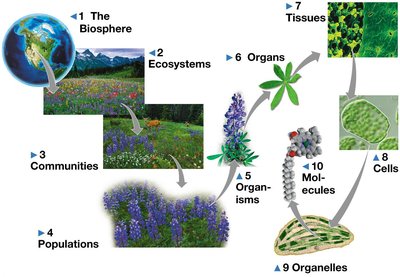
Biology studies life at multiple levels of organization, from molecules to the biosphere. Emergent properties arise from the arrangement and interaction of parts at each level, contributing to the complexity of living systems.
Hierarchical Order: Each level (molecules, organelles, cells, tissues, organs, organisms, populations, communities, ecosystems, biosphere) builds upon the previous, resulting in new properties.
Emergent Properties: Unique characteristics that arise at higher levels of organization, such as water's properties from hydrogen and oxygen.
Properties of Life
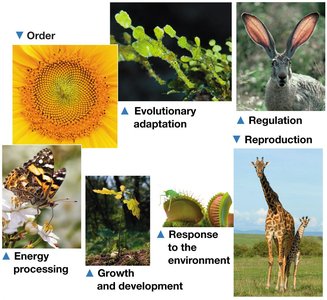
All living organisms share several fundamental properties that distinguish them from non-living matter.
Order: Structured organization at every level.
Evolutionary Adaptation: Ability to change over generations in response to environmental pressures.
Regulation: Maintenance of internal conditions (homeostasis).
Reproduction: Production of offspring.
Energy Processing: Acquisition and transformation of energy for cellular work.
Growth and Development: Increase in size and complexity.
Response to Environment: Reacting to external stimuli.
Cell Theory and Domains of Life
Cell Theory
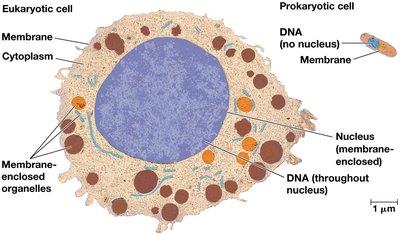
Cell theory is a foundational concept in biology, stating that all living things are composed of cells, and all cells arise from pre-existing cells. Cells are the basic unit of life where all life's properties occur.
Eukaryotic Cells: Contain a membrane-bound nucleus and organelles.
Prokaryotic Cells: Lack a nucleus; DNA is not membrane-bound.
Three Domains of Life
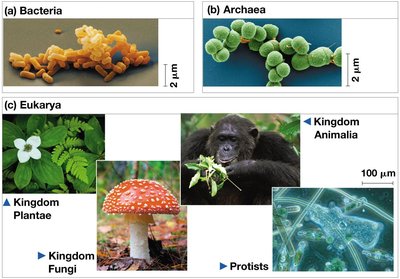
All living organisms are classified into three domains based on cellular structure and genetic characteristics:
Bacteria: Prokaryotic, diverse, found in many environments.
Archaea: Prokaryotic, often found in extreme environments.
Eukarya: Eukaryotic, includes plants, fungi, animals, and protists.
Genetic Information and the Central Dogma
DNA and Inheritance
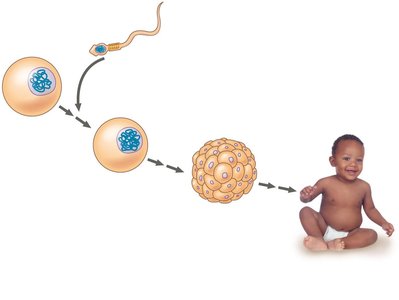
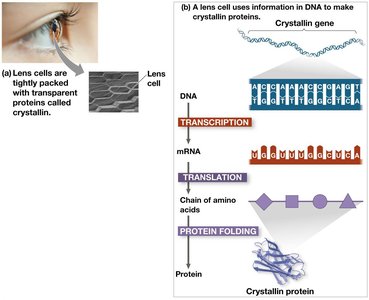
All life’s traits are encoded by DNA, which contains the instructions for making proteins. DNA can be copied and passed to daughter cells, ensuring inheritance of traits.
Central Dogma: DNA → RNA → Protein. DNA is transcribed into RNA, which is translated into proteins.
Gene Expression: Cells use information in genes to synthesize functional proteins.
Energy Processing and Chemical Cycling
Energy Flow in Ecosystems
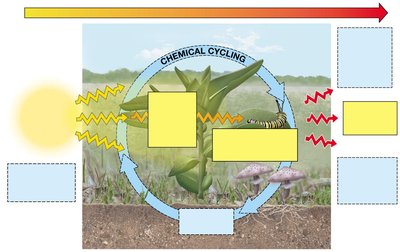
Living organisms require energy to perform work. Energy flows through ecosystems, primarily from sunlight, and is transformed by producers and consumers. Chemical elements are cycled within ecosystems.
Energy Acquisition: Plants convert sunlight to chemical energy; animals obtain energy by consuming plants or other organisms.
Chemical Cycling: Elements such as carbon and nitrogen are recycled by decomposers.
Evolution and Natural Selection
Descent with Modification
Evolution explains the diversity of life through descent with modification. Natural selection acts on heritable variation, favoring traits that enhance survival and reproduction.
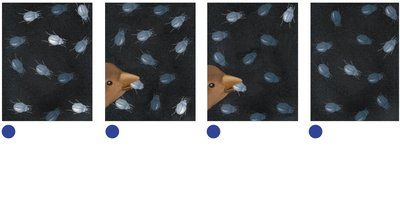
Natural Selection: Differential survival and reproduction of individuals with advantageous traits.
Example: Predators may eliminate more visible prey, increasing the frequency of less visible traits in the population.
Adaptive Radiation
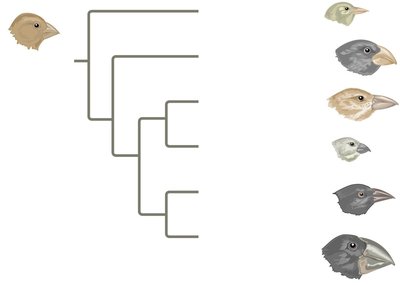
Adaptive radiation occurs when a single ancestral species gives rise to multiple new species, each adapted to different environments or niches.
Example: Finches on the Galápagos Islands evolved different beak shapes to exploit various food sources.
Scientific Inquiry and the Process of Science
Scientific Method
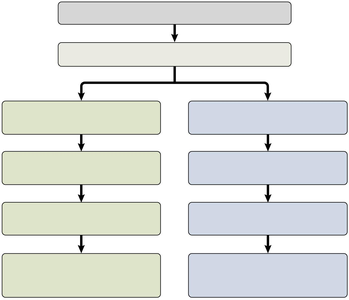
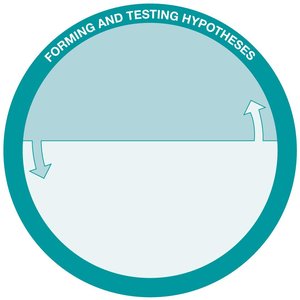
Science is a systematic process for understanding the natural world. It involves making observations, forming hypotheses, testing predictions, and analyzing data.
Hypothesis: A testable explanation that makes predictions.
Inductive Reasoning: Developing general principles from specific observations.
Deductive Reasoning: Making specific predictions from general principles.
Complexity of Scientific Process
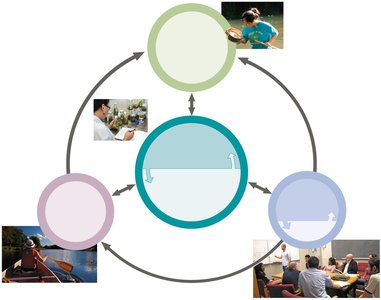
The process of science is iterative and involves exploration, discovery, hypothesis testing, community analysis, and societal benefits.
Testing Ideas: Experiments and observations gather data to support or refute hypotheses.
Community Feedback: Peer review and collaboration improve scientific understanding.
Laboratory Example: Yeast Metabolism and Scientific Testing
Experimental Design
In laboratory experiments, hypotheses are tested by manipulating variables and measuring outcomes. For example, yeast metabolism can be studied by measuring CO2 production at different temperatures.
Hypothesis: Temperature positively affects yeast metabolism.
Experimental Setup: Four fermentation tubes at different temperatures (4°C, 15°C, 37°C, 75°C).
Measurement: CO2 output indicates yeast growth.
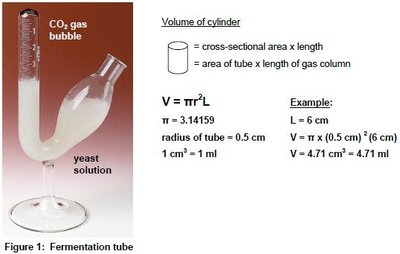
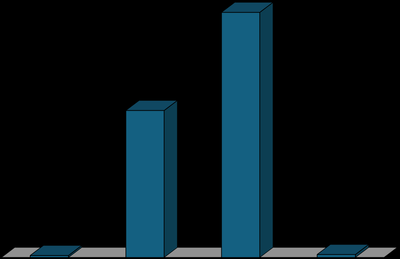
Data Evaluation: Results may support, contradict, or inspire new hypotheses.
Example: Yeast may not grow above a certain temperature, or glucose may become unusable at high temperatures.
Summary Table: Course Assessment Structure
Activity | Points (% of Final Grade) | Material Covered |
|---|---|---|
Exam 1 | 150 (15%) | Chapters 1-6 |
Exam 2 | 150 (15%) | Chapters 7-10 |
Final Exam | 200 (20%) | Cumulative (75% Chapters 12-17, 25% Chapters 1-10) |
Quizzes | 100 (10%) | 20 points each, drop 2 lowest scores |
Homework | 100 (10%) | Weekly assignments |
Laboratory | 300 (30%) | Lab experiments and reports |
Key Academic Tips
Study daily and avoid falling behind.
Read chapters before lectures.
Participate actively and seek help when needed.
Use course resources and set reminders for assignments.
Conclusion
This course provides a comprehensive introduction to biology, emphasizing scientific inquiry, core biological concepts, and laboratory skills. Understanding the hierarchical organization of life, properties of living organisms, cell theory, genetic information, energy processing, evolution, and the scientific method forms the foundation for further study in biology.
