 Back
General Biology I (Biology 101) Syllabus and Course Overview
Study Guide - Smart Notes
 Tailored notes based on your materials, expanded with key definitions, examples, and context.
Course Introduction
This document provides an overview of the General Biology I (Biology 101) course, including instructor information, required materials, grading policies, course structure, and learning outcomes. The course covers foundational topics in cellular and molecular biology, genetics, and the scientific process, aligning with the standard curriculum for introductory college biology.
Instructor and Contact Information
Instructor: Dr. D. M. Helfgott (Dr. H.)
Office: LSB 331
Office Hours: After class on Tuesday and Thursday, 2:30–4:00 PM, or by appointment
Email: dhelfgott@luc.edu (preferred contact method)
Phone: 773.508.8357
Course Structure and Format
Lectures are primarily in-person, with occasional voice-over PowerPoint lectures available online (Panopto).
Quizzes and exams are administered during class time.
The Sakai site serves as the central hub for lecture materials, assignments, gradebook, and communication.
Required Materials
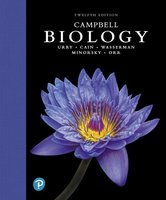
Textbook: Campbell Biology, 12th Edition (Mastering Biology access required)
Mastering Biology: Online homework and practice platform specific to the 12th edition
Top Hat: Classroom response system for participation and quizzes
All materials must be obtained promptly to ensure access to assignments and course content.
Grading and Evaluation
Exams (5 unit exams): 70% (multiple choice, in-class)
Quizzes: 10% (5 in-class, group-based, closed book)
Mastering Biology Homework: 8% (completed online, first assignment due Sunday at 11:59 pm)
Paper Assignments: 7% (in-class or homework, submitted via Sakai)
Top Hat Participation: 5% (requires purchase and registration with Loyola email)
Grade disputes must be addressed within one week of receiving graded work.
Course Policies and Expectations
Read the syllabus thoroughly; its contents are subject to assessment.
Maintain respectful classroom conduct and academic integrity.
AI-assisted technology is not permitted on graded assignments but may be used for practice.
Accommodations for disabilities are managed through the Student Accessibility Center (SAC).
Student Participation and Success Strategies
Prepare for class by reviewing assigned textbook pages in advance.
After class, review lecture PowerPoints and corresponding textbook sections.
Use review sheets and integrate information into organized notes.
Identify and seek help with challenging concepts; utilize office hours and peer support.
Practice regularly using Mastering Biology and paper assignments; avoid last-minute studying.
Class Learning Outcomes
Discuss how the molecular structures of biological molecules dictate functional relationships within the cell.
Describe how cellular structure impacts the functions cells can carry out.
Outline cellular processes that capture, transfer, and use energy.
Discuss how nucleic acids are stored, used, and regulated to form the instructions for building cells and multicellular organisms.
Describe the processes of eukaryotic and prokaryotic cell reproduction.
Discuss how genetic changes can produce changes in function that impact cell function, health, and evolution.
Describe how cells’ interactions with molecules and other cells affect cell behavior and organismal health.
Outline how life scientists collect, use, and interpret data about biological processes.
Explain how biology relates to society.
Support Resources
Tutoring Center (CTAE): Additional academic support available.
Student Accessibility Center (SAC): For accommodations related to disabilities or other conditions.
