 Back
General Biology I: Foundations of Life, Biomolecules, and Cell Membranes
Study Guide - Smart Notes
 Tailored notes based on your materials, expanded with key definitions, examples, and context.
Biology: The Study of Life
Characteristics of Living Organisms
Biology is the scientific study of life and living organisms. All living organisms share five fundamental characteristics that distinguish them from non-living matter:
Cells: All organisms are made up of membrane-bound cells.
Replication: All organisms are capable of reproduction.
Evolution: Populations of organisms are continually evolving.
Information: All organisms process hereditary information encoded in genes as well as information from the environment.
Energy: All organisms acquire and use energy.
Water and Carbon: The Chemical Basis of Life
Basic Atomic Structure
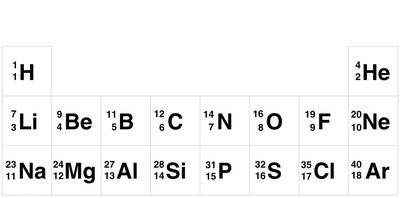
Atoms are the fundamental units of matter, composed of protons (positively charged), neutrons (neutral), and electrons (negatively charged). Protons and neutrons are located in the nucleus, while electrons occupy orbitals surrounding the nucleus.
Atomic Number: The number of protons in the nucleus, unique to each element.
Mass Number: The sum of protons and neutrons in an atom.
Covalent and Ionic Bonds
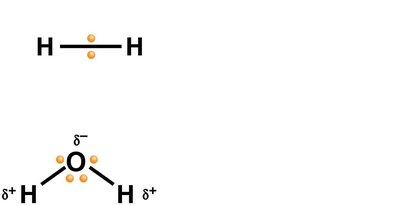
The distribution of electrons in covalent bonds is determined by electronegativity:
Nonpolar Covalent Bonds: Electrons are shared equally (e.g., C–H bond).
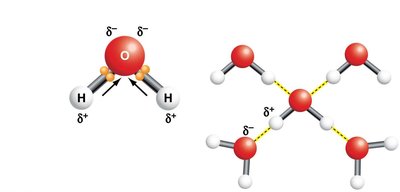
Polar Covalent Bonds: Electrons are shared unequally, resulting in partial charges (e.g., O–H bond in water).
Ionic Bonds: Electrons are transferred, resulting in full charges on atoms.
Properties of Water
Water is a polar molecule, allowing it to form hydrogen bonds with other polar molecules. This property makes water an efficient solvent for ions and polar molecules (hydrophilic), while nonpolar molecules (hydrophobic) do not dissolve in water.
Protein Structure and Function
Amino Acids and Peptide Bonds
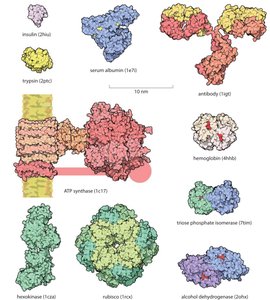
Proteins are polymers of amino acids, linked by peptide bonds. Each amino acid contains a central carbon (α-carbon), an amino group, a carboxyl group, a hydrogen atom, and a unique side chain (R-group).
Monomer: Amino acid
Polymer: Polypeptide
Bond: Peptide bond (formed by condensation reaction)
Classification of Amino Acids
The 20 amino acids differ in their R-groups, which determine their properties:
Charged (acidic or basic)
Uncharged polar
Nonpolar
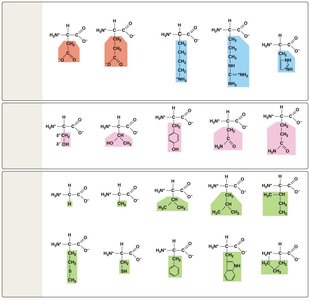
Levels of Protein Structure
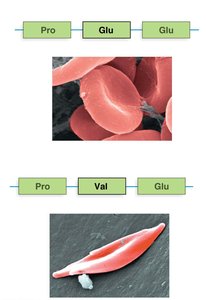
Primary Structure: Unique sequence of amino acids.
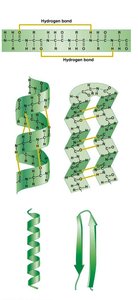
Secondary Structure: Hydrogen bonding forms α-helices and β-pleated sheets.
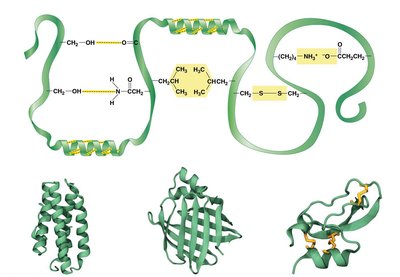
Tertiary Structure: 3D shape formed by interactions between R-groups and the backbone.
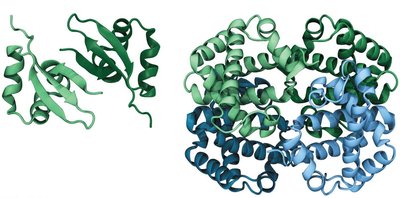
Quaternary Structure: Multiple polypeptide subunits assemble into a functional protein.
Nucleic Acids and the RNA World
Nucleotides and Nucleic Acids
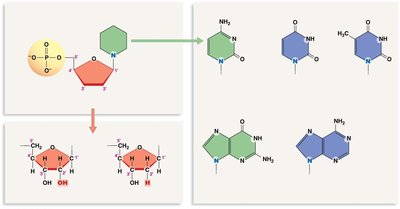
Nucleic acids are polymers of nucleotides, each consisting of a phosphate group, a five-carbon sugar (ribose in RNA, deoxyribose in DNA), and a nitrogenous base (purine or pyrimidine).
Monomer: Nucleotide
Polymer: DNA or RNA
Bond: Phosphodiester linkage
DNA Structure
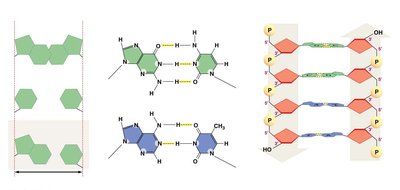
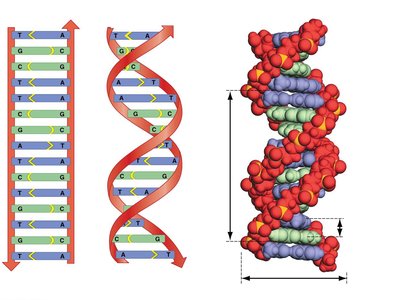
DNA consists of two antiparallel strands forming a double helix, stabilized by hydrogen bonds between complementary base pairs (A-T, C-G). The sugar-phosphate backbone faces outward, while bases face inward.
RNA Structure
RNA is typically single-stranded but can form secondary structures (hairpins) through internal base pairing. RNA contains ribose and uracil instead of deoxyribose and thymine.
An Introduction to Carbohydrates
Monosaccharides and Polysaccharides
Carbohydrates are composed of monosaccharide monomers. Polysaccharides are formed by glycosidic linkages between monosaccharides. The structure and function of polysaccharides depend on the type of glycosidic linkage (α or β).
Monomer: Monosaccharide
Polymer: Polysaccharide
Bond: Glycosidic linkage
Major Polysaccharides
Starch: Storage polysaccharide in plants (α-glucose, helical structure).
Glycogen: Storage polysaccharide in animals (highly branched α-glucose).
Cellulose: Structural polysaccharide in plants (β-glucose, linear structure).
Lipids, Membranes, and the First Cells
Types and Properties of Lipids
Lipids are nonpolar molecules, including fats, phospholipids, and steroids. They are major components of cell membranes and are not formed by true polymerization reactions.
Fats: Composed of glycerol and fatty acids.
Phospholipids: Contain hydrophilic heads and hydrophobic tails; form bilayers in water.
Steroids: Characterized by a four-ring structure.
Membrane Structure and Selective Permeability
Phospholipids spontaneously form bilayers, creating a selectively permeable membrane. Small, nonpolar molecules cross easily, while large or charged molecules cross slowly or not at all.
Transport Across Membranes
Diffusion: Movement of molecules from high to low concentration (passive transport).
Osmosis: Diffusion of water across a selectively permeable membrane.
Facilitated Diffusion: Channel and carrier proteins help substances cross membranes without energy input.
Active Transport: Movement against a concentration gradient, requiring energy (often from ATP).
Summary Table: Protein Structure Levels
Level | Description | Stabilized by | Example |
|---|---|---|---|
Primary | Sequence of amino acids in a polypeptide | Peptide bonds | Gly-Ser-Asp-Cys |
Secondary | Formation of α-helices and β-pleated sheets | Hydrogen bonding between groups along the peptide-bonded backbone | One α-helix |
Tertiary | Overall 3D shape of a polypeptide | Bonds and other interactions between R-groups, or between R-groups and the peptide-bonded backbone | One of hemoglobin's subunits |
Quaternary | Shape produced by combinations of polypeptides | Bonds and other interactions between R-groups, and between peptide backbones of different polypeptides | Hemoglobin (four polypeptide subunits) |
