 Back
General Biology I: Introduction, Study Skills, and Foundations of Life
Study Guide - Smart Notes
 Tailored notes based on your materials, expanded with key definitions, examples, and context.
Introduction to Biology
What is Biology?
Biology is the scientific study of life and living organisms. It encompasses a wide range of topics, from the molecular mechanisms inside cells to the interactions of organisms with their environment. Biologists seek to understand the structure, function, growth, origin, evolution, and distribution of living things.
Key Question: What do all living things have in common?
Biology investigates: How a single cell develops into an organism, how the human mind works, and what defines life.
Properties of Life
All living organisms share a set of fundamental properties that distinguish them from non-living matter.
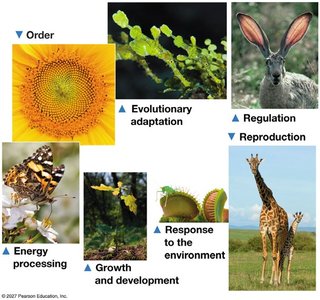
Order: Living things exhibit complex but ordered organization.
Evolutionary Adaptation: Populations evolve over generations as individuals with traits best suited to their environment have greater reproductive success.
Regulation (Homeostasis): Organisms maintain stable internal conditions.
Reproduction: Organisms reproduce their own kind.
Energy Processing: Organisms obtain and use energy to power activities.
Growth and Development: Organisms grow and develop according to inherited instructions.
Response to the Environment: Organisms respond to environmental stimuli.
Cellular Basis of Life
Cells and Chromosomes
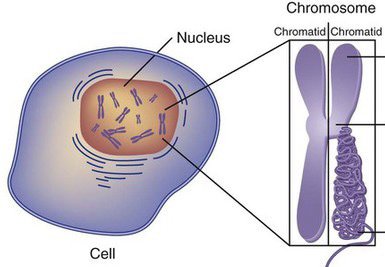
The cell is the basic unit of life. All living things are composed of cells, which contain genetic material (DNA) organized into chromosomes.
Nucleus: Membrane-bound structure in eukaryotic cells containing chromosomes.
Chromosome: Structure made of DNA and proteins; contains genetic information.
Chromatid: Each of the two thread-like strands into which a chromosome divides during cell division.
Classification of Life
Taxonomy and Domains
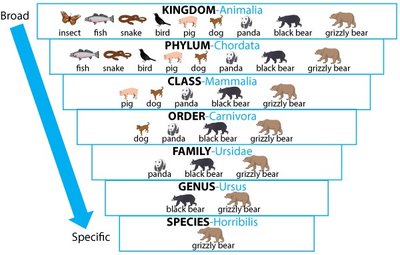
Taxonomy is the science of naming, defining, and classifying organisms. Life is organized into hierarchical categories, from broad to specific.
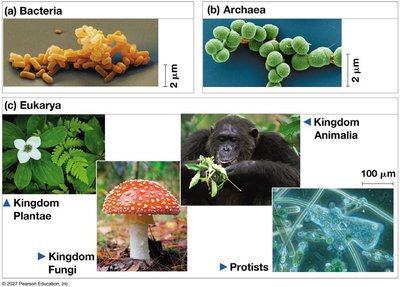
Domain: The highest taxonomic rank; three domains are Bacteria, Archaea, and Eukarya.
Kingdom: The next level below domain; examples include Animalia, Plantae, Fungi, and Protists.
Hierarchy: Domain > Kingdom > Phylum > Class > Order > Family > Genus > Species
The Three Domains of Life
Bacteria: Prokaryotic, unicellular organisms without a nucleus.
Archaea: Prokaryotic, often found in extreme environments, genetically distinct from bacteria.
Eukarya: Eukaryotic organisms with membrane-bound organelles; includes animals, plants, fungi, and protists.
Prokaryotes vs. Eukaryotes
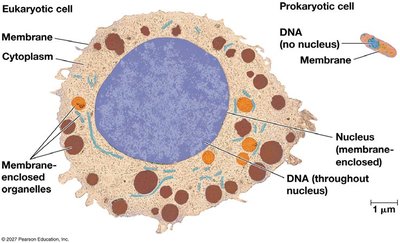
Cells are classified as prokaryotic or eukaryotic based on their structure.
Prokaryotic Cells: Lack a nucleus and membrane-bound organelles; DNA is free in the cytoplasm.
Eukaryotic Cells: Have a nucleus and membrane-bound organelles; DNA is enclosed within the nucleus.
Unity and Diversity of Life
Unity and Diversity
Despite the diversity of life, all organisms share fundamental similarities at the cellular and molecular levels, such as the genetic code and basic metabolic pathways. This unity reflects common ancestry, while diversity results from evolutionary processes.
Evolution
Evidence for Evolution
Multiple lines of evidence support the theory of evolution:
Homology: Similarities in structure or genetics due to shared ancestry.
Fossil Record: Fossils show changes in organisms over time.
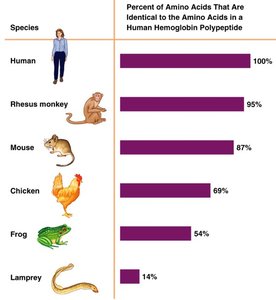
Molecular Evidence: Similarities in DNA and proteins among different species.
Natural Selection
Natural selection is the primary mechanism of evolution. It explains how populations adapt to their environment over generations.
Populations contain individuals with varied traits.
Individuals with advantageous traits are more likely to survive and reproduce.
Favorable traits become more common in the population over time.
Study Skills for Biology
Effective Study Strategies
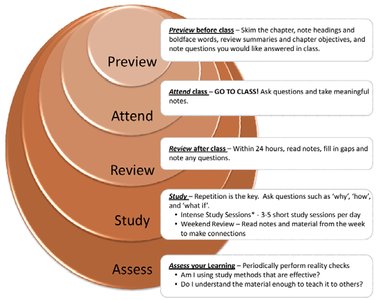
Success in biology requires active engagement and consistent study habits. The following strategies are recommended:
Preview: Skim chapters, review objectives, and identify key questions before class.
Attend: Go to class, participate, and take meaningful notes.
Review: Within 24 hours, review notes and fill in gaps.
Study: Use repetition, concept maps, and practice questions to reinforce learning.
Assess: Regularly check your understanding and adjust study methods as needed.
Intense Study Sessions
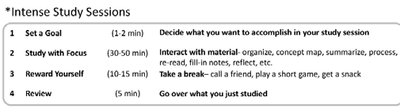
Short, focused study sessions can improve retention and understanding.
Step | Time | Action |
|---|---|---|
Set a Goal | 1-2 min | Decide what you want to accomplish |
Study with Focus | 30-50 min | Interact with material (organize, summarize, process) |
Reward Yourself | 10-15 min | Take a break |
Review | 5 min | Go over what you just studied |
Course Structure and Assignments
Lecture and Homework Topics
The course covers foundational topics in biology, including:
Chemical Bonds and Water
Acids, Bases, and pH
Carbon, Carbohydrates, Lipids, Nucleic Acids, and Proteins
Cell Structure and Function
Membranes and Enzymes
Homework assignments are aligned with textbook chapters and reinforce lecture material.
Key Vocabulary
Eukaryote
Prokaryote
Heterotroph
Autotroph
Homeostasis
Heredity
Evolution
Homology
Natural selection
Artificial selection
Mutations
Adaptation
Theory
Additional info:
Students are encouraged to use all available resources, including supplemental instruction and online modules, to maximize success in the course.
Time management and consistent study are critical for mastering biology content.
