 Back
General Biology: Principles of Physiology, Form, and Function
Study Guide - Smart Notes
 Tailored notes based on your materials, expanded with key definitions, examples, and context.
Introduction to General Biology and Physiology
Course Overview and Structure
This course, General Biology: Physiology (BIO 2040), explores the fundamental principles of how multicellular organisms function, with a focus on both plants and animals. The course is structured around learning objectives, active recall, and self-evaluation, and includes lectures, labs, quizzes, and exams. Students are expected to engage in both in-class and out-of-class assignments, with an emphasis on participation and continuous assessment.
Course Components: Three major exams, weekly quizzes, lab work, and participation.
Student Responsibilities: Attendance, participation, timely submission of assignments, and proactive communication.
Instructor Responsibilities: Fair evaluation, positive learning environment, and support for student success.
Additional info: The course uses the Campbell Biology textbook as a primary reference.
Major Themes and Learning Objectives in Biology
Unifying Themes of Biology
Biology is unified by several core themes that are essential for understanding physiology and the diversity of life. These themes provide a framework for studying how organisms are structured and how they function.
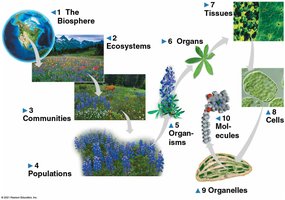
Organization: Biological systems are organized at multiple levels, from molecules to the biosphere.
Information: Genetic information is stored, transmitted, and expressed in all living things.
Energy and Matter: Life requires the transformation of energy and cycling of matter.
Interactions: Organisms interact with each other and their environments.
Evolution: Evolution explains the unity and diversity of life.
Quote: “Nothing in biology makes sense except in the light of evolution.” – T. Dobzhansky
Properties and Characteristics of Living Things
Defining Life
Living organisms share several key characteristics that distinguish them from non-living matter. These properties are foundational to the study of biology and physiology.
Order: Highly ordered structure and organization.
Regulation (Homeostasis): Ability to maintain stable internal conditions.
Growth and Development: Controlled by genetic information.
Energy Processing: Acquisition and use of energy for metabolic processes.
Response to the Environment: Ability to sense and respond to stimuli.
Reproduction: Production of offspring.
Evolutionary Adaptation: Populations evolve over generations.
Comparative Physiology: Plants vs. Animals
While both plants and animals share the basic properties of life, they have evolved distinct solutions to physiological challenges.
Animals: Eukaryotic, multicellular, heterotrophic, lack cell walls.
Plants: Eukaryotic, multicellular, autotrophic, possess cell walls.
Example: Plants use leaves for photosynthesis, while animals rely on specialized organs for nutrient acquisition.
Form and Function in Multicellular Organisms
Body Plans and Hierarchical Organization
The structure (form) of an organism is closely related to its function. Multicellularity introduces challenges for exchange with the environment, which are solved through specialized tissues and organ systems.
Hierarchical Organization: Cells → Tissues → Organs → Organ Systems → Organism
Animal Body Plans: Specialized systems for exchange (digestive, respiratory, circulatory, excretory).
Plant Body Plans: Specialized structures for absorption, transport, and support.
Exchange with the Environment
Multicellular organisms must exchange materials (nutrients, gases, wastes) with their environment. This is achieved through specialized surfaces and transport systems.
Absorption Surfaces: Root hairs in plants and intestinal villi in animals increase surface area for absorption.
Transport Systems: Circulatory systems in animals and vascular systems in plants distribute materials throughout the organism.
Homeostasis
Homeostasis is the maintenance of stable internal conditions despite external fluctuations. It is a central concept in physiology, involving feedback mechanisms to regulate variables such as temperature, pH, and water balance.
Negative Feedback: Reduces the effect of a stimulus (e.g., body temperature regulation).
Positive Feedback: Amplifies a response (e.g., blood clotting).
General Model:
Animal and Plant Body Organization
Animal Organ Systems
Animals possess multiple organ systems, each with specialized functions. The main organ systems include:
Digestive System: Food processing (ingestion, digestion, absorption, elimination).
Circulatory System: Internal distribution of materials.
Respiratory System: Gas exchange.
Excretory System: Disposal of metabolic wastes, regulation of osmotic balance.
Nervous System: Coordination of body activities, detection of stimuli.
Muscular System: Movement and locomotion.
Skeletal System: Support and protection.
Immune System: Defense against pathogens.
Endocrine System: Hormonal coordination of body activities.
Reproductive System: Production of gametes and offspring.
Integumentary System: Protection against mechanical injury and pathogens.
Animal Tissue Types
Animal bodies are composed of four main tissue types, each with distinct structure and function:
Tissue Type | Function |
|---|---|
Epithelial | Covers body surfaces and lines cavities; protection, absorption, secretion |
Connective | Supports, binds, and protects other tissues and organs |
Muscle | Movement and contraction |
Nervous | Receives, processes, and transmits information |
Plant Tissue Systems
Plants have three main tissue systems:
Dermal Tissue: Protective outer covering (e.g., epidermis).
Vascular Tissue: Transport of water, minerals, and sugars (xylem and phloem).
Ground Tissue: Photosynthesis, storage, and support.
Example: The dermal tissue is the primary barrier to pathogen entry in plants.
Scientific Method in Biology
Steps of the Scientific Method
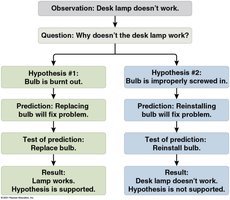
The scientific method is a systematic approach to inquiry in biology. It involves observation, hypothesis formation, prediction, experimentation, and analysis.
Observation: Gathering data about phenomena.
Question: Asking why or how something occurs.
Hypothesis: Proposing a testable explanation.
Prediction: Stating expected outcomes if the hypothesis is correct.
Experiment: Testing the prediction through controlled investigation.
Analysis: Interpreting results to support or refute the hypothesis.
Summary Table: Comparison of Plants and Animals
Feature | Animals | Plants |
|---|---|---|
Cell Type | Eukaryotic | Eukaryotic |
Nutrition | Heterotrophic | Autotrophic |
Cell Wall | Absent | Present (cellulose) |
Growth | Determinate (usually) | Indeterminate (often) |
Movement | Motile (at least at some stage) | Generally non-motile |
Reproduction | Sexual (mostly) | Sexual and asexual |
Key Concepts for Exam Preparation
Understand the hierarchical organization of life and how form relates to function.
Be able to compare and contrast plant and animal physiology.
Know the main tissue types and organ systems in animals and plants.
Explain the concept of homeostasis and its importance in physiology.
Apply the scientific method to biological questions.
