 Back
General Biology Study Guide: Atoms, Molecules, and Biological Macromolecules
Study Guide - Smart Notes
 Tailored notes based on your materials, expanded with key definitions, examples, and context.
Atoms and Elements
Structure of the Atom
Atoms are the fundamental units of matter, composed of three main subatomic particles: protons, neutrons, and electrons. Each plays a distinct role in determining the properties and behavior of the atom.
Protons: Positively charged, located in the nucleus, determine the atomic number and identity of the element.
Neutrons: Neutral, located in the nucleus, contribute to atomic mass and create isotopes when their number varies.
Electrons: Negatively charged, found in electron shells around the nucleus, responsible for chemical bonding and reactivity.
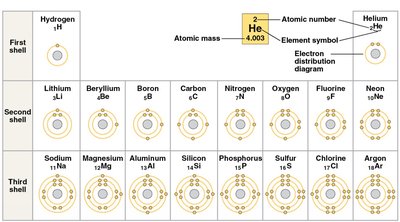
Atomic Number and Mass
Atomic Number: Number of protons in the nucleus; unique to each element.
Atomic Mass: Sum of protons and neutrons; measured in daltons.
Isotopes: Atoms of the same element with different numbers of neutrons.
Essential Elements
Living organisms require a small subset of elements for survival.
Four Essential Elements: Carbon (C), Hydrogen (H), Oxygen (O), Nitrogen (N).
Other important elements include Calcium (Ca) and trace elements, which can be toxic in excess.
Reading the Periodic Table
The periodic table provides information about each element, including atomic number, atomic mass, and electron configuration.
Isotopes and Radioactivity
Isotopes: Variants of elements with different neutron numbers.
Radioactive Isotopes: Unstable isotopes that decay, emitting particles and energy.
Half-life: The time required for half of a radioactive isotope to decay.
Electron Configuration and Chemical Bonding
Electron Shells and Orbitals
Electrons occupy specific energy levels called shells, which are subdivided into orbitals.
First shell: Holds up to 2 electrons (1s orbital).
Second shell: Holds up to 8 electrons (2s, 2p orbitals).
Third shell: Holds up to 18 electrons (3s, 3p, 3d orbitals).
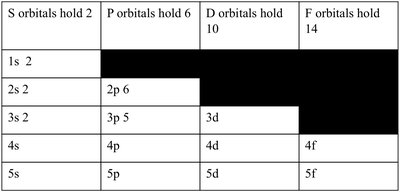
Electron Configuration
Electrons fill orbitals in order of increasing energy: s, p, d, f.
Valence electrons are in the outermost shell and determine chemical reactivity.
Chemical Bonds
Atoms form bonds to achieve stable electron configurations.
Covalent Bonds: Sharing of electrons between atoms; can be single, double, or triple bonds.
Ionic Bonds: Transfer of electrons, resulting in oppositely charged ions (cations and anions).
Hydrogen Bonds: Weak attraction between a hydrogen atom and an electronegative atom (e.g., O or N).
Van der Waals Forces: Weak attractions due to transient partial charges.
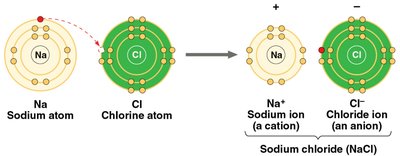
Hybridization and Molecular Shape
Atomic orbitals can hybridize to form new shapes, affecting molecular geometry.
Common hybridizations: sp (linear), sp2 (trigonal planar), sp3 (tetrahedral).
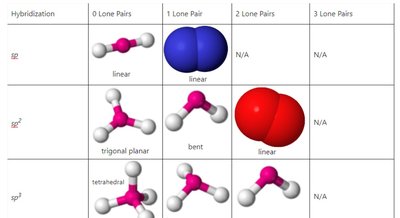
Molecular Shape and Function
The shape of a molecule is determined by the arrangement of its atoms and orbitals, influencing its function. 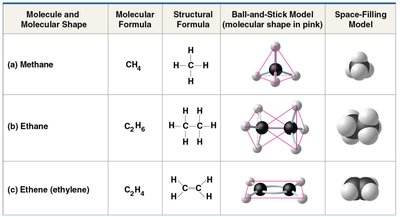
Organic Molecules and Functional Groups
Hydrocarbons and Isomers
Hydrocarbons: Molecules consisting only of carbon and hydrogen; nonpolar and hydrophobic.
Isomers: Molecules with the same formula but different structures (structural, cis-trans, enantiomers).
Functional Groups
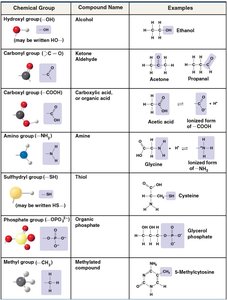
Functional groups are specific groups of atoms that confer distinct chemical properties to organic molecules.
Examples: Hydroxyl, Carbonyl, Carboxyl, Amino, Sulfhydryl, Phosphate, Methyl.
Macromolecules: Carbohydrates, Lipids, and Proteins
Carbohydrates
Carbohydrates are polymers of sugars, serving as energy sources and structural materials.
Monosaccharides: Simple sugars (e.g., glucose).
Polysaccharides: Long chains of monosaccharides (e.g., starch, glycogen, cellulose).
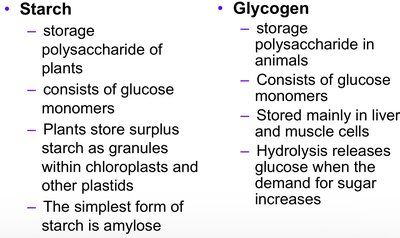
Starch: Storage polysaccharide in plants; consists of glucose monomers.
Glycogen: Storage polysaccharide in animals; stored in liver and muscle cells.
Dehydration and Hydrolysis Reactions
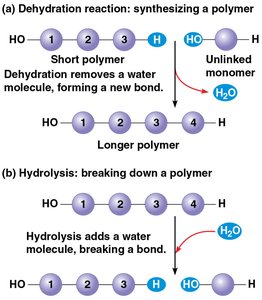
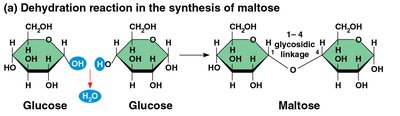
Dehydration: Synthesis of polymers by removing water.
Hydrolysis: Breakdown of polymers by adding water.
Lipids
Lipids are hydrophobic molecules, including fats, phospholipids, and steroids.
Fats: Composed of glycerol and fatty acids; function in energy storage and insulation.
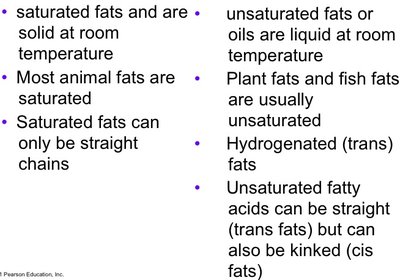
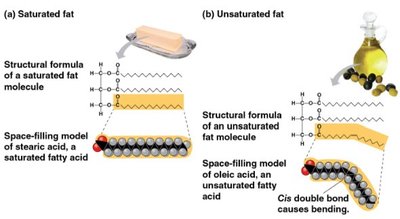
Saturated Fats: No double bonds; solid at room temperature.
Unsaturated Fats: One or more double bonds; liquid at room temperature.
Proteins
Proteins are polymers of amino acids, performing diverse functions in cells.
Amino Acids: Organic molecules with amino and carboxyl groups; differ by side chains (R groups).
Polypeptides: Chains of amino acids linked by peptide bonds.
Protein Structure: Four levels—primary (sequence), secondary (alpha helix, beta sheet), tertiary (3D shape), quaternary (multiple polypeptides).
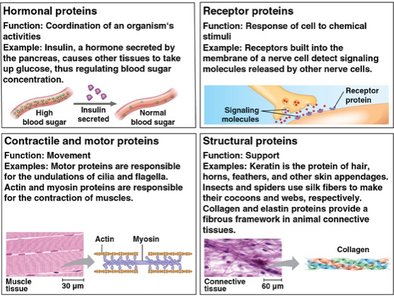
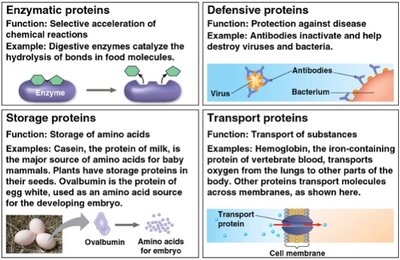
Functions: Enzymatic, structural, transport, hormonal, defensive, storage, contractile, and receptor proteins.
Summary Table: Electron Configuration
Orbital Type | Maximum Electrons |
|---|---|
S | 2 |
P | 6 |
D | 10 |
F | 14 |
Summary Table: Functional Groups
Chemical Group | Compound Name | Example |
|---|---|---|
Hydroxyl (-OH) | Alcohol | Ethanol |
Carbonyl (C=O) | Ketone/Aldehyde | Acetone, Propanal |
Carboxyl (-COOH) | Carboxylic acid | Acetic acid |
Amino (-NH2) | Amine | Glycine |
Sulfhydryl (-SH) | Thiol | Cysteine |
Phosphate (-OPO3^2-) | Organic phosphate | Glycerol phosphate |
Methyl (-CH3) | Methylated compound | 5-Methylcytosine |
Key Equations
Calculating Neutrons:
Half-life Calculation:
Additional info:
These notes cover foundational concepts in chemistry and biomolecules relevant to General Biology, including atomic structure, bonding, macromolecules, and functional groups.
