 Back
General Biology Study Guide: Foundations, Chemistry of Life, and Biological Macromolecules
Study Guide - Smart Notes
 Tailored notes based on your materials, expanded with key definitions, examples, and context.
Biology: The Study of Life
Levels of Biological Organization
Biology examines life across a hierarchy of structural levels, from the smallest chemical units to the entire biosphere.
Molecules: Chemical structures consisting of two or more atoms.
Organelles: Specialized structures within cells (e.g., mitochondria).
Cells: Basic unit of life; can be prokaryotic or eukaryotic.
Tissues: Groups of similar cells performing a specific function.
Organs: Structures composed of multiple tissues working together.
Organisms: Individual living entities.
Populations: Groups of individuals of the same species in an area.
Communities: All organisms in a particular area.
Ecosystems: Communities plus their physical environment.
Biosphere: All life on Earth and the places where life exists.
Properties of Life
Order: Highly organized structure.
Energy Processing: Use of energy to power activities.
Regulation: Maintenance of internal environment (homeostasis).
Evolutionary Adaptation: Change over generations for survival.
Response to Environment: Reacting to stimuli.
Growth & Development: Increase in size and complexity.
Reproduction: Producing new organisms.
Evolution and the Diversity of Life
Evolutionary Theory
Evolution explains the diversity of life through changes in inheritable characteristics of populations over generations. Natural selection is a key mechanism, favoring traits that enhance survival and reproduction.
Forces of Evolution: Mutation, gene flow, nonrandom mating, genetic drift, natural selection.
Natural Selection: Differential survival and reproduction of individuals with advantageous traits.
Domains of Life and Phylogenetic Trees
All life is classified into three domains: Bacteria, Archaea, and Eukarya. Phylogenetic trees illustrate evolutionary relationships among organisms.
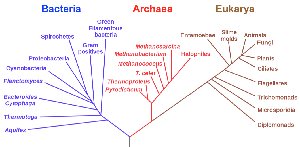
Bacteria and Archaea: Prokaryotic cells (no nucleus).
Eukarya: Eukaryotic cells (with nucleus); includes animals, plants, fungi, and protists.
Phylogenetic trees show common ancestry and evolutionary divergence.
Scientific Inquiry and Experimental Design
The Scientific Method
The scientific method is a systematic approach to understanding natural phenomena through observation, hypothesis formation, experimentation, and analysis.
Observation: Gathering empirical data.
Question: Formulating a testable inquiry.
Hypothesis: Testable explanation for observations.
Experiment: Testing the hypothesis with controls and variables.
Analysis: Interpreting results.
Theory: Broad explanation supported by evidence.
Law: Theory repeatedly validated and widely accepted.
Proper experimental design includes control groups, independent and dependent variables, and reproducibility. Collaboration and diversity enhance scientific progress.
Pseudoscience
Pseudoscience consists of claims or beliefs presented as scientific but lacking adherence to the scientific method, systematic testing, and peer review. It can mislead public understanding and policy.
The Chemical Context of Life
Atoms, Elements, and Compounds
An atom consists of a central nucleus (protons and neutrons) and orbiting electrons. Elements are pure substances of one atom type, while compounds are combinations of different elements in fixed ratios.
Atomic Number: Number of protons (defines element).
Atomic Mass: Protons + neutrons.
Isotopes: Atoms with same protons, different neutrons.
Common Biological Elements: CHNOPS (Carbon, Hydrogen, Nitrogen, Oxygen, Phosphorus, Sulfur).
Electron Shells and Orbitals
Electrons occupy energy levels (shells) and orbitals. The arrangement determines chemical reactivity. Atoms react to achieve stable, full valence shells (octet rule).
Ions and Chemical Bonds
Cation: Positively charged ion (lost electrons).
Anion: Negatively charged ion (gained electrons).
Covalent Bonds: Sharing electrons (can be polar or nonpolar).
Ionic Bonds: Attraction between oppositely charged ions.
Hydrogen Bonds: Weak attraction between hydrogen and electronegative atoms.
van der Waals Forces: Weak, transient interactions due to temporary dipoles.
Isomers and Hydrocarbons
Isomers: Same formula, different structures (structural, cis-trans, enantiomers).
Hydrocarbons: Compounds of only hydrogen and carbon.
Electronegativity and Bond Polarity
Electronegativity is an atom's tendency to attract electrons. Differences in electronegativity create polar bonds, influencing molecular properties and interactions.
The Periodic Table
Elements are arranged by increasing atomic number. Groups and periods reflect recurring chemical properties.
Water and Life
Structure and Properties of Water
Water (H2O) has polar covalent bonds and forms hydrogen bonds between molecules, giving rise to unique properties essential for life.
High Specific Heat: Stabilizes temperature.
Cohesion: Water molecules stick together (surface tension).
Adhesion: Water sticks to other substances (capillary action).
Floating Ice: Solid water is less dense than liquid.
Universal Solvent: Dissolves ionic and polar substances.
Thermal Energy: Moderates temperature changes.
Bonds in Water
Within Molecule: Polar covalent bonds (O–H).
Between Molecules: Hydrogen bonds (responsible for cohesion, adhesion, etc.).
States of Matter
Solid: Fixed structure, low kinetic energy.
Liquid: Close molecules, higher energy, fluid.
Gas: Molecules far apart, high energy, random motion.
Water and Climate
Water's thermal properties influence climate patterns, weather intensity, and ecosystem stability.
Carbon and Molecular Diversity
Role of Carbon and Functional Groups
Carbon forms the backbone of organic molecules, allowing for structural diversity. Functional groups attached to carbon skeletons determine chemical reactivity and polarity.
Functional Groups: Hydroxyl, carbonyl, carboxyl, amino, sulfhydryl, phosphate, methyl.
Bond Polarity in Organic Molecules
Polar bonds in functional groups influence solubility, reactivity, and molecular interactions (e.g., hydrogen bonding, nucleophilic addition).
Acids, Bases, and pH
pH Scale
pH measures hydrogen ion concentration in solution:
0–6.9: Acidic (more H+ than OH−)
7: Neutral
7.1–14: Basic (more OH− than H+)
Biological Macromolecules
Classes and Functions
Macromolecules are large, complex molecules essential for life, built from smaller monomers.
Carbohydrates: Energy source (glucose), storage (starch, glycogen), structure (cellulose, chitin), cell signaling.
Lipids: Long-term energy storage (triglycerides), membranes (phospholipids), signaling (steroids).
Proteins: Catalysis (enzymes), structure, transport, regulation, defense.
Nucleic Acids: Genetic information (DNA, RNA), energy transfer (ATP).
Polymer Synthesis and Breakdown
Dehydration Synthesis: Joins monomers, releases water, requires energy.
Hydrolysis: Breaks polymers, adds water, releases energy.
Protein Structure
Primary: Amino acid sequence.
Secondary: Local folding (α-helix, β-sheet).
Tertiary: 3D shape from R-group interactions.
Quaternary: Multiple polypeptides assembled.
Protein function depends on precise 3D structure; denaturation disrupts function.
DNA and RNA: Structure and Function
DNA and RNA are nucleic acids with distinct structures and roles in genetic information storage and protein synthesis.
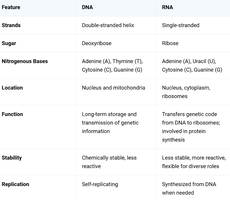
DNA: Double-stranded, deoxyribose sugar, bases A-T-C-G, stores genetic information, self-replicating, stable.
RNA: Single-stranded, ribose sugar, bases A-U-C-G, transfers genetic code, involved in protein synthesis, less stable.
Phylogenetic Relationships Among Vertebrates
Phylogenetic trees illustrate evolutionary relationships among vertebrates, showing common ancestry and divergence of major groups.
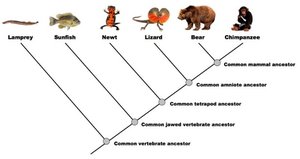
Major evolutionary branches: vertebrate ancestor, jawed vertebrates, tetrapods, amniotes, mammals.
