 Back
General Biology Study Guide: Introduction to Biology and Characteristics of Life
Study Guide - Smart Notes
 Tailored notes based on your materials, expanded with key definitions, examples, and context.
Q1. What is Biology?
Background
Topic: Definition and Scope of Biology
This question is testing your understanding of what biology is and what it encompasses, including the study of living organisms and their interactions.
Key Terms:
Biology: The scientific study of life and living organisms.
Organism: Any living thing, from bacteria to humans.
Step-by-Step Guidance
Consider the etymology: 'bio-' means life, and '-ology' means study.
Think about the range of organisms included in biology, from microscopic bacteria to large animals and plants.
Reflect on how biology also includes the interactions between organisms and their environments.
Remember that biology is a dynamic field, with new discoveries and evolving knowledge.
Try solving on your own before revealing the answer!
Final Answer: Biology is the study of life.
Biology covers all living things and their interactions, as well as the processes that sustain life.
Q2. How do we distinguish between living and non-living things?
Background
Topic: Characteristics of Life
This question is testing your ability to identify the criteria used to define life and distinguish living organisms from non-living objects.
Key Terms:
Living: Exhibits all required characteristics of life.
Non-living: Does not exhibit all characteristics of life.
Characteristics of Life: Cells, organization, chemicals and energy, homeostasis, DNA/RNA/protein, reproduction, evolution.
Step-by-Step Guidance
List the seven required characteristics of living organisms.
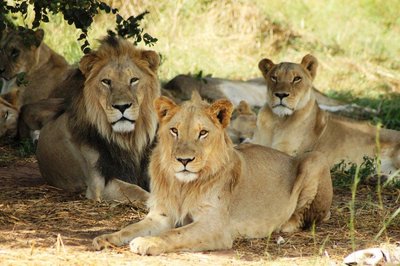
Compare examples of living (e.g., lions) and non-living (e.g., rocks) things.
Check if an organism exhibits all the characteristics to be considered living.
Think about how these characteristics are observed in real-life examples.

Try solving on your own before revealing the answer!
Final Answer: Living things exhibit all seven characteristics of life, while non-living things do not.
To be considered alive, an organism must have cells, organization, use chemicals and energy, maintain homeostasis, contain DNA/RNA/protein, reproduce, and evolve.
Q3. What is the Cell Theory?
Background
Topic: Cell Theory
This question is testing your understanding of the foundational principles of cell biology, including the definition and importance of cells.
Key Terms and Concepts:
Cell Theory: All living organisms are composed of cells; cells are the smallest units of life; new cells come only from pre-existing cells by cell division.
Theory (in science): A broad explanation supported by evidence.
Step-by-Step Guidance
Recall the three main points of the Cell Theory.
Understand why cells are considered the basic unit of life.
Think about how new cells are formed (cell division).
Consider the scientific meaning of 'theory' and why Cell Theory is widely accepted.
Try solving on your own before revealing the answer!
Final Answer: The Cell Theory states that all living organisms are composed of cells, cells are the smallest units of life, and new cells come only from pre-existing cells by cell division.
This theory is fundamental to biology and explains the structure and reproduction of all living things.
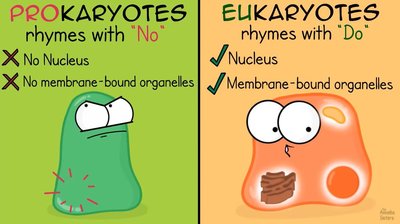
Q4. What are the differences between prokaryotic and eukaryotic cells?
Background
Topic: Types of Cells
This question is testing your ability to distinguish between prokaryotic and eukaryotic cells based on their structure and complexity.
Key Terms:
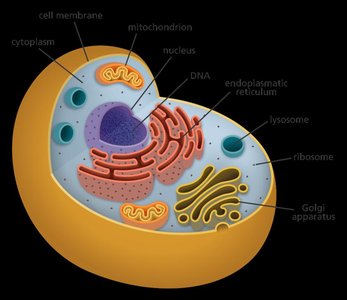
Prokaryotic Cell: Small, simple, no nucleus, no membrane-bound organelles.
Eukaryotic Cell: Larger, complex, has nucleus, has membrane-bound organelles.
Step-by-Step Guidance
Identify the presence or absence of a nucleus in each cell type.
Compare the presence of membrane-bound organelles.
Consider the relative size and complexity of each cell type.
Think about examples of organisms that have each cell type.
Try solving on your own before revealing the answer!
Final Answer: Prokaryotic cells lack a nucleus and membrane-bound organelles, while eukaryotic cells have both.
Prokaryotes are generally smaller and simpler, while eukaryotes are larger and more complex.
Q5. What are the levels of organization in living organisms?
Background
Topic: Biological Organization
This question is testing your knowledge of the hierarchical structure of living organisms, from atoms to the biosphere.
Key Terms:
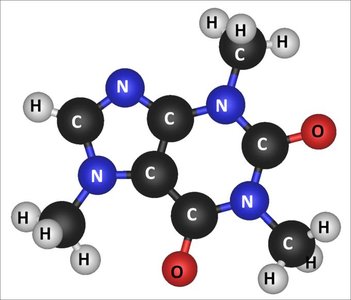
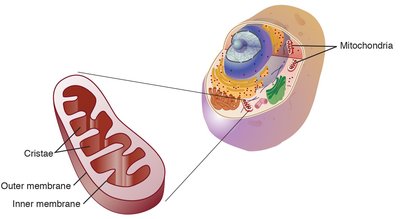
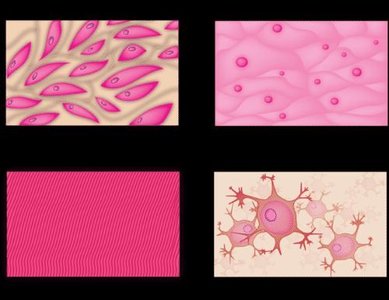
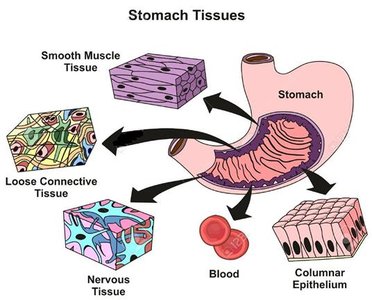
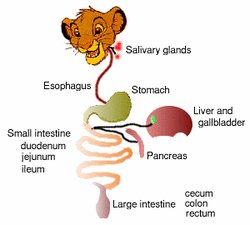
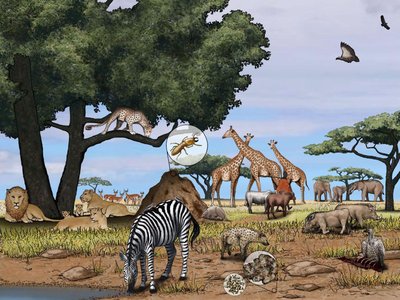
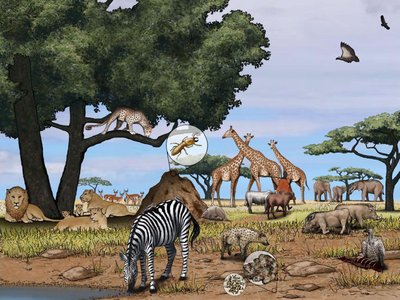
Levels of Organization: Atom, molecule, organelle, cell, tissue, organ, organ system, organism, population, community, ecosystem, biosphere.
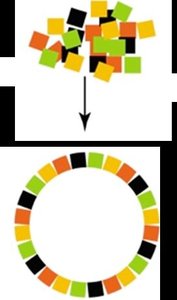
Emergent Property: A characteristic that arises when smaller components combine into a larger system.
Step-by-Step Guidance
List the levels of organization from smallest to largest.
Understand the function and significance of each level (e.g., atoms form molecules, molecules form organelles).
Recognize how complexity increases at each level.
Think about examples for each level (e.g., cell, tissue, organ).


Try solving on your own before revealing the answer!
Final Answer: The levels of organization are atom, molecule, organelle, cell, tissue, organ, organ system, organism, population, community, ecosystem, and biosphere.
Each level builds upon the previous, creating increasing complexity and emergent properties.
