 Back
General Biology Study Guide: Metabolism, Cellular Respiration, Photosynthesis, Viruses, Prokaryotes, and Protists
Study Guide - Smart Notes
 Tailored notes based on your materials, expanded with key definitions, examples, and context.
Metabolism and Energy in Biological Systems
Catabolic vs. Anabolic Processes
Metabolism encompasses all chemical reactions in an organism, divided into catabolic and anabolic pathways.
Catabolic processes: Break down complex molecules into simpler ones, releasing energy (e.g., cellular respiration).
Anabolic processes: Build complex molecules from simpler ones, requiring energy input (e.g., protein synthesis).
Example: Digestion is catabolic; photosynthesis is anabolic.
Kinetic vs. Potential Energy
Energy exists in two main forms in biological systems:
Kinetic energy: Energy of motion (e.g., movement of molecules).
Potential energy: Stored energy due to position or structure (e.g., chemical bonds in glucose).
Endergonic vs. Exergonic Reactions
Chemical reactions are classified by their energy changes:
Endergonic reactions: Require energy input; have a positive change in free energy ().
Exergonic reactions: Release energy; have a negative change in free energy ().
Example: ATP hydrolysis is exergonic; photosynthesis is endergonic.
Oxidation and Reduction
Redox reactions are central to metabolism:
Oxidation: Loss of electrons (often hydrogen atoms).
Reduction: Gain of electrons (often hydrogen atoms).
Significance: Reduced molecules store more energy for cellular processes.
First Law of Thermodynamics
Energy cannot be created or destroyed, only transformed or transferred. In ecosystems, energy flows from the sun through producers and consumers, eventually dissipating as heat.
Energy flow: Sun → photosynthesis → cellular respiration → heat.
Energy Use in Organisms
Organisms use energy in four main ways:
Maintenance (homeostasis, lost as heat)
Growth (building body mass)
Waste molecules
Activity (movement)
ATP vs. Glucose
Glucose contains more free energy than ATP. Cellular respiration breaks down glucose to produce ATP, which powers most cellular work.
Activation Energy and Enzymes
Activation energy () is the initial energy required to start a chemical reaction. Enzymes lower the barrier, speeding up reactions without being consumed.
Enzyme Structure and Function
Active site: Region where substrate binds to the enzyme.
Enzyme after reaction: Releases products and remains unchanged.
Factors Affecting Enzyme Activity
Temperature
pH
Substrate concentration
Presence of inhibitors or activators
Cofactors and Enzyme Inhibitors
Cofactors: Non-protein molecules required for enzyme activity (e.g., metal ions).
Enzyme inhibitors: Molecules that decrease or stop enzyme activity.
Cellular Respiration and Fermentation
Autotrophs vs. Heterotrophs
Autotrophs: Capture energy from light via photosynthesis to produce energy-containing molecules.
Heterotrophs: Obtain energy by consuming other organisms.
Energy Flow and Carbon Cycling in Ecosystems
Energy flows through ecosystems, while carbon-containing molecules cycle within them. Photosynthesis converts light energy to glucose and oxygen; cellular respiration uses glucose to produce ATP, releasing CO2 and H2O.
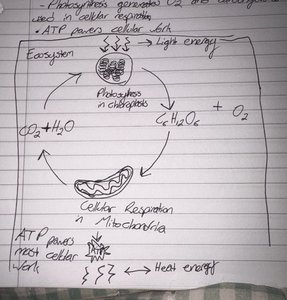
Cellular Respiration: Catabolic Process
Cellular respiration breaks down glucose into simpler molecules, releasing ATP. It is a catabolic process.
Reduction in Cellular Respiration
Reduction involves gaining electrons, increasing the energy content of molecules. Reduced molecules can fuel further reactions.
Mitochondrial Structure
The mitochondrion has two membranes and two spaces:
Outer membrane
Inner membrane
Intermembrane space
Matrix
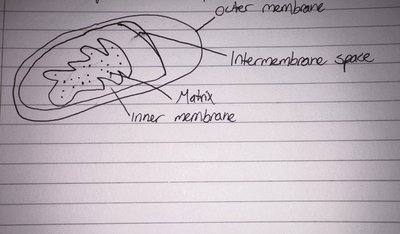
Cellular Respiration in Prokaryotes vs. Eukaryotes
Prokaryotes: Occurs in cytoplasm and cell membrane (no mitochondria).
Eukaryotes: Occurs in cytoplasm, mitochondrial matrix, and inner mitochondrial membrane.
Chemiosmosis and ATP Synthase
Chemiosmosis is the movement of ions through ATP synthase to produce ATP. ATP synthase is the main enzyme involved.
Fermentation Types
Alcoholic fermentation: Produces CO2 and alcohol; performed by yeast.
Lactic acid fermentation: Produces lactic acid; performed by human cells and other microorganisms.
Metabolism of Other Molecules
Lipids and proteins can be metabolized for energy. Their components enter glycolysis or the Krebs cycle at different points.
Photosynthesis
Chemical Formula for Photosynthesis
The formula for photosynthesis is:
Light: Reactant, converted from solar to chemical energy.
Photosynthesis and Fossil Fuels
Coal and other fossil fuels are ancient stores of solar energy, originally captured by photosynthesis in plants.
Chloroplast Structure
Stroma: Liquid surrounding thylakoids within the two membranes.
Thylakoid: Membrane-bound sacs containing chlorophyll; site of light reactions.
Granum: Stack of thylakoids.
Light Energy and Pigments
Blue light: Contains more energy than red light due to shorter wavelength.
Pigments: Substances that absorb visible light (e.g., chlorophyll).
Chlorophyll: Appears green because it reflects and transmits green light, absorbing other wavelengths.
Photosynthesis Summary Table
Process | What goes in | What comes out | Location in chloroplast |
|---|---|---|---|
Light Reactions | H2O, light | O2, ATP, NADPH | Thylakoids |
Calvin Cycle | CO2, ATP, NADPH | G3P, ADP, NADP+ | Stroma |
Glucose and Other Sugars
Photosynthesis produces G3P, which can be used to make glucose and other sugars like sucrose. Excess sugars are stored as starch.
Viruses, Prions, and Prokaryotes
Viruses
Not living: Cannot reproduce independently.
Structure: Nucleic acid (DNA or RNA) and protein coat (capsid).
Host specificity: Infect only specific cells/species.
Infection steps: Bind to cell, enter, hijack cell machinery, assemble new viruses, release.
Prions
Definition: Infectious proteins causing brain diseases in mammals.
Mechanism: Convert normal proteins into prion form.
Examples: Scrapie (sheep), mad cow disease (cattle), chronic wasting disease (deer), Creutzfeldt-Jakob disease (humans).
Prokaryotes: Bacteria and Archaea
Domains: Archaea and Bacteria; differ in membrane structure, metabolism, and genetic machinery.
Size ranking: Virus < Prokaryotic cell < Eukaryotic cell
Bacterial Shapes and Structures
Cocci: Spherical
Bacilli: Rod-shaped
Spirals: Spiral-shaped
Fimbriae: Attachment to surfaces
Cell wall: Structural support
Capsule: Protective layer (some bacteria)
Ribosomes: Protein synthesis
Flagella: Movement
Sex pilus: DNA exchange
Circular chromosome: Ring-shaped DNA
Bacterial Reproduction and Adaptation
Binary fission: Asexual reproduction; daughter cells are identical to parent.
Reproduction rate: Every 1-3 hours, some as fast as 20-40 minutes.
Sex pilus: Exchange of plasmids (e.g., antibiotic resistance genes).
Rapid adaptation: High mutation rates and DNA exchange enable quick evolution.
Protists
Kingdom Protista: Polyphyletic Nature
Protists are considered polyphyletic, meaning they share a common ancestor with multiple kingdoms.
Unicellular vs. Multicellular Protists
Most protists: Unicellular (e.g., algae, plankton)
Some multicellular: Colonial or multicellular (e.g., kelp)
Endosymbiotic Theory
Eukaryotes evolved via endosymbiosis, where a unicellular organism engulfed another cell, which became an organelle (e.g., mitochondria, chloroplasts). Prokaryotes evolved first.
Ecological Roles of Protists
Beneficial: Aquatic protists produce ~50% of Earth's oxygen; some aid animal digestion (e.g., termite gut protists).
Harmful: Many protists are parasites causing disease.
Primary Producers in Ecosystems
Terrestrial: Plants are primary producers.
Aquatic: Protists are primary producers.
Consequences of Protist Decline
Collapse of food webs
Reduced fishery yields
Disruption of global carbon cycle
Key Definitions
Photoautotroph: Organism with chloroplasts performing photosynthesis.
Heterotroph: Organism absorbing organic molecules or ingesting food particles.
Mixotroph: Organism combining photosynthesis and heterotrophic nutrition.
Endosymbiosis: Process where a unicellular organism engulfs another, forming an organelle.
Producer: Performs photosynthesis.
Consumer: Feeds on other organisms.
Symbiont: Lives in a mutually beneficial relationship with a host.
Parasite: Lives at the expense of its host.
