 Back
General Biology Study Guide: Molecular Structure, Isomers, Functional Groups, and Biological Consequences
Study Guide - Smart Notes
 Tailored notes based on your materials, expanded with key definitions, examples, and context.
Q1. Why can two molecules with the same molecular formula (same atom counts) have different properties?
Background
Topic: Isomers and Molecular Structure
This question tests your understanding of how the arrangement of atoms (structure) affects the properties of molecules, even when their molecular formulas are identical.
Key Terms:
Molecular Formula: Shows the number and type of atoms in a molecule (e.g., C5H12).
Isomers: Molecules with the same molecular formula but different structural arrangements.
Structural Isomers: Isomers that differ in the connectivity of their atoms.
Step-by-Step Guidance
Start by comparing the molecular formulas of the two molecules. If they are identical, check the arrangement of atoms.
Examine the connectivity: Are the atoms connected in a straight chain or is there branching?
Consider how the structure affects physical properties like boiling point, shape, and chemical reactivity.
Think about how these differences in structure can lead to different interactions with other molecules and different biological functions.
Try solving on your own before revealing the answer!
Final Answer:
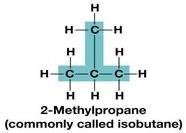
Two molecules with the same molecular formula can have different properties because their atoms are arranged differently (they are structural isomers). For example, pentane and 2-methylbutane both have the formula C5H12, but pentane is a straight chain and 2-methylbutane is branched. This difference in structure leads to different boiling points, shapes, and chemical behaviors.
Structure determines function: even a small change in connectivity can result in large differences in physical and biological properties.
Q2. How do you determine the molecular formula of a compound given its empirical formula and molar mass?
Background
Topic: Molecular and Empirical Formulas
This question tests your ability to use the empirical formula and molar mass to find the molecular formula of a compound.
Key Terms and Formulas:
Empirical Formula: The simplest whole-number ratio of atoms in a compound.
Molecular Formula: The actual number of atoms of each element in a molecule.
Formula:
Step-by-Step Guidance
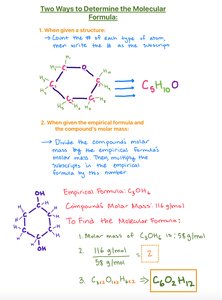
Calculate the mass of the empirical formula by adding up the atomic masses of each element in the empirical formula.
Divide the compound's molar mass by the empirical formula mass to find the multiplier (n).
Multiply each subscript in the empirical formula by n to get the molecular formula.
Try solving on your own before revealing the answer!
Final Answer:
For a compound with empirical formula CH2O and molar mass 180.18 g/mol:
Empirical formula mass = 12.01 + (2 × 1.008) + 16 = 30.026 g/mol
n = 180.18 / 30.026 ≈ 6
Molecular formula = (CH2O) × 6 = C6H12O6
This is the molecular formula for glucose.
Q3. What is an isomer, and how do you classify different types of isomers?
Background
Topic: Isomer Classification
This question tests your understanding of the different types of isomers and how to distinguish between them based on structure and connectivity.
Key Terms:
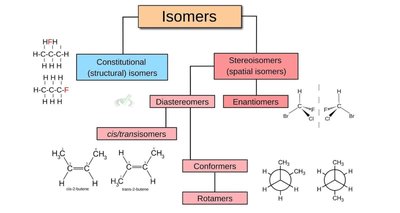
Isomer: Molecules with the same molecular formula but different arrangements of atoms.
Structural (Constitutional) Isomers: Differ in atom connectivity.
Stereoisomers: Same connectivity, different spatial arrangement.
Enantiomers: Mirror-image isomers.
Cis-trans Isomers: Differ in arrangement around a double bond.
Step-by-Step Guidance
Check if the molecules have the same molecular formula.
Examine the connectivity of atoms to determine if they are structural isomers.
If connectivity is the same, look for differences in spatial arrangement (stereoisomers).
Identify if the molecules are mirror images (enantiomers) or differ around a double bond (cis-trans isomers).
Try solving on your own before revealing the answer!
Final Answer:
An isomer is a molecule with the same molecular formula as another but a different arrangement of atoms. Structural isomers differ in connectivity, while stereoisomers have the same connectivity but differ in spatial arrangement. Enantiomers are mirror images, and cis-trans isomers differ around a double bond.
Q4. How do functional groups affect the properties and behavior of molecules?
Background
Topic: Functional Groups and Chemical Properties
This question tests your ability to recognize functional groups and predict how they influence molecular properties such as polarity, solubility, and acid-base behavior.
Key Terms:
Functional Group: Specific group of atoms within a molecule that determines its chemical properties.
Polarity: Distribution of electrical charge across a molecule.
Solubility: Ability of a molecule to dissolve in water or other solvents.
Step-by-Step Guidance
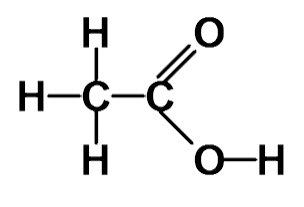
Identify the functional groups present in the molecule (e.g., hydroxyl, carbonyl, carboxyl, amino, sulfhydryl, phosphate, methyl).
Determine which groups are polar (e.g., –OH, –COOH, –NH2) and which are nonpolar (e.g., –CH3).
Predict how these groups affect the molecule's interaction with water and other molecules.
Consider how changes in functional groups can alter the molecule's biological function.
Try solving on your own before revealing the answer!
Final Answer:
Functional groups determine a molecule's properties and behavior. For example, a hydroxyl group (–OH) makes a molecule polar and able to form hydrogen bonds with water, increasing solubility. A methyl group (–CH3) is nonpolar and decreases solubility. Changing functional groups can dramatically alter a molecule's biological role.
Q5. Why can small structural changes in a molecule lead to large biological consequences?
Background
Topic: Structure-Function Relationship in Biology
This question tests your understanding of how even minor changes in molecular structure (such as swapping one functional group for another) can affect a molecule's function in living systems.
Key Terms:
Structure-Function Relationship: The concept that a molecule's structure determines its function.
Functional Group Substitution: Replacing one group with another (e.g., –OH with –CH3).
Step-by-Step Guidance
Identify the structural change (e.g., substitution of a functional group).
Analyze how this change affects the molecule's polarity, solubility, and interactions with other molecules.
Consider how these altered properties can change the molecule's biological role, such as which receptors it binds to or how it is metabolized.
Try solving on your own before revealing the answer!
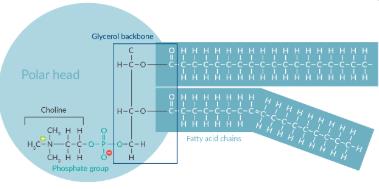
Final Answer:
Small structural changes, such as swapping a functional group, can alter a molecule's polarity, solubility, and interactions with biological targets. This can change its entire biological function, as seen in molecules like serotonin and hormones (estradiol vs. testosterone). Structure drives function, so even minor modifications can have major effects.
