 Back
General Biology Study Guide: Unifying Theories, Biological Molecules, and Nucleic Acids
Study Guide - Smart Notes
 Tailored notes based on your materials, expanded with key definitions, examples, and context.
Q1. List the properties of living things.
Background
Topic: Characteristics of Life
This question tests your understanding of what defines living organisms and distinguishes them from non-living things. These properties are foundational to biology and help explain how life is organized and maintained.
Key Terms:
Order
Self-regulation
Evolve
Homeostasis
Hierarchical organization
Emergent properties
Genetic information
Step-by-Step Guidance
Recall the main properties that biologists use to define living things (such as organization, regulation, growth, reproduction, response to environment, and adaptation).
Think about examples for each property (e.g., homeostasis in humans, reproduction in plants).
Consider how these properties are interconnected and why each is essential for life.
Write out the list, making sure you include all major properties discussed in class or your textbook.
Try solving on your own before revealing the answer!
Final Answer:
The properties of living things include: order, regulation (homeostasis), growth and development, energy processing, response to environment, reproduction, and evolutionary adaptation. Each property is essential for maintaining life and distinguishing living organisms from non-living matter.
Q2. Understand and give examples of these main themes of biology: hierarchical organization; structure-function relationships; cells as the basic units of life; genetic information and heredity; the transfer and transformation of energy and matter; importance of interactions within and between levels of organization; evolution, and how it explains the unity and diversity of living organisms.
Background
Topic: Themes of Biology
This question is about the foundational themes that unify biological study, such as how life is organized, how structure relates to function, and how genetic information is passed on.
Key Terms:
Hierarchical organization
Structure-function relationship
Cell theory
Genetic information
Energy and matter transformation
Interactions
Evolution
Step-by-Step Guidance
Review each theme and what it means in biology (e.g., hierarchical organization refers to levels from molecules to ecosystems).
Think of a specific example for each theme (e.g., structure-function: the shape of an enzyme determines its activity).
Consider how cells are the basic units of life and why genetic information is crucial for heredity.
Reflect on how energy and matter are transferred in biological systems (e.g., photosynthesis).
Identify examples of interactions within and between levels of organization (e.g., predator-prey relationships).
Try solving on your own before revealing the answer!
Final Answer:
Main themes of biology include: hierarchical organization (atoms → molecules → cells → tissues → organs → organisms → populations → ecosystems), structure-function relationships (e.g., enzyme shape and activity), cells as basic units of life, genetic information and heredity (DNA), transfer and transformation of energy and matter (e.g., cellular respiration), importance of interactions (e.g., symbiosis), and evolution explaining unity and diversity (common ancestry and adaptation).
Q22. Define the primary, secondary, tertiary and quaternary levels of structure of proteins.
Background
Topic: Protein Structure
This question tests your understanding of how proteins are organized at different structural levels, which is crucial for their function in biological systems.
Key Terms and Formulas:
Primary structure: sequence of amino acids
Secondary structure: local folding (alpha helices, beta sheets)
Tertiary structure: overall 3D shape
Quaternary structure: arrangement of multiple polypeptide chains
Step-by-Step Guidance
Recall that the primary structure is the linear sequence of amino acids in a polypeptide chain.
Understand that secondary structure refers to local folding patterns stabilized by hydrogen bonds (e.g., alpha helices and beta sheets).
Recognize that tertiary structure is the overall 3D shape formed by interactions among side chains (R groups).
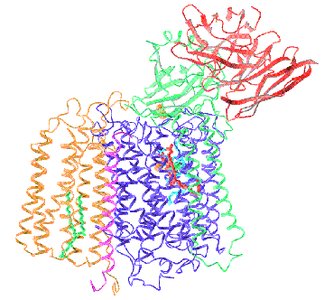
Quaternary structure involves the association of two or more polypeptide chains into a functional protein complex.
Think about examples of proteins with quaternary structure (e.g., hemoglobin).
Try solving on your own before revealing the answer!
Final Answer:
Primary structure is the sequence of amino acids. Secondary structure includes alpha helices and beta sheets formed by hydrogen bonding. Tertiary structure is the overall 3D shape of a single polypeptide. Quaternary structure is the arrangement of multiple polypeptide chains. The image above shows a protein with multiple subunits, illustrating tertiary and quaternary structure.
