 Back
General Biology Study Notes: Chapters 1–4 (Cell Theory, Chemistry of Life, Protein Structure, Nucleic Acids)
Study Guide - Smart Notes
 Tailored notes based on your materials, expanded with key definitions, examples, and context.
Biology: The Study of Life
Characteristics of Life
Biology is the scientific study of life, focusing on the properties that distinguish living organisms from nonliving matter. Living systems exhibit several key characteristics:
Cellular organization: All organisms are composed of one or more cells, which are the fundamental units of life.
Reproduction: Living organisms can produce new organisms or copies of themselves, either asexually or sexually.
Hereditary information: Genetic information is stored in DNA and influences cellular structure, metabolism, and development.
Energy processing: Organisms require energy for growth, movement, and maintenance.
Response to stimuli: Organisms respond to environmental and internal signals.
Homeostasis: Maintaining a stable internal environment.
Evolution: Populations change genetically across generations, leading to adaptation and diversity.
Cell Theory
The cell theory is foundational in biology:
All organisms are composed of cells.
The cell is the basic unit of life.
Cells arise from preexisting cells.
Key contributors include Robert Hooke (coined "cell"), Antonie van Leeuwenhoek (observed bacteria), Matthias Schleiden (plants), Theodor Schwann (animals), and Rudolf Virchow (cells from cells).
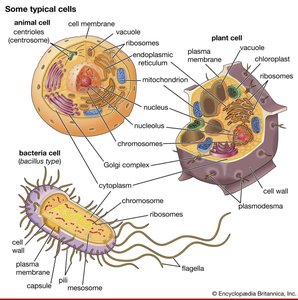
Prokaryotic vs. Eukaryotic Cells
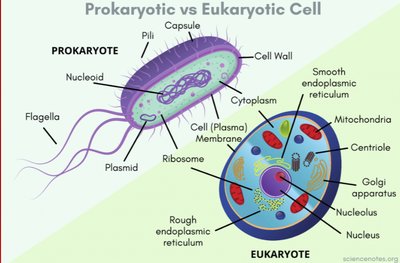
Cells are classified as prokaryotic or eukaryotic:
Prokaryotic cells: Lack a nucleus; DNA is free in the cytoplasm (nucleoid). Examples: Bacteria, Archaea.
Eukaryotic cells: Have a nucleus and membrane-bound organelles. Examples: Animals, plants, fungi, protists.
Major Domains and Kingdoms
Life is classified into three domains:
Bacteria: Prokaryotic, single-celled.
Archaea: Prokaryotic, often in extreme environments.
Eukarya: Eukaryotic, includes animals, plants, fungi, protists.
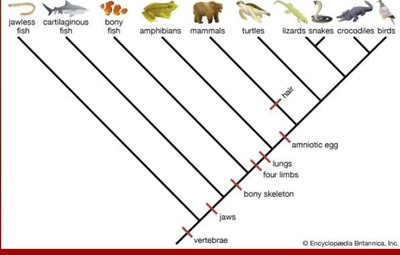
Phylogenetic Trees and Evolution
Phylogenetic trees illustrate evolutionary relationships and common ancestry. Evolution occurs through natural selection, where heritable traits that increase fitness become more common over generations.
Model Organisms
Model organisms are used to study biological processes. Examples include Ambystoma mexicanum (axolotl), Danio rerio (zebrafish), Drosophila melanogaster (fruit fly), and corn.
Viruses and Bacteriophages
Viruses are not considered alive because they lack cellular structure and cannot metabolize or reproduce independently. Bacteriophages are viruses that infect bacteria and are studied for their potential in combating antibiotic-resistant infections.
Scientific Process
Biology relies on observation, hypothesis formation, experimentation, and evidence-based reasoning.
Water and Carbon: The Chemical Basis of Life
Atoms, Elements, and Molecules
Atoms are the smallest units of elements, composed of protons, neutrons, and electrons. Four elements—carbon, hydrogen, oxygen, and nitrogen—make up most of living matter.
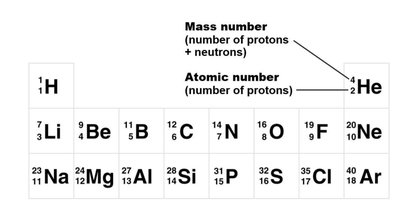
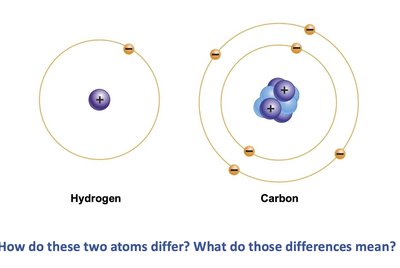
Atomic number: Number of protons.
Mass number: Protons + neutrons.
Isotopes: Same element, different number of neutrons.
Chemical Bonds
Atoms form bonds to achieve stable electron configurations:
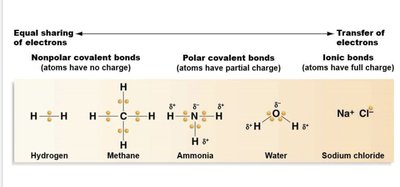
Covalent bonds: Electrons are shared. Can be polar (unequal sharing, partial charges) or nonpolar (equal sharing).
Ionic bonds: Electrons are transferred, forming charged ions (cations and anions).
Properties of Water
Water is a polar molecule, enabling hydrogen bonding and unique properties:
Cohesion: Water molecules stick to each other.
Adhesion: Water molecules stick to other surfaces.
Surface tension: Strong surface layer due to cohesion.
High specific heat: Water absorbs heat without rapid temperature change.
Solvent properties: Water dissolves many polar and ionic substances.
Acids, Bases, and Buffers
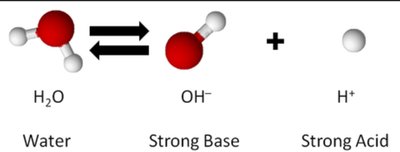
Acids increase hydrogen ion concentration; bases decrease it. Buffers help maintain stable pH, critical for homeostasis.
Carbon Chemistry
Carbon can form up to four covalent bonds, allowing for diverse molecular structures (chains, rings, branches). Organic chemistry is largely the chemistry of carbon.
Protein Structure and Function
Amino Acids and Polymerization
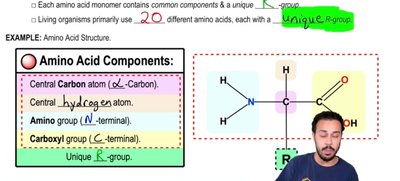
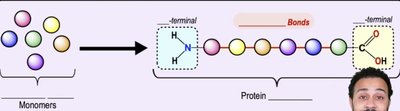
Proteins are polymers of amino acids, joined by peptide bonds. There are 20 standard amino acids, each with a unique R group (side chain) that determines its chemical properties.
Primary structure: Sequence of amino acids.
Secondary structure: Local folding (alpha helices, beta sheets) stabilized by hydrogen bonds.
Tertiary structure: Overall 3D shape, determined by interactions among R groups.
Quaternary structure: Association of multiple polypeptide chains (not all proteins have this).
Protein function depends on proper folding; denaturation disrupts function. Molecular chaperones assist in correct folding.
Protein Functions
Enzymes: Catalyze chemical reactions.
Structural proteins: Provide support (e.g., collagen, keratin).
Transport proteins: Move substances (e.g., hemoglobin).
Signaling proteins: Transmit information.
Defense proteins: Immune response (e.g., antibodies).
Nucleic Acids and the RNA World
Nucleic Acid Structure
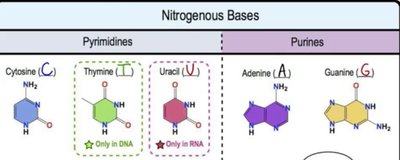
Nucleic acids (DNA and RNA) are polymers of nucleotides, each consisting of a phosphate group, a five-carbon sugar, and a nitrogenous base. DNA and RNA differ in their sugars (deoxyribose vs. ribose) and bases (DNA: A, T, C, G; RNA: A, U, C, G).
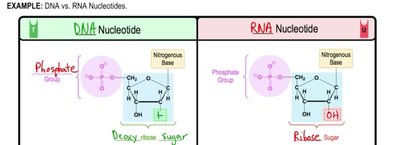
Phosphodiester bonds: Link nucleotides, forming the sugar-phosphate backbone.
Directionality: Nucleic acids have 5' and 3' ends; new nucleotides are added to the 3' end.
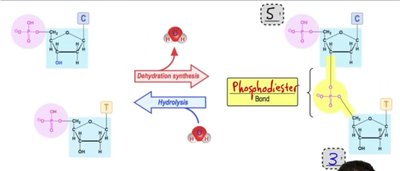
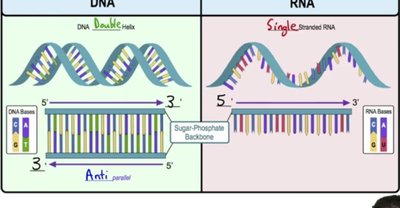
DNA vs. RNA
DNA: Double-stranded, antiparallel, stores genetic information.
RNA: Single-stranded, various functions including protein synthesis.
Central Dogma of Molecular Biology
The flow of genetic information in cells follows the central dogma:
DNA → RNA → Protein
DNA is transcribed into messenger RNA (mRNA), which is then translated into proteins.
RNA World Hypothesis
The RNA world hypothesis proposes that early life may have relied on RNA for both information storage and catalysis, preceding the evolution of DNA and proteins.
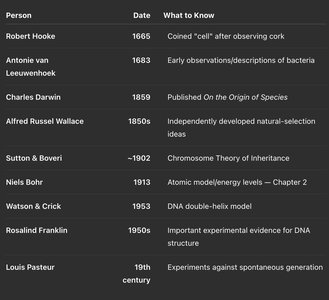
Key People and Dates
Person | Date | What to Know |
|---|---|---|
Robert Hooke | 1665 | Coined "cell" after observing cork |
Antonie van Leeuwenhoek | 1683 | Early observations/descriptions of bacteria |
Charles Darwin | 1859 | Published On the Origin of Species |
Alfred Russel Wallace | 1850s | Independently developed natural-selection ideas |
Sutton & Boveri | ~1902 | Chromosome Theory of Inheritance |
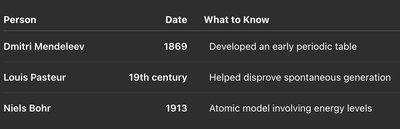
Niels Bohr | 1913 | Atomic model/energy levels |
Watson & Crick | 1953 | DNA double-helix model |
Rosalind Franklin | 1950s | Experimental evidence for DNA structure |
Louis Pasteur | 19th century | Experiments against spontaneous generation |
Dmitri Mendeleev | 1869 | Developed an early periodic table |
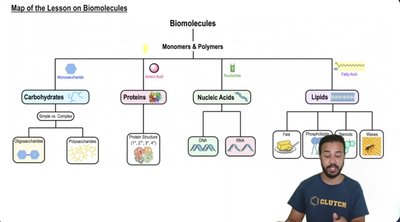
Summary of Connections
Biology integrates cellular structure, chemical principles, protein function, and genetic information. Understanding these foundational concepts is essential for further study in molecular biology, genetics, and evolution.
