 Back
General Biology Study Notes: Chemical Context of Life & Properties of Water
Study Guide - Smart Notes
 Tailored notes based on your materials, expanded with key definitions, examples, and context.
Introduction to Biology
Overview
Biology is the scientific study of life and living organisms. It encompasses a wide range of topics, from the chemical foundations of life to the complex interactions within ecosystems. Understanding biology requires knowledge of chemistry, physics, and mathematics, as these disciplines provide the basis for biological processes.
Chapter 2: Chemical Context of Life
Elements and Compounds
All living organisms are composed of matter, which consists of elements and compounds. Elements are pure substances that cannot be broken down by chemical means, while compounds are substances formed by the combination of two or more elements in fixed ratios.
Element: A substance made of only one type of atom (e.g., Oxygen, Carbon).
Compound: A substance made of two or more elements chemically combined (e.g., Water (H2O), Sodium chloride (NaCl)).
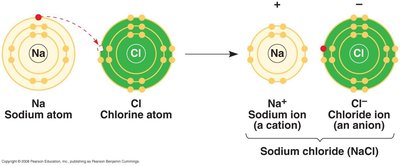
Example: Sodium (Na) and chlorine (Cl) combine to form sodium chloride (NaCl), a common table salt.

Table: Naturally Occurring Elements in the Human Body
The human body is primarily composed of a few key elements, with others present in trace amounts.
Element | Atomic Number | Percentage of Human Body Weight |
|---|---|---|
Oxygen (O) | 8 | 65.0 |
Carbon (C) | 6 | 18.5 |
Hydrogen (H) | 1 | 9.5 |
Nitrogen (N) | 7 | 3.3 |
Calcium (Ca) | 20 | 1.5 |
Phosphorus (P) | 15 | 1.0 |
Potassium (K) | 19 | 0.4 |
Sulfur (S) | 16 | 0.3 |
Sodium (Na) | 11 | 0.2 |
Chlorine (Cl) | 17 | 0.2 |
Magnesium (Mg) | 12 | 0.1 |
Matter, Mass, and Weight
Matter is anything that has mass and takes up space. Mass is the amount of matter in an object, while weight is the force of gravity acting on that object.
Mass: Measured in kilograms or grams; intrinsic property.
Weight: Measured in newtons; depends on gravity.
Example: An object has the same mass on Earth and the Moon, but its weight changes due to different gravitational forces.
Emergent Properties
Emergent properties arise when individual components interact to produce new characteristics not found in the individual parts. In biology, emergent properties are essential for understanding complex systems.
Example: Life emerges from the interaction of non-living molecules within a cell; consciousness arises from networks of neurons.
Subatomic Particles, Atomic Number, and Mass
Atoms are composed of subatomic particles: protons, neutrons, and electrons. The atomic number is the number of protons in an atom, while atomic mass is the sum of protons and neutrons.
Proton: Positively charged particle in the nucleus.
Neutron: Neutral particle in the nucleus.
Electron: Negatively charged particle orbiting the nucleus.
Atomic Number: Determines the element.
Atomic Mass:
Isotopes and Radioactive Isotopes
Isotopes are atoms of the same element with different numbers of neutrons. Some isotopes are radioactive and are used in experimental and diagnostic applications.
Radioactive Isotope: Unstable isotope that emits radiation.
Applications: Used in PET scans, cancer diagnostics, and tracing biochemical pathways.
Safety: High-energy isotopes have shorter half-lives and may pose risks with prolonged exposure.

Chemical Bonds
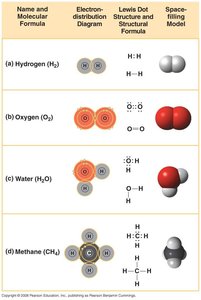
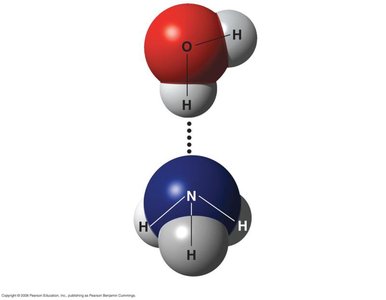
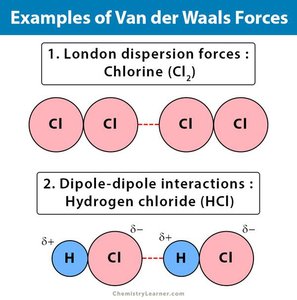
Chemical bonds are forces that hold atoms together in molecules. The strongest bonds are covalent and ionic, while weaker bonds include hydrogen and van der Waals interactions.
Covalent Bond: Atoms share electrons; strong and stable.
Ionic Bond: Atoms transfer electrons; forms charged ions.
Hydrogen Bond: Weak attraction between a hydrogen atom and an electronegative atom.
van der Waals Forces: Weak interactions due to temporary dipoles.


Molecular Mimicry
Molecular shape is crucial for biological function, especially in drug synthesis. Molecules with similar shapes can bind to the same receptors, affecting biological activity.
Example: Morphine and endorphins bind to the same brain receptors due to similar shapes, producing pain relief and euphoria.
Chapter 3: Water
Emergent Properties of Water
Water exhibits four key emergent properties that make it ideal for supporting life: adhesion and cohesion, high specific heat, ice floating on liquid water, and its role as the solvent of life.
1. Adhesion and Cohesion
Adhesion is the attraction between water molecules and other substances, while cohesion is the attraction between water molecules themselves. Cohesion creates surface tension, allowing insects to walk on water.
Adhesion: Water molecules stick to other surfaces.
Cohesion: Water molecules stick to each other.
Example: Water movement in plants relies on both adhesion and cohesion.


2. High Specific Heat/Temperature Moderation
Water has a high specific heat, meaning it can absorb or release large amounts of heat with little change in temperature. This property moderates Earth's climate and stabilizes temperatures in organisms.
Specific Heat: Amount of heat required to change the temperature of 1 g of a substance by 1°C.
Formula: (where is heat energy, is mass, is specific heat, is temperature change)
Example: Coastal regions have milder climates due to water's temperature moderation.

3. Ice Floats on Liquid Water
Ice is less dense than liquid water because hydrogen bonds stabilize in a lattice structure, making ice float. This property insulates aquatic life during cold periods.
Hydrogen Bonds: Stabilize ice, creating a less dense structure.
Example: Lakes and ponds freeze from the top down, protecting organisms below.
4. Water as the Solvent of Life
Water is a universal solvent due to its polarity. It forms hydration shells around ions and dissolves a wide range of substances, facilitating biochemical reactions.
Polarity: Oxygen is slightly negative, hydrogen is slightly positive.
Hydration Shell: Water molecules surround ions, allowing them to dissolve.
Example: Salt (NaCl) dissolves in water as Na+ and Cl- ions.
Chapter 4: Biomolecules
Carbon and Molecular Diversity
Carbon atoms form the backbone of biological molecules, allowing for diversity through different bonding, branching, and ring structures. Isomers are molecules with the same formula but different structures.
Structural Isomers: Differ in the arrangement of atoms.
Geometric Isomers: Differ in spatial arrangement around a double bond.
Enantiomers: Mirror images; non-superposable.
Biological Macromolecules
Macromolecules are large, complex molecules essential for life. They include carbohydrates, proteins, nucleic acids, and lipids.
Carbohydrates: Energy storage and structural support.
Proteins: Enzymes, structural components, signaling.
Nucleic Acids: Information storage and transfer (DNA, RNA).
Lipids: Energy storage, membrane structure, signaling.
Carbohydrates
Carbohydrates are composed of monosaccharides, which join to form disaccharides and polysaccharides. They serve as energy sources and structural components.
Monosaccharide: Simple sugar (e.g., glucose).
Disaccharide: Two monosaccharides joined by glycosidic linkage (e.g., maltose, sucrose).
Polysaccharide: Long chains for storage (starch, glycogen) or structure (cellulose).
Lipids
Lipids are hydrophobic molecules, including fats, phospholipids, and steroids. They are important for energy storage, membrane structure, and signaling.
Fats: Glycerol + fatty acids; saturated (no double bonds) or unsaturated (one or more double bonds).
Phospholipids: Form cell membranes; amphipathic.
Steroids: Four fused rings; diverse functions.
Proteins
Proteins are polymers of amino acids, with diverse functions. Their structure is organized into four levels: primary, secondary, tertiary, and quaternary.
Primary Structure: Sequence of amino acids.
Secondary Structure: α helices and β sheets stabilized by hydrogen bonds.
Tertiary Structure: 3D folding due to interactions among R groups.
Quaternary Structure: Multiple polypeptide subunits.
Chaperonins: Assist in proper protein folding.
Nucleic Acids
Nucleic acids (DNA and RNA) store and transfer genetic information. They are composed of a sugar-phosphate backbone and nitrogenous bases.
DNA: Deoxyribonucleic acid; stores genetic information.
RNA: Ribonucleic acid; involved in protein synthesis.
Bases: Purines (A, G) and pyrimidines (C, T, U).
Additional info: The sequence of bases determines gene variability and RNA forms.
----------------------------------------
