 Back
General Biology Study Notes: Chemical Context of Life, Water, and Biological Macromolecules
Study Guide - Smart Notes
 Tailored notes based on your materials, expanded with key definitions, examples, and context.
The Chemical Context of Life
Chemical Bonds
Chemical bonds are the forces that hold atoms together in molecules and compounds. Understanding these bonds is fundamental to biology, as they determine the structure and function of biological molecules.
Covalent Bonds: Atoms share electrons to achieve stability. These are strong bonds found in most biological molecules.
Ionic Bonds: Atoms transfer electrons, resulting in charged ions that attract each other. Ionic bonds are important in salts and cellular signaling.
Hydrogen Bonds: Weak attractions between a hydrogen atom (attached to an electronegative atom like oxygen or nitrogen) and another electronegative atom. Hydrogen bonds are crucial for the properties of water and the structure of DNA.
Van der Waals Interactions: Weak, transient attractions between molecules due to temporary dipoles. These help stabilize large biological molecules.
Example: Water molecules are held together by polar covalent bonds, and interact via hydrogen bonds.
Water and Life
Structure of Water Molecules
Water molecules (H2O) are formed from polar covalent bonds between hydrogen and oxygen atoms. The polarity of water leads to hydrogen bonding between molecules, which is responsible for many of water's unique properties.
Polar Covalent Bonds: Oxygen is more electronegative than hydrogen, creating a partial negative charge (δ−) on oxygen and partial positive charges (δ+) on hydrogens.
Hydrogen Bonds: Each water molecule can form up to four hydrogen bonds—two as a donor (hydrogen atoms) and two as an acceptor (lone pairs on oxygen).
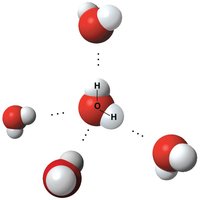
Example: Hydrogen bonds between water molecules are responsible for water's high cohesion and surface tension.
Emergent Properties of Water
Interactions among water molecules give rise to emergent properties that are essential for life on Earth. These properties are primarily due to hydrogen bonding.
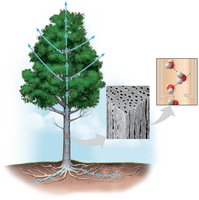
Cohesive Behavior: Water molecules stick together, enabling transport in plants and creating surface tension.
Ability to Moderate Temperature: Water absorbs and releases heat slowly, stabilizing environmental and biological temperatures.
Versatility as a Solvent: Water dissolves a wide range of substances, facilitating biochemical reactions.
Expansion upon Freezing: Water forms a crystalline structure in ice, making it less dense than liquid water.
Cohesive Behavior
Cohesion refers to the attraction between water molecules, which is critical for processes like water transport in plants.
Adhesion: Water molecules also stick to other surfaces, aiding capillary action.
Surface Tension: The cohesive forces at the surface of water create a 'skin' that allows small organisms to walk on water.

Ability to Moderate Temperature
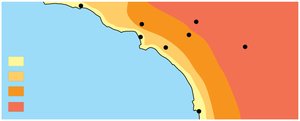
Water's high specific heat allows it to absorb and release large amounts of heat with minimal temperature change. This property is vital for maintaining stable climates and internal body temperatures.
Heat Absorption: Energy is absorbed when hydrogen bonds break (e.g., during evaporation).
Heat Release: Energy is released when hydrogen bonds form (e.g., during condensation).
Versatility as a Solvent
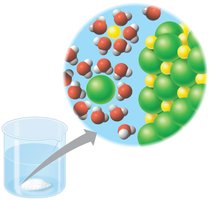
Water's polarity enables it to dissolve ionic and polar substances, forming hydration shells around ions and molecules.
Hydrophilic Substances: These are attracted to water and dissolve easily.
Hydrophobic Substances: These repel water and do not dissolve.
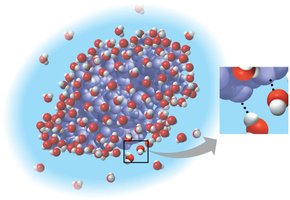
Expansion upon Freezing
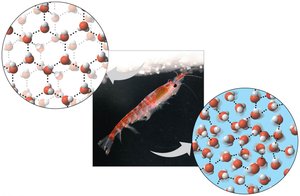
When water freezes, hydrogen bonds stabilize, forming a lattice structure that makes ice less dense than liquid water. This allows ice to float, insulating aquatic life below.
Liquid Water: Hydrogen bonds constantly break and reform.
Ice: Hydrogen bonds are stable, creating open spaces in the structure.
The Structure and Function of Large Biological Molecules
Biological Macromolecules
Macromolecules are large, complex molecules essential for life. They include carbohydrates, lipids, proteins, and nucleic acids. Each type has unique structures and functions.
Carbohydrates: Serve as energy sources and structural materials.
Lipids: Store energy, form membranes, and act as signaling molecules.
Proteins: Perform a wide range of functions, including catalysis, transport, and structural support.
Nucleic Acids: Store and transmit genetic information.
Lipids
Lipids are hydrophobic molecules, including fats, phospholipids, and steroids.
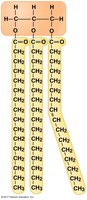
Fats (Triglycerides): Consist of three fatty acids linked to glycerol. Used for energy storage.
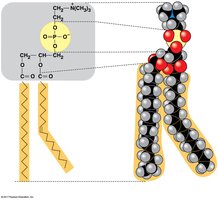
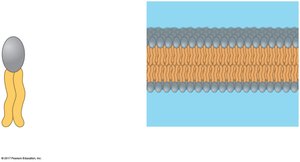
Phospholipids: Have hydrophilic heads and hydrophobic tails, forming cell membranes.
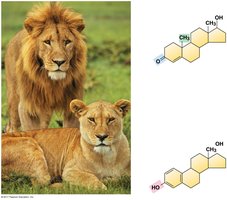
Steroids: Include signaling molecules like hormones.
Polymers: Synthesis and Breakdown
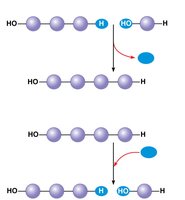
Macromolecules are often polymers, made by linking monomers through dehydration reactions and broken down by hydrolysis.
Dehydration Reaction: Removes water to form a new bond between monomers.
Hydrolysis: Adds water to break a bond between monomers.
Carbohydrates
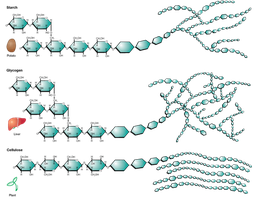
Carbohydrates include monosaccharides, disaccharides, and polysaccharides. They are important for energy and structure.
Monosaccharides: Simple sugars like glucose.
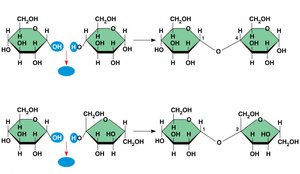
Disaccharides: Two monosaccharides joined by glycosidic linkage (e.g., maltose, sucrose).
Polysaccharides: Long chains of monosaccharides (e.g., starch, glycogen, cellulose).
Nucleic Acids
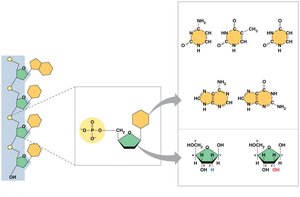
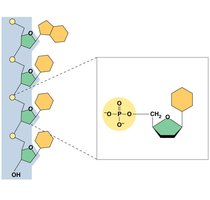
Nucleic acids (DNA and RNA) are polymers of nucleotides. They store and transmit genetic information.
Nucleotide: Composed of a sugar, phosphate group, and nitrogenous base.
DNA vs. RNA: DNA contains deoxyribose and thymine; RNA contains ribose and uracil.
Phosphodiester Bonds: Link nucleotides in a chain.
Proteins: Structure and Function
Proteins are polymers of amino acids, performing diverse functions in cells. Their function depends on their structure, which is organized into four levels.
Primary Structure: Unique sequence of amino acids.
Secondary Structure: Coils and folds (α-helix, β-sheet) stabilized by hydrogen bonds.
Tertiary Structure: Three-dimensional shape determined by interactions among side chains.
Quaternary Structure: Association of multiple polypeptide chains.
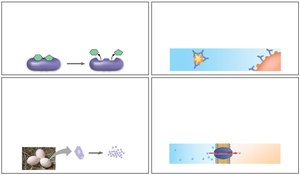
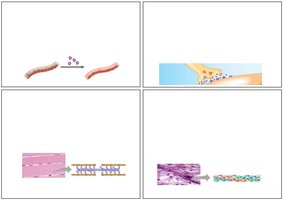
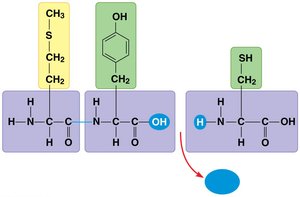
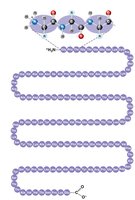
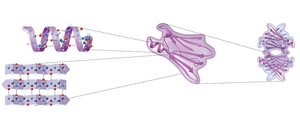
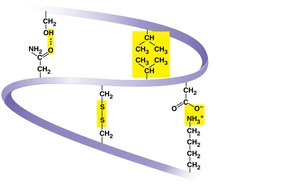
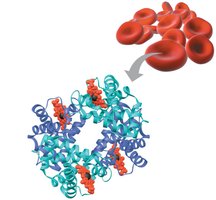
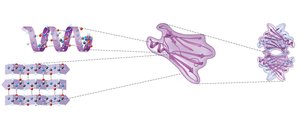
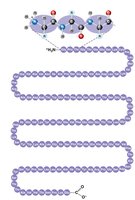
Example: The function of an enzyme depends on its precise amino acid sequence and three-dimensional structure.
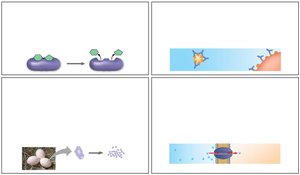
Protein Function | Example |
|---|---|
Enzymatic | Digestive enzymes |
Storage | Casein, ovalbumin |
Defensive | Antibodies |
Transport | Hemoglobin |
Hormonal | Insulin |
Receptor | Membrane receptors |
Contractile/Motor | Actin, myosin |
Structural | Keratin, collagen |
Additional info: Protein structure is hierarchical, and the primary structure (amino acid sequence) determines all higher levels of structure and ultimately the protein's function.
