 Back
General Biology Study Notes: Evolution, Population Genetics, Classification, and Protists
Study Guide - Smart Notes
 Tailored notes based on your materials, expanded with key definitions, examples, and context.
Evolution: Evidence and Trends
Introduction to Evolution
Evolution is the process by which living organisms change over time, forming the foundation of biological study. Charles Darwin's theory of evolution by natural selection explains how populations change in response to environmental pressures, leading to differential reproductive success. Adaptations are inherited traits that enhance survival and reproduction in specific environments. Evolution occurs at the population level, not the individual level.
Comparative Anatomical Evidence
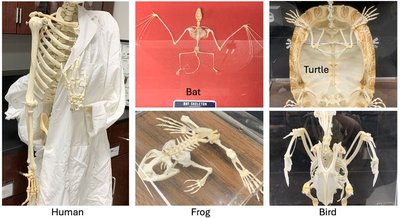
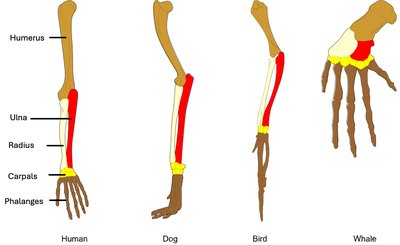
Comparative anatomy provides evidence for evolution through the presence of homologous structures—features shared by related organisms due to common ancestry. Homologous structures may differ in function but share a similar underlying anatomy, such as the forelimbs of humans, bats, turtles, frogs, and birds.
Homologous Structures: Anatomical features inherited from a common ancestor.
Examples: Forelimbs in vertebrates (human, bat, turtle, frog, bird).
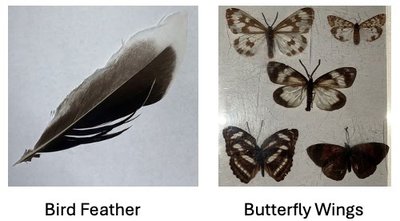
Analogous Structures: Features with similar functions but different evolutionary origins, resulting from convergent evolution (e.g., bird feathers and butterfly wings).
Comparative Embryology
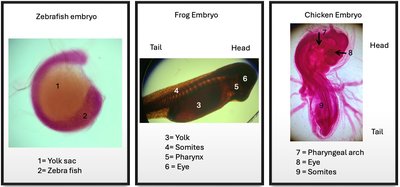
Embryonic development reveals homologous structures that may not be visible in adult organisms. Vertebrate embryos (zebrafish, frog, chicken) share features such as pharyngeal arches, somites, and yolk sacs, indicating common ancestry.
Pharyngeal Arches: Develop into gills in aquatic vertebrates or parts of the inner ear in terrestrial vertebrates.
Somites: Repetitive muscular elements along the dorsal side.
Fossil Evidence
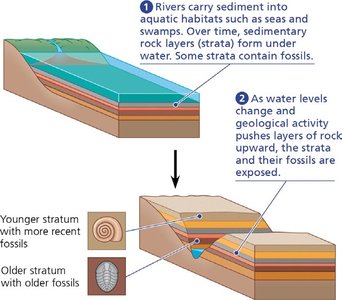
Fossils are preserved remnants of organisms found in sedimentary rock layers (strata). The fossil record documents macroevolutionary changes and extinction events, providing insight into the history of life on Earth.
Types of Fossils: Complete fossils (entire organism), part fossils (e.g., bones), trace fossils (tracks, burrows).
Relative Dating: Determining the age of fossils based on their position in strata.
Radiometric Dating: Using radioactive decay to date fossils.
Population Genetics and Hardy-Weinberg Equilibrium
Allele Frequencies and Gene Pool
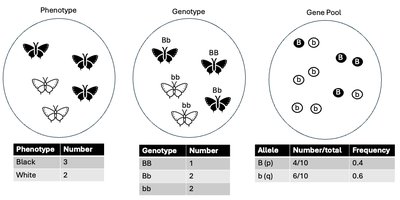
Population genetics studies the genetic composition of populations and how allele frequencies change over time (microevolution). The gene pool includes all alleles present in a population. Allele frequency is calculated as the proportion of a specific allele among all alleles for a gene.
Allele Frequency Equation: Frequency of dominant allele (p), frequency of recessive allele (q).
Genetic Drift: Random changes in allele frequencies, especially in small populations.
Hardy-Weinberg Equilibrium
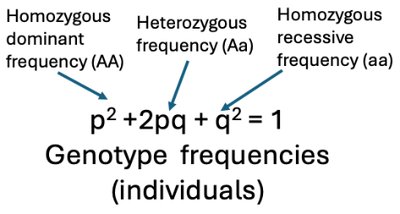
The Hardy-Weinberg principle describes the expected genotype frequencies in a non-evolving population. Five conditions must be met: no mutations, random mating, no natural selection, large population size, and no gene flow.
Equation:
p2: Frequency of homozygous dominant genotype
2pq: Frequency of heterozygous genotype
q2: Frequency of homozygous recessive genotype
Classification and Phylogenetic Relationships
Taxonomy and Binomial Nomenclature
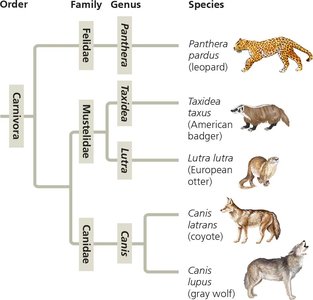
Classification organizes organisms based on shared ancestry and evolutionary relationships. Binomial nomenclature uses genus and species names (italicized, genus capitalized) to uniquely identify organisms.
Taxonomic Hierarchy: Domain, Kingdom, Phylum, Class, Order, Family, Genus, Species.
Domains: Archaea, Bacteria, Eukarya.
Phylogenetic Trees and Cladistics
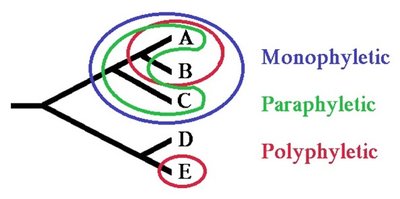
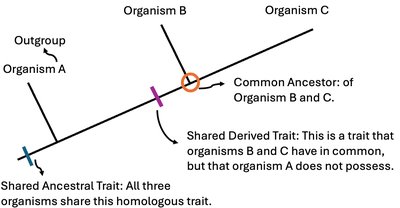
Phylogenetic trees (cladograms) represent evolutionary relationships. Cladistics classifies organisms based on shared ancestry and homologous traits.
Monophyletic Group: Includes a common ancestor and all descendants.
Paraphyletic Group: Includes a common ancestor and some descendants.
Polyphyletic Group: Includes distantly related species without a recent common ancestor.
Outgroup: A distantly related organism used to root the tree.
Protists: Diversity and Classification
Domain Eukarya and Protist Supergroups
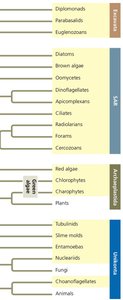
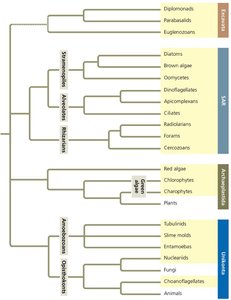
Protists are diverse eukaryotic organisms classified into supergroups: Excavata, SAR, Archaeplastida, and Unikonta. They exhibit various modes of nutrition (autotrophic, heterotrophic, mixotrophic) and ecological roles.
Excavata: Includes diplomonads (Giardia), parabasalids (Trichonympha), kinetoplasts (Trypanosoma), euglenids (Euglena).
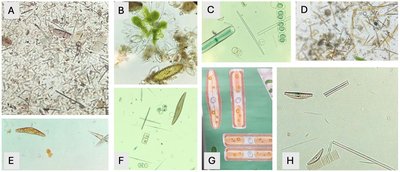
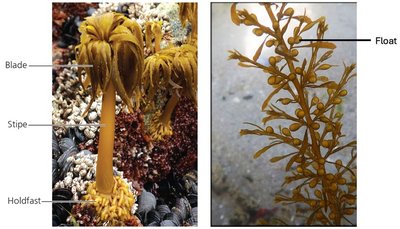
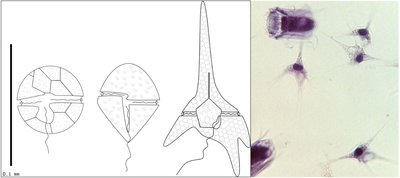
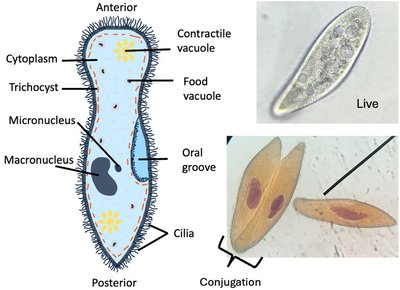
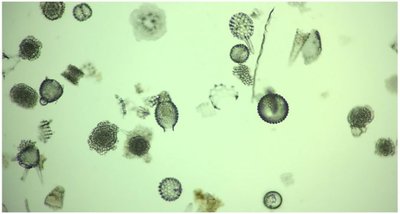
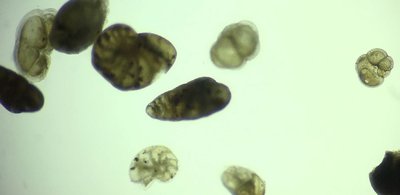
SAR: Includes diatoms, brown algae, oomycetes, dinoflagellates, apicomplexans, ciliates, radiolarians, forams.
Archaeplastida: Includes red algae (Polysiphonia), green algae (Volvox, Spirogyra).
Unikonta: Includes amoebozoans (Amoeba, slime molds, Entamoeba).
Excavata: Key Protists
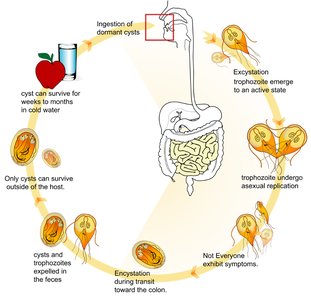
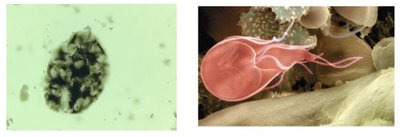
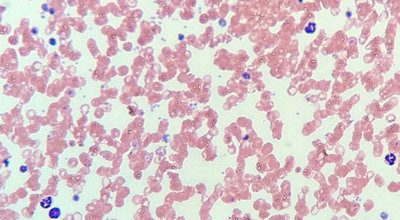
Giardia: Diplomonad, heterotrophic parasite causing giardiasis. Exists in motile and cyst forms.
Trichonympha: Parabasalid, termite symbiont, digests cellulose.
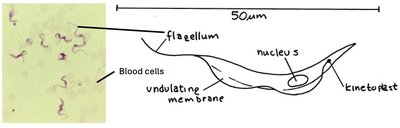
Trypanosoma: Kinetoplast, heterotrophic parasite causing diseases like sleeping sickness.
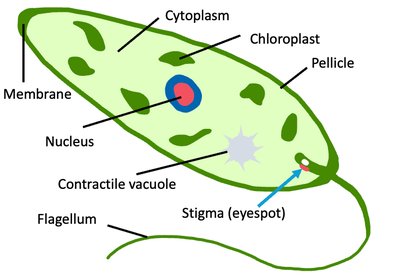
Euglena: Euglenid, mixotroph, contains chloroplasts, pellicle, stigma (eyespot), contractile vacuole.
Alternation of Generations
Life Cycle in Plants and Algae
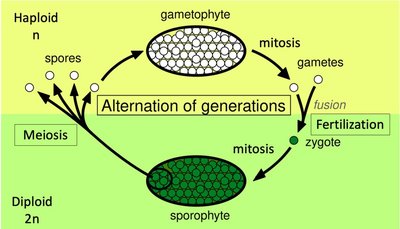
Alternation of generations is a life cycle alternating between multicellular haploid (gametophyte) and multicellular diploid (sporophyte) forms. Gametophytes produce gametes by mitosis; sporophytes produce spores by meiosis. Fertilization forms a diploid zygote, which grows into a sporophyte.
Gametophyte: Haploid, produces gametes.
Sporophyte: Diploid, produces spores.
Meiosis: Produces haploid spores.
Mitosis: Produces gametes and growth of zygote.
Plant Anatomy: Cells, Tissues, and Organs
Plant Cell Types
Parenchyma: Thin, flexible cell walls, metabolic functions, can differentiate.
Collenchyma: Unevenly thickened cell walls, flexible support for growing plants.
Sclerenchyma: Thick secondary cell walls with lignin, rigid, often dead at maturity.
Tracheids and Vessel Elements: Xylem tissue, transport water, dead at maturity.
Sieve Tube Elements and Companion Cells: Phloem tissue, transport organic materials, alive at maturity.
Guard Cells: Surround stomata, regulate gas exchange and water loss.
Apical Meristems and Primary Growth
Apical meristems are regions of undifferentiated cells at the tips of roots and shoots, responsible for primary growth. They give rise to three primary meristems: protoderm (dermal tissue), procambium (vascular tissue), and ground meristem (ground tissue).
Plant Organs: Roots, Stems, and Leaves
Roots: Anchor plant, absorb water/minerals, prevent erosion. Monocots have fibrous roots; eudicots have taproots. Adaptations include prop roots, storage roots, pneumatophores, aerial roots.
Stems: Support leaves/flowers, transport nutrients. Adaptations include rhizomes, stolons/runners, tubers, corms, thorns.
Leaves: Primary photosynthetic organ. Monocots have parallel veins; eudicots have branched veins. Adaptations include storage leaves, spines, tendrils, bracts, plantlets. Simple leaves have a single blade; compound leaves have multiple leaflets (pinnate or palmate).
Additional info: These study notes expand on brief points from the original materials, providing definitions, examples, and academic context for each topic. All images included are directly relevant to the explanations and reinforce key concepts.
