 Back
General Biology Study Notes: Foundations, Chemistry, Water, and Biomolecules
Study Guide - Smart Notes
 Tailored notes based on your materials, expanded with key definitions, examples, and context.
Evolution, Themes of Biology, and Scientific Inquiry
Major Themes in Biology
Biology is organized around recurring themes that help explain the complexity and diversity of life. - Organization: Life is structured in a hierarchy, from molecules to ecosystems. Example: Ecosystems consist of interacting organisms and their environment. - Information: Genetic information is transmitted and expressed, determining traits. Example: DNA inheritance determines offspring characteristics. - Energy & Matter: Life depends on the transformation and transfer of energy and matter. Example: Photosynthesis converts sunlight into chemical energy. - Interactions: Biological systems involve constant interactions. Example: Plants and animals exchange gases through photosynthesis and respiration. - Evolution: Unity and diversity of life arise from evolutionary processes. Example: Giraffes and hummingbirds share skeletal organization despite differences.
Emergent Properties
Emergent properties arise from interactions among components at lower levels of organization. - Example: Photosynthesis is possible only when chlorophyll is organized within chloroplasts, cells, and tissues.
Cell Types
- Prokaryotic cells: Lack a nucleus, less complex. - Eukaryotic cells: Have a nucleus, more complex.
Gene Expression: DNA to Protein
Gene expression involves transcription and translation, converting DNA information into proteins. - Transcription: RNA polymerase reads DNA and synthesizes mRNA. - Translation: Ribosomes (small and large subunits) read mRNA; tRNA brings amino acids to build proteins. - Start codon: Signals where translation begins.
Energy vs. Chemical Movement in Ecosystems
- Energy: Flows in one direction. - Chemicals: Cycle and are recycled.
Roles in Ecosystems
- Producers: Photosynthetic organisms. - Consumers: Eat other organisms. - Decomposers: Break down organic matter, recycle chemicals.
Symbiosis Types
- Mutualism: Both benefit (e.g., pollinators and plants). - Commensalism: One benefits, other unaffected (e.g., viceroy and monarch butterflies). - Parasitism: One benefits, other harmed (e.g., cockroach and wasp). - Predation: One kills and eats another (e.g., lion and zebra).
Feedback Regulation
- Negative feedback: Reduces stimulus (e.g., insulin signaling). - Positive feedback: Amplifies stimulus (e.g., blood clotting).
Evolution as Core Theme
Evolution explains both unity and diversity among organisms. - Classification: Three domains: Bacteria (unicellular prokaryotes), Archaea (unicellular prokaryotes), Eukarya (eukaryotes: Plantae, Fungi, Animalia, Protists).
Natural Selection
Natural selection favors traits that enhance survival and reproduction. - Example: Darker beetles survive better on dark soil due to genetic variation.
Scientific Inquiry
- Falsifiability: Essential for hypothesis testing. - Controlled experiments: Control group (no test factor), experimental group (test factor), dependent variable (measured), independent variable (changed). - Scientific hypothesis: Specific, testable prediction. - Scientific theory: Broad explanation supported by evidence.
The Chemical Context of Life
Atoms, Elements, and Compounds
- Atom: Smallest unit of matter. - Element: Cannot be broken down chemically. - Compound: Two or more elements in fixed ratio.
Emergent Properties of Compounds
- Example: Sodium and chlorine form edible table salt (sodium chloride).
Essential Elements
- Oxygen, carbon, hydrogen, nitrogen: Make up 96.3% of cells. - Trace elements: Needed in minute quantities (e.g., iron, iodine).
Subatomic Particles
Particle | Charge | Location | Atomic Mass |
|---|---|---|---|
Electron | Negative | Electron cloud | Negligible |
Proton | Positive | Nucleus | 1.7 x 10⁻²⁴ g |
Neutron | Neutral | Nucleus | 1.7 x 10⁻²⁴ g |
Atomic Number vs. Atomic Mass
- Atomic number: Number of protons (and electrons in neutral atom). - Atomic mass: Protons + neutrons.
Isotopes and Radioactive Isotopes
- Isotope: Same element, different neutrons. - Radioactive isotope: Nucleus decays, emits energy.
Radioisotopes in Research and Medicine
Used as tracers, diagnostic tools, and in imaging (e.g., PET scans).
Radiometric Dating
Measures radioactive decay to estimate fossil age. - Half-life: Time for half of parent isotope to decay.
Electron Orbitals and Energy
Electrons absorb energy and move to higher levels.
Valence Electrons and Periodic Table
Valence electrons determine element placement and chemical behavior.
Chemical Bonds
- Covalent bonds: Strongest, share electrons. - Ionic bonds: Attraction between cation and anion. - Hydrogen bonds: Weak, between hydrogen and electronegative atom. - Van der Waals interactions: Weak, due to temporary charge differences.
Bond Strength Order
Covalent > Ionic > Hydrogen > Van der Waals
Molecular Shape
Crucial for molecular recognition and function.
Chemical Reactions and Conservation of Matter
Atoms are rearranged, not created or destroyed.
Chemical Equilibrium
Forward and reverse reactions occur at equal rates.
Water and Life
Polarity and Hydrogen Bonding in Water
Water is a polar molecule due to unequal electronegativity between oxygen and hydrogen. - Bond within water molecule: Polar covalent. - Bond between water molecules: Hydrogen bond. 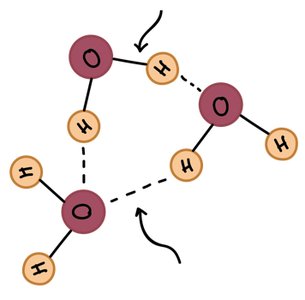
Emergent Properties of Water
Property | Description |
|---|---|
Cohesion | Hydrogen bonds hold water molecules together |
Adhesion | Water clings to other substances |
Surface tension | Hard to break water surface |
High specific heat | Large heat needed to change temperature |
High heat of vaporization | Large heat needed to vaporize water |
Low density of ice | Ice expands, floats on water |
Versatile solvent | Dissolves many substances |
pH/Ionization | Water ionizes spontaneously |
High Specific Heat and Temperature Moderation
Water's high specific heat allows it to moderate temperature, changing slowly and keeping environments stable.
Evaporative Cooling
- Lakes and ponds: Evaporation stabilizes temperature. - Terrestrial organisms: Sweat and saliva evaporation cools the body.
Density of Ice vs. Liquid Water
Water expands when it freezes, making ice less dense and able to float.
Dissolving Ionic and Polar Substances
Water dissolves ionic substances (e.g., salt) by attracting cations and anions, and polar substances (e.g., sugar) by interacting with their charged regions.
Hydrophilic vs. Hydrophobic Substances
- Hydrophilic: Affinity for water (e.g., cotton). - Hydrophobic: Repel water (e.g., vegetable oil).
Acids, Bases, and pH
- Acid: Increases H+ concentration. - Base: Reduces H+ concentration. - pH scale: Measures negative logarithm of H+ concentration.
Ionization of Water
Water dissociates into hydronium (H3O+) and hydroxide (OH-) ions. 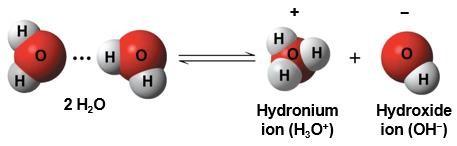
Acidic vs. Basic Solutions
- Acidic: More H+ than OH-, pH < 7. - Basic: More OH- than H+, pH > 7.
Logarithmic Nature of pH
Each unit change is a 10x change in ion concentration.
Buffers and pH Moderation
Buffers accept or donate H+ ions to maintain pH stability.
CO2 and Ocean Acidification
CO2 dissolves in seawater, forms carbonic acid, lowers pH, and affects marine life.
Carbon and Molecular Diversity of Life
Miller-Urey Experiment
Simulated early Earth conditions to test abiotic synthesis of organic molecules. 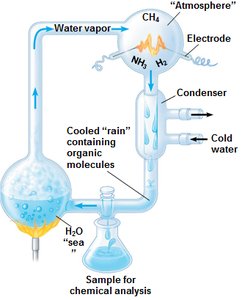
Carbon Bonding and Diversity
Carbon forms single and double covalent bonds, enabling complex molecules.
Hydrocarbons and Isomers
- Hydrocarbons: Only carbon and hydrogen, hydrophobic, energy-rich. - Isomers: Same formula, different structure. - Structural isomers: Different covalent arrangements. - Cis-trans isomers: Same bonds, different spatial arrangement. - Enantiomers: Mirror images, important in pharmaceuticals.
Functional Groups
Functional groups are directly involved in chemical reactions and determine properties of organic compounds.
ATP Structure and Function
ATP stores and releases energy during cellular reactions.
Structure and Function of Large Biological Molecules
Macromolecules, Monomers, and Polymers
- Macromolecule: Large chain-like polymer (carbohydrates, proteins, nucleic acids). - Monomer: Repeating unit, building block. - Polymer: Long molecule of covalently bonded monomers.
Dehydration Synthesis and Hydrolysis
- Dehydration synthesis: Joins monomers, releases water. - Hydrolysis: Breaks polymers, adds water.
Carbohydrates
- Monosaccharides: Simple sugars, basic unit. - Disaccharides: Two monosaccharides joined by glycosidic linkage. - Polysaccharides: Hundreds to thousands of monosaccharides.
Polymer | Structure | Function | Location |
|---|---|---|---|
Starch | Branched/unbranched | Energy storage | Plants |
Glycogen | Branched | Energy storage | Animals (liver, muscle) |
Cellulose | Unbranched | Structural support | Plant cell walls |
Chitin | Unbranched | Structural support | Arthropod exoskeletons |
Digestion of Cellulose
Only organisms with cellulose-digesting prokaryotes/protists can digest cellulose.
Lipids
- Structure: Mostly hydrocarbon regions, nonpolar. - Types: Fats, waxes, oils, phospholipids, steroids. - Characteristic: Hydrophobic. - Not polymers: No repeating subunits.
Triglycerides
Formed by dehydration reaction between fatty acids and glycerol (ester linkage).
Fats vs. Oils
- Fats: Saturated, solid at room temperature. - Oils: Unsaturated, liquid at room temperature.
Functions of Fats
Energy storage, cell membrane structure, hormone production, insulation/protection.
Phospholipids and Bilayer Formation
Amphipathic nature leads to bilayer formation, hydrophilic heads outward, hydrophobic tails inward.
Proteins
- Structure: One or more polypeptides folded in 3D shape. - Monomers: Amino acids. 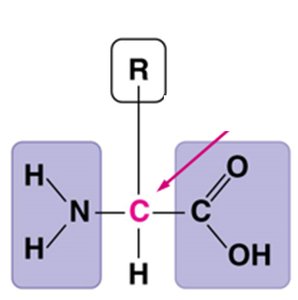
Peptide Bond Formation
Dehydration reaction between carboxyl and amino groups forms peptide bond (dipeptide).
Levels of Protein Structure
- Primary: Sequence of amino acids. - Secondary: Coiling/folding (hydrogen bonds). - Tertiary: Overall shape (side chain interactions). - Quaternary: Aggregation of polypeptide subunits.
Environmental Effects on Proteins
Temperature, pH, and salt concentration can cause denaturation (loss of shape/function).
Chaperonins
Provide safe environment for proper protein folding.
Nucleic Acids
- Role: DNA and RNA enable gene expression and inheritance. - Monomers: Nucleotides. 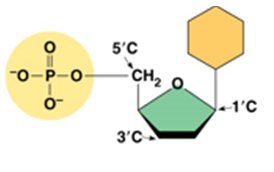
DNA vs. RNA
- DNA: Deoxyribose, thymine, double-stranded helix. - RNA: Ribose, uracil, single-stranded helix. Example: DNA stores genetic information; RNA transmits and translates it for protein synthesis. ----------------------------------------
