 Back
General Biology Study Notes: Water, Carbon, Proteins, Nucleic Acids, Carbohydrates, and Lipids
Study Guide - Smart Notes
 Tailored notes based on your materials, expanded with key definitions, examples, and context.
Ch. 2 - Water & Carbon: The Chemical Basis of Life
Atoms, Elements, and Bonds
Understanding the chemical basis of life begins with atoms, elements, and the types of bonds they form. These concepts are foundational for all biological molecules and processes.
Atom: The smallest unit of an element, consisting of protons, neutrons, and electrons.
Element: A substance that cannot be broken down into simpler substances by chemical means.
Isotope: Atoms of the same element with different numbers of neutrons.
Valence: The number of unpaired electrons in the outer shell, determining bonding capacity.
Covalent Bond: A chemical bond formed by the sharing of electron pairs between atoms.
Electronegativity: The ability of an atom to attract electrons in a covalent bond. Oxygen is highly electronegative.
Polar Covalent Bond: Electrons are shared unequally, resulting in partial charges (e.g., in H2O).
Nonpolar Covalent Bond: Electrons are shared equally (e.g., in O2 or CH4).
Ionic Bond: Electrons are transferred from one atom to another, creating ions (e.g., NaCl).
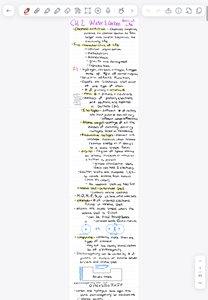
Properties of Water
Water is essential for life due to its unique chemical and physical properties, which arise from its polarity and ability to form hydrogen bonds.
Polarity: Water molecules have partial positive (H) and negative (O) charges, making them polar.
Hydrogen Bond: A weak bond between the partially positive hydrogen of one water molecule and the partially negative oxygen of another.
Cohesion: Water molecules stick to each other, contributing to surface tension.
Adhesion: Water molecules stick to other polar substances.
High Specific Heat: Water resists temperature changes due to hydrogen bonding.
High Heat of Vaporization: Large amounts of energy are required to convert water from liquid to gas.
Density: Ice is less dense than liquid water because hydrogen bonds form a lattice structure.
Solvent Properties: Water dissolves many substances due to its polarity, making it the "universal solvent." Hydrophilic substances dissolve easily; hydrophobic substances do not.
Acids, Bases, and pH
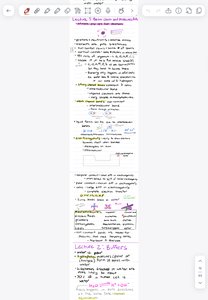
Acids and bases are important in biological systems for maintaining pH balance, which is crucial for enzyme function and cellular processes.
Acid: A substance that donates protons (H+).
Base: A substance that accepts protons (H+).
pH Scale: Measures the concentration of H+ ions in solution. Defined as .
Buffers: Substances that minimize changes in pH by accepting or donating H+ ions.
Ch. 3 - Protein Structure and Function
Amino Acids and Peptide Bonds
Proteins are polymers of amino acids, which are linked by peptide bonds. The sequence and properties of amino acids determine protein structure and function.
Amino Acid: Organic molecule with a central carbon, amino group, carboxyl group, hydrogen, and R group (side chain).
Peptide Bond: Covalent bond formed between the carboxyl group of one amino acid and the amino group of another via a condensation reaction.
Polypeptide: A chain of amino acids linked by peptide bonds.
Levels of Protein Structure
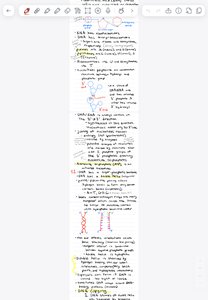
Protein function depends on its structure, which is organized into four levels: primary, secondary, tertiary, and quaternary.
Primary Structure: The unique sequence of amino acids in a polypeptide.
Secondary Structure: Local folding into alpha-helices and beta-pleated sheets, stabilized by hydrogen bonds.
Tertiary Structure: Overall 3D shape of a polypeptide, stabilized by interactions among R groups.
Quaternary Structure: Association of multiple polypeptide subunits.
Ch. 4 - Nucleic Acids and the RNA World
Nucleotides and Nucleic Acids
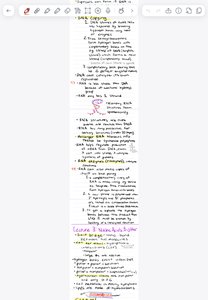
Nucleic acids (DNA and RNA) are polymers of nucleotides, which store and transmit genetic information.
Nucleotide: Consists of a phosphate group, a five-carbon sugar (ribose or deoxyribose), and a nitrogenous base.
Phosphodiester Bond: Covalent bond linking nucleotides between the phosphate group of one and the sugar of another.
DNA: Double-stranded helix, stores genetic information.
RNA: Single-stranded, involved in protein synthesis and gene regulation.
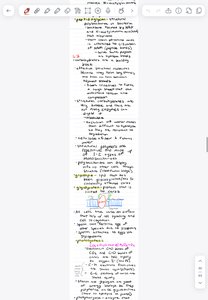
The RNA World Hypothesis
The RNA world hypothesis suggests that RNA was the first genetic material, capable of both storing information and catalyzing reactions.
Ribozymes: RNA molecules with catalytic activity.
Self-replication: RNA can serve as a template for its own synthesis.
Ch. 5 - An Introduction to Carbohydrates
Monosaccharides and Polysaccharides
Carbohydrates are essential biomolecules that serve as energy sources and structural components. They are classified based on the number of sugar units.
Monosaccharide: Simple sugar (e.g., glucose, fructose).
Disaccharide: Two monosaccharides linked by a glycosidic bond (e.g., sucrose).
Polysaccharide: Many monosaccharides linked together (e.g., starch, glycogen, cellulose).
Glycosidic Bond: Covalent bond joining carbohydrate molecules.
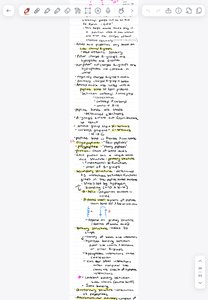
Functions of Carbohydrates
Energy Storage: Starch (plants) and glycogen (animals) store energy.
Structural Support: Cellulose (plants) and chitin (fungi, arthropods) provide structural integrity.
Cell Recognition: Oligosaccharides on cell surfaces are involved in cell-cell recognition and signaling.
Ch. 6 - Lipids, Membranes, and the First Cells
Types and Properties of Lipids
Lipids are hydrophobic molecules that play key roles in energy storage, membrane structure, and signaling.
Fats (Triglycerides): Composed of glycerol and three fatty acids; used for energy storage.
Phospholipids: Major component of cell membranes; have hydrophilic heads and hydrophobic tails, forming bilayers.
Steroids: Lipids with a four-ring structure (e.g., cholesterol, hormones).
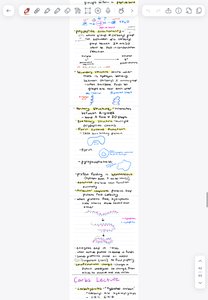
Biological Membranes
Selective Permeability: Phospholipid bilayers allow some substances to pass while blocking others.
Fluid Mosaic Model: Membranes are dynamic, with proteins and lipids moving laterally within the layer.
Additional info:
Some diagrams and tables were inferred for clarity and completeness based on standard biology textbooks.
All equations are provided in LaTeX format as required.
