 Back
General Biology Unit 1: Foundations of Life, Chemistry, and Macromolecules
Study Guide - Smart Notes
 Tailored notes based on your materials, expanded with key definitions, examples, and context.
Characteristics of Life
Defining Biology and Life
Biology is the scientific study of life, encompassing the vast diversity of living organisms. All living organisms share several fundamental characteristics:
Organization: Life is organized from molecules to cells, tissues, organs, and organ systems. The cell is the basic functional unit of life.
Energy Use: Organisms acquire and use energy, such as plants converting solar energy to chemical energy, which is then consumed by animals.
Homeostasis: The ability to maintain a stable internal environment, such as humans regulating body temperature through sweating and shivering.
Reproduction: Organisms reproduce either asexually (cloning) or sexually (combining genetic material for diversity).
Evolution: Populations evolve over time through genetic changes, leading to adaptation and diversity.
The Chemical Context of Life
Atoms and Elements
Chemistry is central to understanding biological processes.
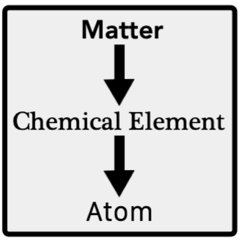
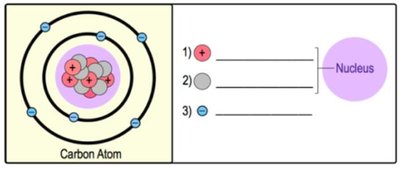
Atom: The smallest unit of matter, composed of protons (positive), neutrons (neutral), and electrons (negative).
Element: A substance that cannot be broken down by chemical reactions. Defined by its atomic number (number of protons).
Matter: Anything that occupies space and has mass.
Subatomic Particles
Proton: Positive charge, found in the nucleus.
Neutron: Neutral charge, found in the nucleus.
Electron: Negative charge, orbits the nucleus.
Isotopes
Isotopes are atoms of the same element with different numbers of neutrons. For example, carbon has three isotopes:
Carbon-12: 6 protons, 6 neutrons
Carbon-13: 6 protons, 7 neutrons
Carbon-14: 6 protons, 8 neutrons (radioactive)
Radioactive isotopes decay spontaneously, emitting energy and particles. They are used in medical diagnostics, such as PET scans.
Chemical Bonding
Types of Chemical Bonds
Atoms form bonds to achieve stability in their valence shells. The main types of bonds are:
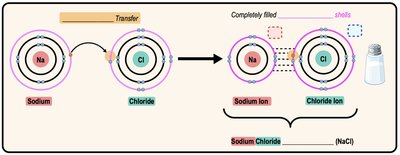
Ionic Bonds: Formed by the transfer of electrons, resulting in charged ions (cations and anions) that attract each other.
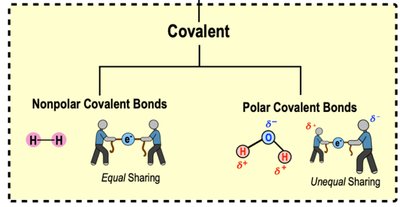
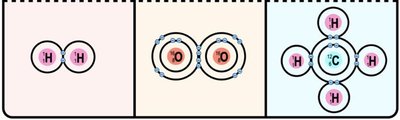
Covalent Bonds: Formed by the sharing of electron pairs between atoms. Covalent bonds can be single, double, or triple, depending on the number of shared pairs.
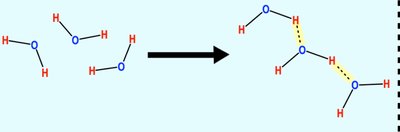
Hydrogen Bonds: Weak attractions between the partial positive charge of hydrogen and the partial negative charge of oxygen or nitrogen in another molecule.
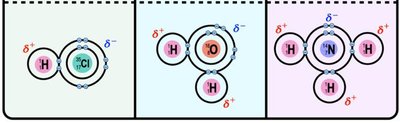
Electronegativity and Bond Polarity
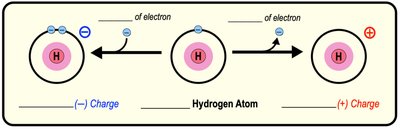
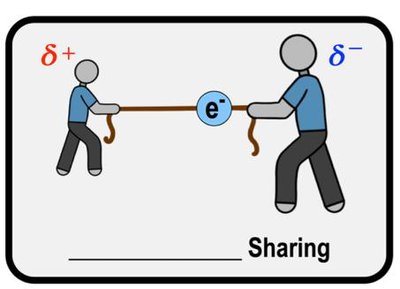
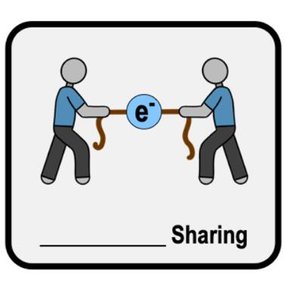
Electronegativity: The tendency of an atom to attract electrons in a covalent bond.
Nonpolar Covalent Bond: Equal sharing of electrons (e.g., H2).
Polar Covalent Bond: Unequal sharing of electrons, resulting in partial charges (e.g., H2O).
Properties of Water
Hydrogen Bonding and Water's Unique Properties
Water's polarity allows it to form hydrogen bonds, which are crucial for its properties:
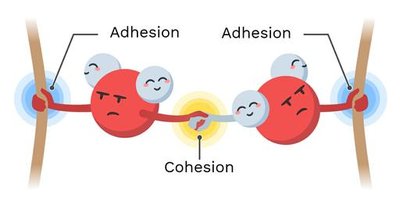
Cohesion: Water molecules stick to each other, creating surface tension.
Adhesion: Water molecules stick to other surfaces, aiding capillary action.
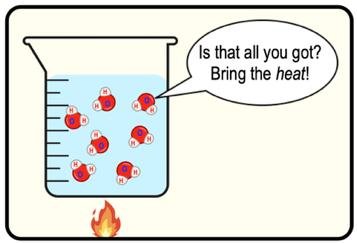
High Specific Heat: Water resists temperature changes, helping organisms maintain stable internal temperatures.
Ice Floats: Water expands upon freezing, making ice less dense than liquid water.
Solvent Properties: Water dissolves many substances due to its polarity.
Acids, Bases, and pH
pH Scale and Buffer Systems
Acid: Increases hydrogen ion (H+) concentration, lowering pH.
Base: Reduces hydrogen ion concentration, raising pH.
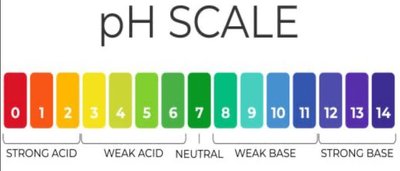
pH Scale: Ranges from 0 (strong acid) to 14 (strong base), with 7 as neutral.
Buffer: Stabilizes pH by accepting or donating H+ ions.
Macromolecules
Types and Structure of Macromolecules
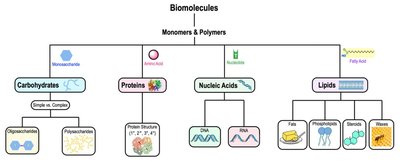
Four major classes of macromolecules are essential for life:
Carbohydrates: Energy storage and structural support
Proteins: Enzymes, structural components, transport, signaling
Nucleic Acids: Genetic information storage and transmission
Lipids: Energy storage, membrane structure, signaling
Polymer Formation and Breakdown
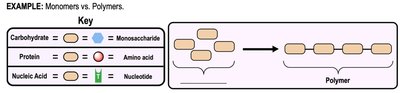
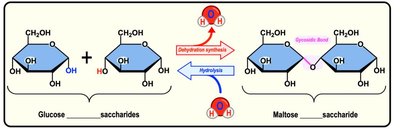
Dehydration Synthesis: Joins monomers by removing water to form polymers.
Hydrolysis: Breaks polymers into monomers by adding water.
Carbohydrates
Monosaccharides, Disaccharides, and Polysaccharides
Monosaccharides: Simple sugars (e.g., glucose, fructose, galactose)
Disaccharides: Two monosaccharides joined (e.g., lactose, sucrose)
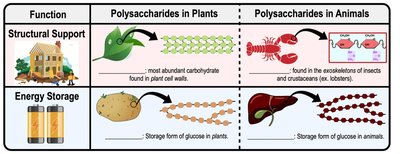
Polysaccharides: Long chains for storage (starch, glycogen) or structure (cellulose, chitin)
Proteins
Amino Acids and Protein Structure
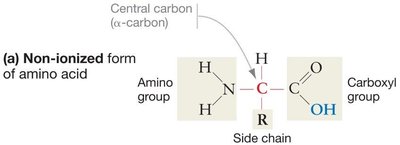
Proteins are polymers of amino acids, each with a central carbon, amino group, carboxyl group, and variable R group.
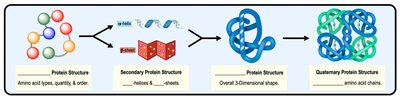
Primary Structure: Sequence of amino acids
Secondary Structure: Alpha helices and beta sheets formed by hydrogen bonding
Tertiary Structure: 3D folding due to R group interactions
Quaternary Structure: Multiple polypeptide chains combined
Functions of Proteins
Enzymes (catalysts)
Structural support (e.g., collagen)
Transport (e.g., hemoglobin)
Defense (e.g., antibodies)
Signaling (e.g., hormones)
Movement (e.g., actin, myosin)
Additional info: Some explanations and examples were expanded for clarity and completeness, such as the role of water in biological systems, the importance of macromolecules, and the functional diversity of proteins.
