 Back
General Biology Unit 1 Study Guide: Chemistry of Life, Water, and Macromolecules
Study Guide - Smart Notes
 Tailored notes based on your materials, expanded with key definitions, examples, and context.
Characteristics of Life
Defining Biology and Life
Biology is the scientific study of life, encompassing the diversity and complexity of living organisms. All living organisms share several fundamental characteristics:
Organization: Living things are organized from molecules to cells, tissues, organs, and organ systems. The cell is the basic unit of life.
Energy Use: Organisms obtain and use energy, such as plants converting solar energy to chemical energy, which is then consumed by animals.
Homeostasis: The ability to maintain a stable internal environment, such as humans regulating body temperature.
Reproduction: Organisms reproduce either asexually (cloning) or sexually (combining genetic material for diversity).
Evolution: Populations evolve over time through genetic changes, leading to diversity and adaptation.
The Chemical Context of Life
Atoms and Elements
Chemistry is fundamental to understanding biological processes.
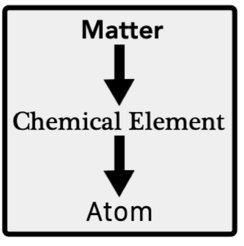
Atom: The smallest unit of matter, composed of protons, neutrons, and electrons.
Element: A substance that cannot be broken down by chemical reactions. Defined by its atomic number (number of protons).
Matter: Anything that takes up space and has mass.
Atomic Structure
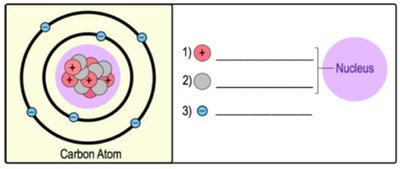
Proton: Positively charged particle in the nucleus.
Neutron: Neutral particle in the nucleus.
Electron: Negatively charged particle orbiting the nucleus.
Atomic Number: Number of protons in an atom.
Mass Number: Sum of protons and neutrons.
Isotopes
Isotopes are atoms of the same element with different numbers of neutrons.
Example: Carbon has three isotopes: 12C (6 neutrons), 13C (7 neutrons), 14C (8 neutrons).
Radioactive Isotopes: Unstable isotopes that decay, emitting radiation. Used in medical imaging (e.g., PET scans).
Introduction to Chemical Bonding
Types of Chemical Bonds
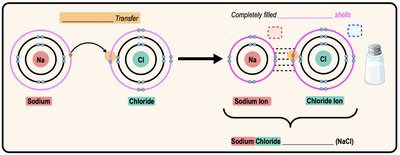
Atoms form bonds to achieve stability by filling their valence shells.
Ionic Bonds: Formed by transfer of electrons, resulting in attraction between oppositely charged ions (e.g., NaCl).
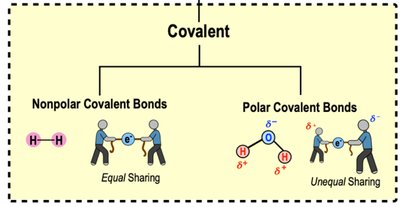
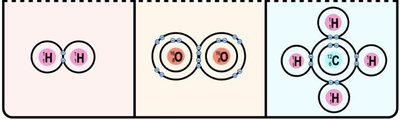
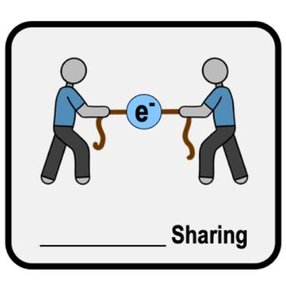
Covalent Bonds: Formed by sharing electrons. Can be single, double, or triple bonds.
Hydrogen Bonds: Weak attractions between partial charges on hydrogen and electronegative atoms (O, N).
Covalent Bond Types
Nonpolar Covalent Bonds: Equal sharing of electrons (e.g., H2).
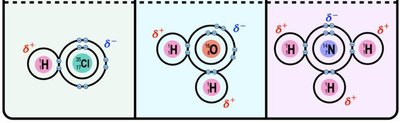
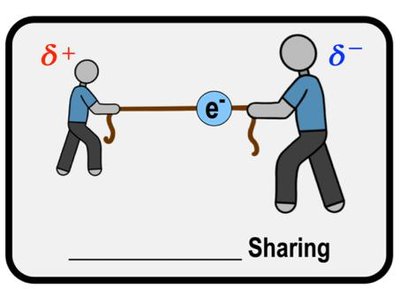
Polar Covalent Bonds: Unequal sharing due to differences in electronegativity (e.g., H2O).
Ions and Ionic Bonds
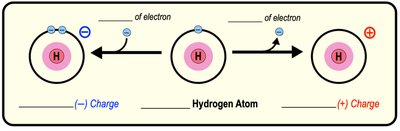
Anion: Negatively charged ion (gains electron).
Cation: Positively charged ion (loses electron).
Electronegativity and Bond Polarity
Electronegativity: The tendency of an atom to attract electrons in a covalent bond.
Polar Bonds: Result from unequal sharing; partial charges develop.
Hydrogen Bonding
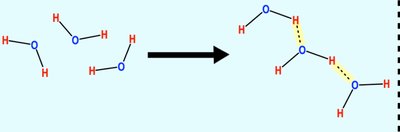
Hydrogen bonds are crucial for the structure and function of water and biological molecules.
Hydrogen Bond: Attraction between partial positive hydrogen and partial negative atom (O, N).
Properties of Water
Hydrophilic and Hydrophobic Interactions
Hydrophilic: Water-loving; interacts with water (polar molecules).
Hydrophobic: Water-fearing; does not interact with water (nonpolar molecules).
Cohesion and Adhesion
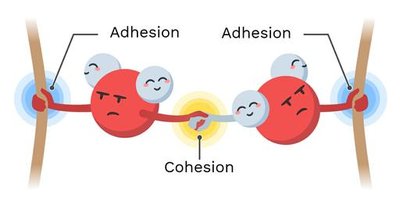
Cohesion: Water molecules stick to each other via hydrogen bonds (surface tension).
Adhesion: Water molecules stick to other surfaces.
Water's High Specific Heat
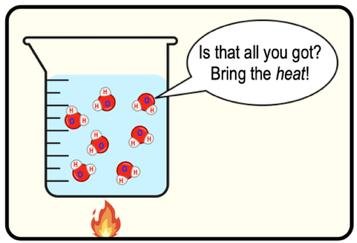
Water resists temperature changes due to hydrogen bonding.
Specific Heat: Amount of heat needed to change temperature of 1g by 1°C.
Biological Importance: Stabilizes climate and internal body temperature.
Evaporation and Heat of Vaporization
Evaporation: Liquid to gas transformation; cools organisms (sweating, panting).
Heat of Vaporization: Energy required to convert 1g of liquid to gas.
Density of Ice
Ice is less dense than liquid water due to hydrogen bonds forming a lattice, allowing ice to float and insulate aquatic life.
Water as a Solvent
Solvent: Dissolving agent (water).
Solute: Substance dissolved (e.g., sugar in coffee).
Aqueous Solution: Solution where water is the solvent.
Versatility: Water dissolves polar and ionic compounds due to its polarity.
Acids, Bases, and Buffers
pH Scale and Definitions
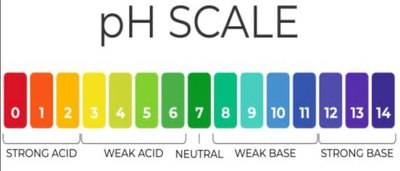
Water can dissociate into H+ and OH- ions, affecting pH.
Acid: Increases H+ concentration (pH < 7).
Base: Decreases H+ concentration (pH > 7).
Buffer: Stabilizes pH by accepting or donating H+.
Macromolecules
Classes of Macromolecules
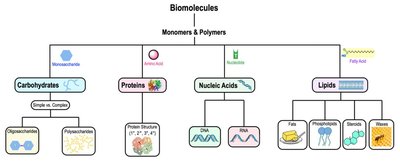
Four main classes: carbohydrates, proteins, nucleic acids, and lipids.
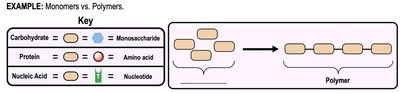
Monomer: Single subunit (e.g., monosaccharide, amino acid, nucleotide).
Polymer: Chain of monomers (e.g., polysaccharide, polypeptide, nucleic acid).
Carbohydrates
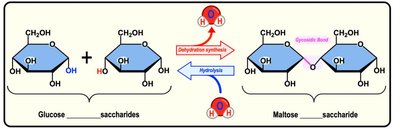
Monosaccharides: Simple sugars (glucose, fructose, galactose).
Disaccharides: Two monosaccharides (lactose, sucrose).
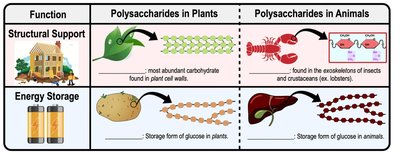
Polysaccharides: Long chains (starch, glycogen, cellulose, chitin).
Glycosidic Linkage: Covalent bond between monosaccharides formed by dehydration synthesis.
Proteins
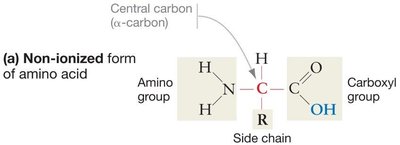
Amino Acid: Monomer of proteins, contains amino group, carboxyl group, hydrogen, and R group.
Peptide Bond: Covalent bond joining amino acids.
Polypeptide: Chain of amino acids.
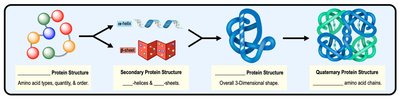
Protein Structure: Four levels: primary (sequence), secondary (alpha helix, beta sheet), tertiary (3D folding), quaternary (multiple polypeptides).
Functions of Proteins
Enzymes (catalysis), structural support, transport, signaling, movement, defense, storage.
Additional info: These notes expand on brief points with academic context, definitions, and examples to ensure completeness and clarity for exam preparation.
