 Back
Lecture 2 Genes, Mutations, and Evolution: From DNA to Evolutionary Change
Study Guide - Smart Notes
 Tailored notes based on your materials, expanded with key definitions, examples, and context.
Introduction to How Genes Work
Gene Expression and the Central Dogma
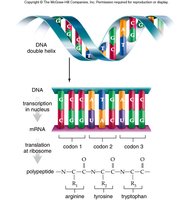
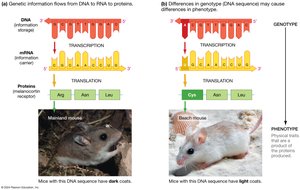
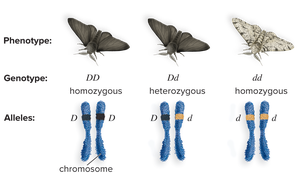
Gene expression is the process by which information encoded in DNA is converted into functional molecules, primarily proteins, within the cell. The central dogma of molecular biology describes the flow of genetic information: DNA is transcribed into RNA, which is then translated into protein. This process underlies how genotypes (genetic makeup) are linked to phenotypes (observable traits).
Gene: A stretch of DNA that codes for a protein or functional RNA.
Genotype: The sequence of bases in an organism's DNA.
Phenotype: The physical and physiological traits of an organism, resulting from protein activity and environmental influences.
DNA, RNA, and Protein Structure and Function
DNA Structure
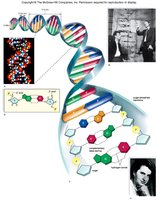
DNA (deoxyribonucleic acid) is composed of two strands forming a double helix, with each strand made up of nucleotides. The sequence of nucleotides encodes genetic information. The order of nucleotides in DNA determines the sequence that will be transcribed into RNA.
Nucleotide: The building block of DNA, consisting of a phosphate group, a deoxyribose sugar, and a nitrogenous base (adenine, thymine, cytosine, guanine).
Double helix: The spiral structure formed by two complementary strands of DNA.
RNA Structure
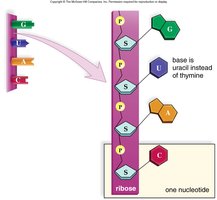
RNA (ribonucleic acid) is typically single-stranded and also composed of nucleotides. However, RNA contains ribose sugar and uracil instead of thymine. The sequence of RNA determines the order of amino acids in proteins during translation.
RNA bases: Adenine (A), uracil (U), cytosine (C), guanine (G).
Protein Structure
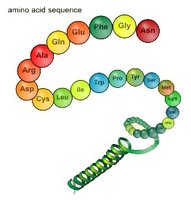
Proteins are polymers of amino acids. The sequence of amino acids (primary structure) determines the protein's shape and function. Proteins serve as enzymes, structural components, and signaling molecules, among other roles.
Amino acid sequence: Dictated by the sequence of codons in mRNA, which is transcribed from DNA.
From Genotype to Phenotype: The Central Dogma in Action
Transcription and Translation
The central dogma explains how genetic information flows from DNA to RNA (transcription) and from RNA to protein (translation). This process determines how genetic variation leads to phenotypic diversity.
Transcription: Synthesis of RNA from a DNA template.
Translation: Synthesis of a protein from an mRNA template at the ribosome.
Mutations: Types and Consequences
Definition and Types of Mutations
A mutation is any permanent change in an organism's DNA sequence. Mutations can alter genotype and potentially phenotype, creating new alleles. They are classified by their scale and effect:
Point mutations: Changes affecting one or a few nucleotides.
Chromosome-level mutations: Large-scale changes affecting chromosome structure or number.
Point Mutations
Missense mutation: Alters a codon, resulting in a different amino acid in the protein. May affect protein function.
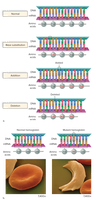
Silent mutation: Changes a nucleotide without altering the amino acid sequence due to redundancy in the genetic code.
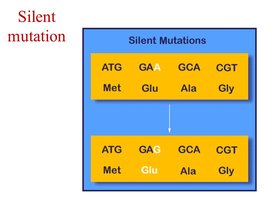
Frameshift mutation: Insertion or deletion of nucleotides shifts the reading frame, usually rendering the protein nonfunctional.
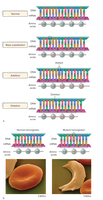
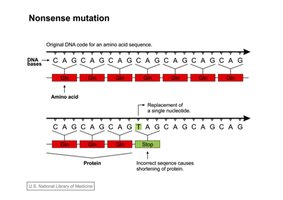
Nonsense mutation: Converts a codon for an amino acid into a stop codon, resulting in a truncated, likely nonfunctional protein.
Silent Mutation Example
Silent mutations do not change the amino acid sequence of the protein, so the protein's function is typically unaffected.
Frameshift Mutation Example
Frameshift mutations, caused by insertions or deletions, disrupt the reading frame and usually result in nonfunctional proteins.
Nonsense Mutation Example
Nonsense mutations introduce a premature stop codon, leading to shortened proteins.
Consequences of Mutations
Beneficial mutations: Increase fitness (survival and reproduction) of an organism.
Neutral mutations: Have no effect on fitness.
Deleterious mutations: Decrease fitness.
Most point mutations are neutral or deleterious. Some mutations outside coding regions can affect gene expression and phenotype.
Chromosome-Level Mutations
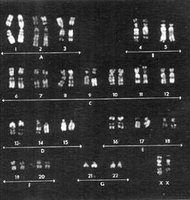
Chromosome mutations can change chromosome number or structure:
Inversion: Segment breaks off, flips, and rejoins.
Translocation: Segment attaches to a different chromosome.
Deletion: Segment is lost.
Duplication: Segment is copied multiple times.
Mutation as an Evolutionary Mechanism
Mutation and Genetic Diversity
Mutation is the ultimate source of genetic variation in populations. It creates new alleles and increases genetic diversity. Mutation is random with respect to fitness; its effects depend on environmental context.
Mutation: Only evolutionary mechanism that creates new alleles.
Natural selection: Increases frequency of beneficial alleles.
Genetic drift: Random changes in allele frequencies.
Gene flow: Movement of alleles between populations.
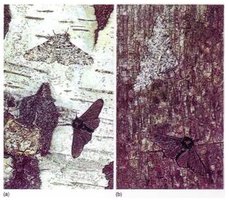
Mutation and Environmental Change: The Case of the Peppered Moth
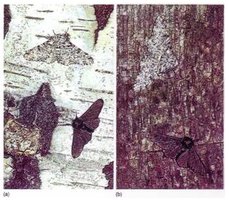
Environmental changes can alter which alleles are beneficial. For example, during the Industrial Revolution, dark-colored (melanic) peppered moths became more common due to increased survival on soot-darkened trees, demonstrating evolution by natural selection.

Mutation in Microorganisms
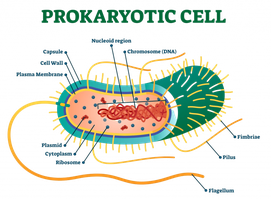
In bacteria and archaea, mutation can be a significant evolutionary force due to short generation times. Experimental studies with Escherichia coli have shown that beneficial mutations can rapidly increase fitness in laboratory populations.
Evidence for Evolution: Change Through Time
Fossil Record and Geologic Time
Fossils provide evidence that species have changed over time and that many species are now extinct. The geologic time scale, based on sedimentary rock layers and radiometric dating, shows that Earth is about 4.6 billion years old and life has existed for at least 3.4–3.8 billion years.
Extant species: Species that are still living.
Extinct species: Species that no longer exist.
Vestigial structures: Remnants of organs or structures that had a function in ancestral species.
Take-Home Messages
Mutation is the ultimate source of genetic variation and is essential for evolution.
Mutations are random with respect to fitness; their effects are determined by environmental context and natural selection.
Without mutation, evolution would eventually stop as no new alleles would arise.
Most mutations are neutral or deleterious, but beneficial mutations can drive evolutionary change.
