 Back
BackGenetic Engineering: DNA Cloning, Sequencing, and Genome Editing
Study Guide - Smart Notes
 Tailored notes based on your materials, expanded with key definitions, examples, and context.
Understanding DNA Structure and Replication in Genetic Engineering
Introduction to Genetic Engineering
Genetic engineering is the direct manipulation of genes for practical purposes, made possible by the discovery of DNA's double-helix structure and the principle of complementary base pairing. This field has revolutionized agriculture, medicine, and biological research by enabling precise modifications of genetic material.
DNA Cloning: Making Multiple Copies of a Gene
Principles and Process of DNA Cloning
DNA cloning is the process of preparing multiple identical copies of a specific DNA segment.
Cloning is necessary because genes are only a small fraction of the total DNA in a cell, and isolating them requires amplification.
Bacteria, especially Escherichia coli, are commonly used as hosts for cloning due to their plasmids—small, circular DNA molecules that replicate independently of the bacterial chromosome.
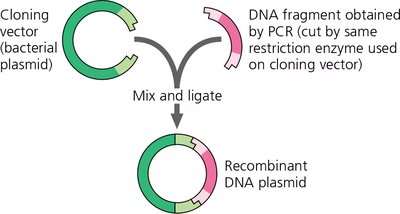
A cloning vector (often a plasmid) is used to carry foreign DNA into a host cell, where it can be replicated and expressed.
The resulting recombinant DNA molecule contains DNA from two different sources, often different species.
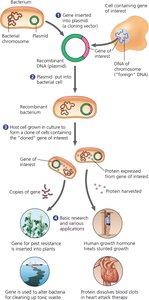
Applications: Cloned genes can be used for basic research, to confer new traits (e.g., pest resistance in crops), or to produce medically important proteins (e.g., human growth hormone).
Restriction Enzymes and Recombinant DNA Technology
Restriction Enzymes: Cutting DNA at Specific Sites
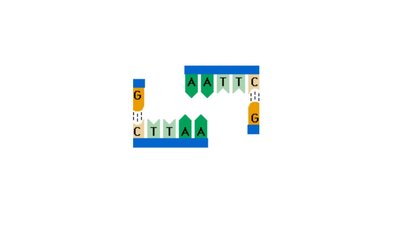
Restriction enzymes (restriction endonucleases) are proteins that cut DNA at specific nucleotide sequences called restriction sites.
These enzymes are highly specific and produce predictable fragments, which is essential for DNA manipulation.
Bacterial DNA is protected from its own restriction enzymes by methylation of the recognition sequences.
Formation of Recombinant DNA Molecules
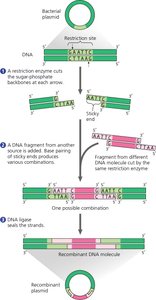
Restriction enzymes often create sticky ends—single-stranded overhangs that can base pair with complementary sequences on other DNA molecules cut with the same enzyme.
DNA ligase is used to covalently bond the sugar-phosphate backbones, forming stable recombinant DNA molecules.
Gel Electrophoresis: Separating DNA Fragments
Principle and Application
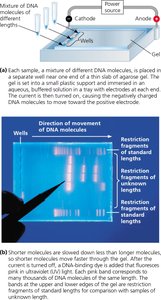
Gel electrophoresis is a technique used to separate DNA fragments by size using an electric field and a gel matrix. Shorter fragments move faster and farther than longer ones, allowing for analysis and purification of DNA.
Amplifying DNA: The Polymerase Chain Reaction (PCR)
PCR Technique and Its Role in Cloning
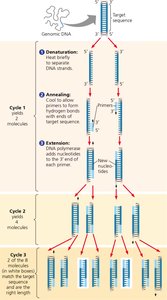
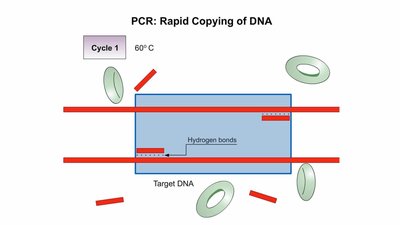
Polymerase Chain Reaction (PCR) is a method to amplify a specific DNA segment exponentially in vitro.
It requires template DNA, two primers (complementary to the ends of the target sequence), nucleotides, and a heat-stable DNA polymerase (e.g., Taq polymerase).
The process involves repeated cycles of denaturation, annealing, and extension, doubling the target DNA each cycle.
After 30 cycles, over a billion copies of the target sequence can be produced.
Integration of PCR with Cloning
PCR products can be engineered with restriction sites for insertion into cloning vectors, facilitating the creation of recombinant DNA plasmids.
Applications of PCR
Amplification of ancient DNA (e.g., from extinct species like the woolly mammoth)
Forensic analysis (e.g., from crime scene samples)
Medical diagnostics (e.g., detection of viral infections such as HIV or SARS-CoV-2)

DNA Sequencing: Determining the Order of Nucleotides
Sanger Sequencing and Next-Generation Methods
DNA sequencing determines the precise order of nucleotides in a DNA molecule.
The classic Sanger method uses dideoxynucleotides to terminate DNA synthesis at specific bases, allowing sequence determination.
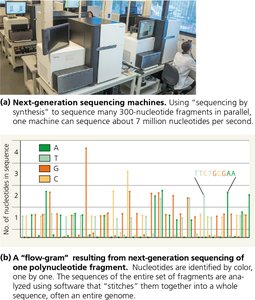
Next-generation sequencing technologies enable massively parallel sequencing, greatly increasing speed and reducing cost.
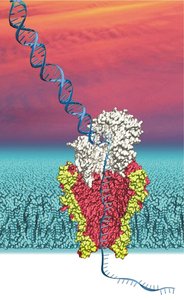
"Third-generation" sequencing can read long, unfragmented DNA molecules, sometimes using nanopores to detect bases as they pass through a membrane.

Genome Editing: The CRISPR-Cas9 System
Mechanism and Applications of CRISPR-Cas9
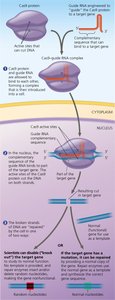
CRISPR-Cas9 is a revolutionary gene-editing tool derived from a bacterial immune system.
Cas9 is a nuclease guided by a customizable RNA molecule to a specific DNA sequence, where it introduces a double-strand break.
Repair of the break can disable the gene (knockout) or, with a supplied template, correct a mutation (gene editing).
Applications include research (gene function studies), medicine (treatment of genetic diseases like sickle-cell anemia), and biotechnology (gene drives in pest control).
Ethical Considerations
The power of CRISPR-Cas9 raises important ethical questions about the potential for unintended effects and the responsible use of gene editing in humans and the environment.
Summary Table: Key Tools and Techniques in Genetic Engineering
Technique | Main Purpose | Key Enzyme/Component | Application Example |
|---|---|---|---|
DNA Cloning | Amplify specific genes | Plasmid, DNA ligase | Production of insulin |
Restriction Enzymes | Cut DNA at specific sites | EcoRI, HindIII, etc. | Creation of recombinant DNA |
Gel Electrophoresis | Separate DNA fragments by size | Polyacrylamide/agarose gel | DNA fingerprinting |
PCR | Amplify DNA segments | Taq polymerase | Forensic analysis |
DNA Sequencing | Determine nucleotide order | DNA polymerase, dideoxynucleotides | Genome projects |
CRISPR-Cas9 | Edit genes/genomes | Cas9, guide RNA | Gene therapy |
Conclusion
Understanding DNA structure and replication has enabled the development of powerful genetic engineering techniques. These methods have transformed research, medicine, and biotechnology, but also require careful ethical consideration as their capabilities expand.
