 Back
Genetic Mutations: Types, Effects, and the Case of Sickle Cell Disease
Study Guide - Smart Notes
 Tailored notes based on your materials, expanded with key definitions, examples, and context.
Genetic Mutations and Their Biological Consequences
Introduction to Mutation
Mutations are changes in the genetic material of an organism and are a fundamental source of genetic variation. They can affect single nucleotides or large segments of chromosomes, leading to a range of effects on phenotype and fitness.
Mutation: Any change in the DNA sequence of an organism.
Causes: Errors during DNA replication or repair, or exposure to mutagens (physical or chemical agents that damage DNA).
Types: Chromosomal mutations (large-scale changes) and point mutations (single base pair changes).
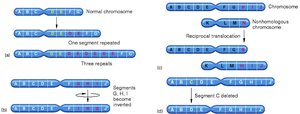
Additional info: Chromosomal mutations include deletions, duplications, inversions, and translocations, which can have significant effects on gene dosage and function.
Types of Point Mutations
Point mutations are changes affecting a single nucleotide pair in DNA. They can be classified based on their molecular and phenotypic consequences.
Base-pair Substitution: Replacement of one nucleotide pair with another.
Insertions and Deletions: Addition or loss of one or more nucleotide pairs, which can shift the reading frame (frameshift mutation).
Outcomes of Base-pair Substitutions
Silent Mutation: No change in the amino acid sequence due to redundancy in the genetic code.
Missense Mutation: Substitution results in a different amino acid.
Nonsense Mutation: Substitution changes an amino acid codon to a stop codon, truncating the protein.
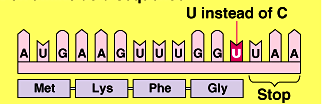
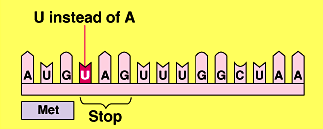
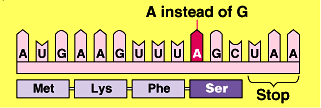
Insertions, Deletions, and Frameshift Mutations
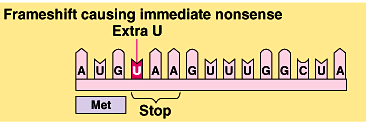
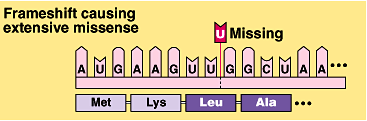
Frameshift Mutation: Insertion or deletion of nucleotides not in multiples of three, altering the reading frame and potentially changing every amino acid downstream.
Can result in extensive missense or immediate nonsense mutations.
Mutation and Phenotype
The effect of a mutation on phenotype depends on its type, location, and genetic context. Effects range from neutral to beneficial or harmful, and may be influenced by environmental factors.
No effect: Neutral mutations do not alter phenotype.
Partial or complete loss of function: Protein function is reduced or eliminated.
Gain of function: Mutation confers a new or enhanced activity.
Context-dependent: The impact may depend on other genes and environmental conditions.
Sickle Cell Disease: A Case Study in Mutation and Natural Selection
Hemoglobin Structure and Function
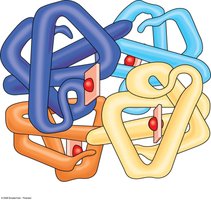
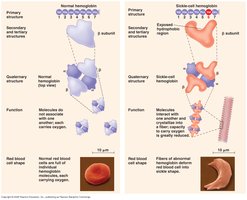
Hemoglobin is a protein in red blood cells responsible for oxygen transport. It consists of two alpha and two beta globin chains.
Normal hemoglobin (HbA): Properly shaped red blood cells, efficient oxygen transport.
Mutant hemoglobins: Sickle cell (HbS), HbC, Hb Makassar—each caused by different mutations in the beta globin gene.
Sickle Cell Mutation and Its Effects
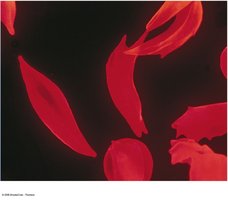
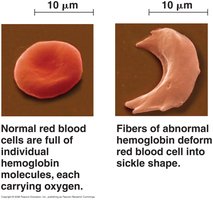
The sickle cell mutation is a single nucleotide substitution in the beta globin gene, resulting in a missense mutation (glutamic acid to valine at position 6). This causes hemoglobin molecules to polymerize under low oxygen, deforming red blood cells into a sickle shape.
Homozygotes (HbS/HbS): Severe sickle cell anemia, reduced oxygen transport, and health complications.
Heterozygotes (HbA/HbS): Milder symptoms, but increased resistance to malaria—a classic example of heterozygote advantage.
Other mutations: HbC (mild disease), Hb Makassar (no effect).
Population Genetics and Evolutionary Implications
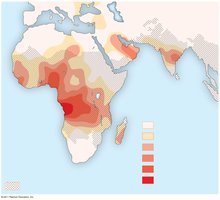
The frequency of the sickle cell allele is highest in regions where malaria is endemic. This distribution reflects natural selection, as heterozygotes have a survival advantage in these environments.
Selection pressure: Malaria selects for the sickle cell allele in populations exposed to the parasite.
Geographic distribution: Highest allele frequencies in sub-Saharan Africa and parts of the Middle East and India.
Summary Table: Types of Point Mutations and Their Effects
Mutation Type | Molecular Change | Effect on Protein | Example |
|---|---|---|---|
Silent | Base substitution | No amino acid change | GAA → GAG (both code for Glu) |
Missense | Base substitution | One amino acid changed | Sickle cell (Glu → Val) |
Nonsense | Base substitution | Premature stop codon | UAC (Tyr) → UAA (Stop) |
Frameshift | Insertion/deletion | Reading frame altered | Extensive missense or nonsense |
Additional info: The sickle cell example illustrates how a single nucleotide change can have profound effects on protein structure, organismal phenotype, and population genetics, especially under specific environmental pressures.
