 Back
Genetic Variability in Meiosis: Structure, Function, and Consequences
Study Guide - Smart Notes
 Tailored notes based on your materials, expanded with key definitions, examples, and context.
Genetic Variability in Meiosis
Overview of Meiosis
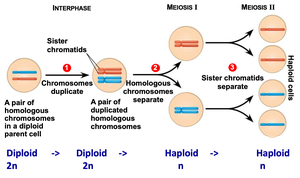
Meiosis is a specialized type of cell division that reduces the chromosome number by half, resulting in the formation of haploid gametes. This process is essential for sexual reproduction and contributes to genetic diversity in populations.
Meiosis I: Homologous chromosomes separate, reducing the chromosome number from diploid (2n) to haploid (n).
Meiosis II: Sister chromatids separate, producing four genetically distinct haploid cells.
Key outcome: Genetic variability is introduced through independent assortment and crossing over.
Cell Cycle Phases Relevant to Meiosis
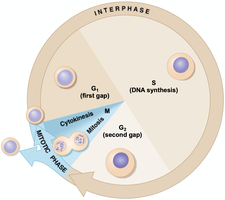
The cell cycle consists of several phases, including G1, S (synthesis), G2, and M (mitosis/meiosis). DNA replication occurs during the S phase, resulting in duplicated chromosomes that are essential for proper segregation during meiosis.
G1: Cell growth and preparation for DNA replication.
S phase: DNA is replicated, forming sister chromatids.
G2: Further growth and preparation for division.
M phase: Cell division (mitosis or meiosis).
Human Genome and Chromosome Structure
Chromosome Number and Origin
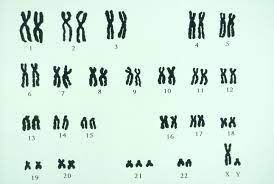
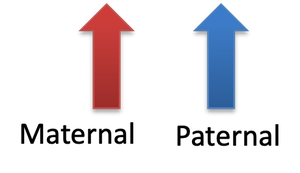
Humans have 46 chromosomes arranged in 23 pairs. Each pair consists of one chromosome from the mother (maternal) and one from the father (paternal). The combination of chromosomes from both parents forms the unique genome of each individual.
Diploid (2n): Full set of chromosomes (46 in humans).
Haploid (n): Half set of chromosomes (23 in humans), found in gametes.
Key Chromosome Terms
Understanding chromosome structure and terminology is essential for studying meiosis and genetic inheritance.
Gene: Segment of DNA that codes for a protein or functional RNA.
Allele: Different versions of a gene, responsible for variations in traits.
Locus: Specific location of a gene on a chromosome.
Centromere: Central region of a chromosome, important for chromosome movement during division.
Homologous chromosomes: Chromosome pairs with the same genes but possibly different alleles.
Sister chromatids: Identical copies of a chromosome, joined at the centromere after DNA replication.
Cell Division and Reproduction
Germ Cells, Gametes, and Somatic Cells
Cell division is fundamental to growth, development, and reproduction. Germ cells undergo meiosis to produce gametes, while somatic cells divide by mitosis.
Germ cells: Cells that give rise to gametes through meiosis.
Gametes: Haploid cells (egg and sperm) involved in fertilization.
Somatic cells: All other body cells, which are diploid and divide by mitosis.
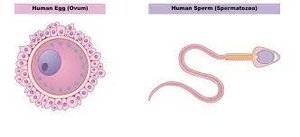
Human Life Cycle: Sexual Reproduction
The human life cycle alternates between diploid and haploid stages. Fertilization restores the diploid chromosome number, while meiosis reduces it in gametes.
Fertilization: Fusion of egg and sperm to form a diploid zygote.
Meiosis: Produces haploid gametes from diploid germ cells.
Zygote: The first cell of a new organism, diploid in chromosome number.
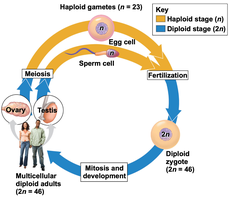
Mechanisms of Genetic Variability in Meiosis
Independent Assortment
During meiosis I, homologous chromosomes are randomly distributed to daughter cells. This process, known as independent assortment, increases genetic diversity by producing new combinations of chromosomes.
Random alignment: Homologous pairs line up independently at the metaphase plate.
Result: Each gamete receives a unique set of chromosomes.
*Additional info: Independent assortment is a key mechanism for genetic variation, as described in Mendel's second law.*
Crossing Over
Crossing over occurs during prophase I of meiosis, where non-sister chromatids of homologous chromosomes exchange genetic material. This process creates recombinant chromosomes and further increases genetic variability.
Occurs in: Prophase I of meiosis.
Result: New combinations of alleles on each chromosome.
*Additional info: The frequency and location of crossing over can be used to map gene loci on chromosomes.*
Nondisjunction and Chromosome Number Abnormalities
Nondisjunction is the failure of chromosomes to separate properly during meiosis, leading to gametes with abnormal numbers of chromosomes. This can result in genetic disorders such as Down's syndrome (trisomy 21).
Meiosis I: Homologous chromosomes fail to separate.
Meiosis II: Sister chromatids fail to separate.
Consequences: Trisomy or monosomy in offspring.
*Additional info: Most abnormalities in sex chromosome number do not affect survival, but can cause syndromes such as Turner or Klinefelter syndrome.*
Summary Table: Key Terms in Meiosis and Chromosome Structure
Term | Definition | Example |
|---|---|---|
Gene | Segment of DNA coding for a protein | Gene for eye color |
Allele | Variant of a gene | Blue vs. brown eye color |
Locus | Location of a gene on a chromosome | Chromosome 15, locus for eye color |
Centromere | Central region of chromosome | Site of spindle attachment |
Homologous chromosomes | Chromosome pairs with same genes | Maternal and paternal chromosome 1 |
Sister chromatids | Identical copies after DNA replication | Two chromatids joined at centromere |
Diploid (2n) | Full set of chromosomes | 46 chromosomes in humans |
Haploid (n) | Half set of chromosomes | 23 chromosomes in gametes |
Equations and Formulas
Chromosome Number: (humans, diploid)
Gamete Chromosome Number: (humans, haploid)
Summary
Meiosis is a fundamental process in biology that ensures genetic diversity through independent assortment, crossing over, and the formation of haploid gametes. Errors in meiosis, such as nondisjunction, can lead to genetic disorders. Understanding chromosome structure and terminology is essential for grasping the mechanisms of inheritance and variability.
