 Back
BackGenetic Variation and Its Role in Evolution
Study Guide - Smart Notes
 Tailored notes based on your materials, expanded with key definitions, examples, and context.
Genetic Variation and Evolution
Introduction to Genetic Variation
Genetic variation is the foundation of evolutionary processes. It refers to differences among individuals in the composition of their genes or other DNA sequences. Without genetic variation, evolution cannot occur, as natural selection and other mechanisms require heritable differences to act upon.
Phenotypic Variation: Observable differences in traits such as height, coloration, or molecular traits like blood type.
Genetic Variation: Underlies phenotypic variation and is caused by differences in DNA sequences among individuals.
Historical Context: Charles Darwin recognized the importance of heritable variation for evolution, but the genetic basis was clarified by Gregor Mendel's work on inheritance.
Types of Phenotypic Variation
Phenotypic variation can be classified based on its genetic basis and mode of inheritance:
"Either-or" Variation: Traits determined by a single gene locus, such as flower color in pea plants (purple or white).
Continuous Variation: Traits influenced by multiple genes (polygenic inheritance), such as coat color in horses, seed number in maize, and human height.
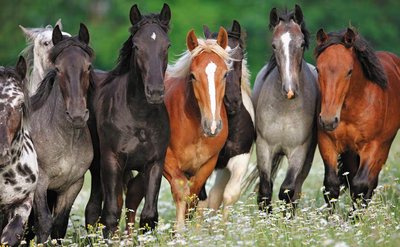
Example: The diversity of coat colors in horses is a result of multiple genes interacting to produce a range of phenotypes.
Measuring Genetic Variation
Genetic variation can be quantified at different levels:
Gene Variability: Measured as the average percentage of loci that are heterozygous in a population.
Nucleotide Variability: Measured by comparing DNA sequences at the molecular level. Many variations occur in noncoding regions (introns) and do not affect phenotype.

Example: In the fruit fly Drosophila melanogaster, sequence comparisons of the Adh gene reveal many nucleotide differences, but only a few affect the amino acid sequence of the protein.
Genotype, Phenotype, and the Environment
Not all phenotypic variation is heritable. The phenotype results from the interaction between genotype and environmental influences.
Nonheritable Variation: Environmental factors can cause phenotypic changes that are not passed to offspring.
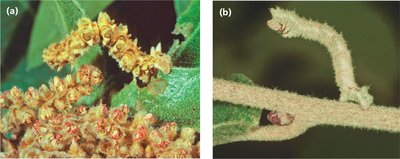
Example: Caterpillars of the moth Nemoria arizonaria develop different appearances depending on their diet, not their genotype.
Sources of Genetic Variation
Formation of New Alleles
New alleles arise through mutation, which is a change in the nucleotide sequence of DNA. Mutations can be caused by errors in DNA replication, exposure to radiation, or chemicals. Most mutations are neutral or harmful, but some can be beneficial if environmental conditions change.
Point Mutation: A change in a single base pair, which can have significant effects (e.g., sickle-cell disease).
Heterozygote Protection: Harmful recessive alleles can persist in populations by being masked in heterozygotes.
Neutral Variation: Mutations in noncoding regions or those that do not alter protein function.
Heritability: Only mutations in gamete-producing cell lines are passed to offspring in animals.
Altering Gene Number or Position
Large-scale chromosomal changes can delete, duplicate, or rearrange genes. While often harmful, some duplications can provide raw material for evolutionary innovation.
Gene Duplication: Can result from errors in meiosis or DNA replication. Duplicated genes may acquire new functions over time.
Example: The expansion of olfactory receptor genes in mammals has enhanced their sense of smell.
Rapid Reproduction
Mutation rates are generally low, but organisms with short generation times (such as prokaryotes and viruses) can accumulate genetic variation rapidly.
Example: HIV evolves quickly due to its short generation time and high mutation rate, making it resistant to single-drug treatments.
Sexual Reproduction
Sexual reproduction shuffles existing alleles into new combinations, greatly increasing genetic variation in populations. Three main mechanisms contribute:
Crossing Over: Homologous chromosomes exchange genetic material during meiosis.
Independent Assortment: Chromosomes are distributed randomly into gametes.
Fertilization: Combines gametes from different parents, creating unique genetic combinations.
Concept Check
Why is genetic variation within a population a prerequisite for evolution? Genetic variation provides the raw material for natural selection and other evolutionary processes to act upon. Without variation, populations cannot adapt to changing environments.
Why do only a small fraction of mutations become widespread? Most mutations are neutral or harmful and are eliminated by natural selection or genetic drift. Only beneficial mutations that confer a selective advantage may increase in frequency.
How would genetic variation be affected if a population stopped reproducing sexually? Without sexual reproduction, genetic variation would decrease over time, as new combinations of alleles would not be generated, and the population would rely solely on mutation for new variation.
