 Back
BackGenetics and Mendelian Inheritance: Study Notes
Study Guide - Smart Notes
 Tailored notes based on your materials, expanded with key definitions, examples, and context.
Genetics: Science of Inheritance
Introduction to Genetics
Genetics is the branch of biology concerned with the study of heredity and variation in organisms. It explores how traits are passed from parents to offspring through genes, and how these traits manifest as observable characteristics.
Genotype: The genetic makeup of an individual, consisting of the alleles inherited from both parents.
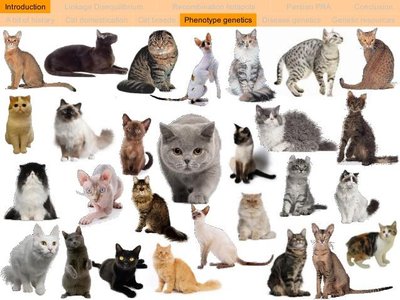
Phenotype: The observable characteristics of an individual, resulting from the expression of its genotype.
Heredity: The process by which traits are transmitted from one generation to the next.
Chromosomes and Genes
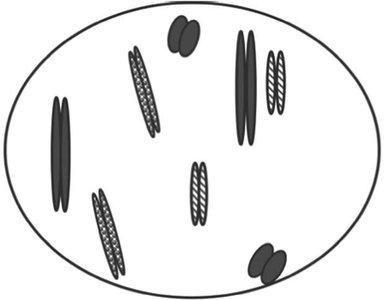
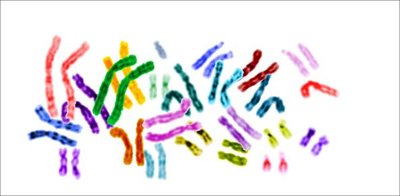
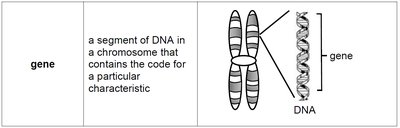
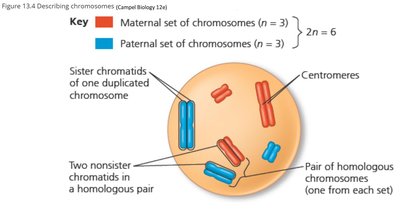
Chromosomes are thread-like structures located in the nucleus of cells, carrying genetic information in the form of DNA. Genes are segments of DNA that code for specific traits.
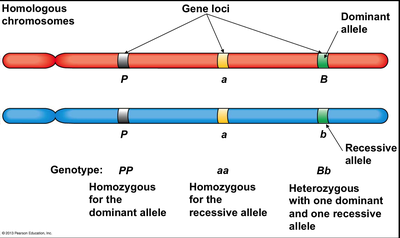
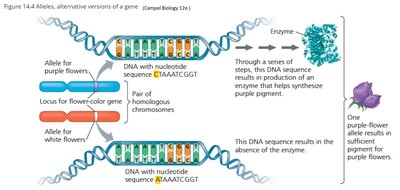
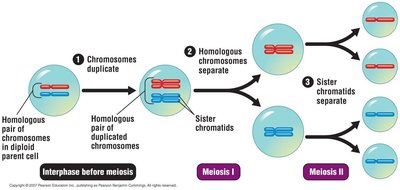
Homologous chromosomes: Chromosome pairs, one from each parent, carrying genes for the same traits.
Locus (plural: loci): The specific location of a gene on a chromosome.
Alleles: Alternative versions of a gene that may produce distinguishable phenotypic effects.
Mendelian Laws of Inheritance
Mendel’s Experimental Approach
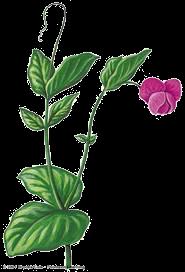
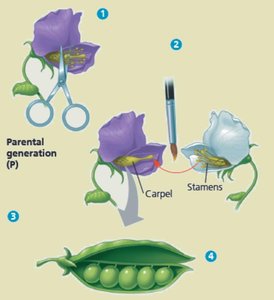
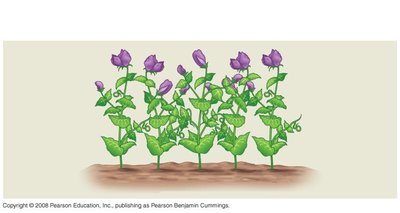
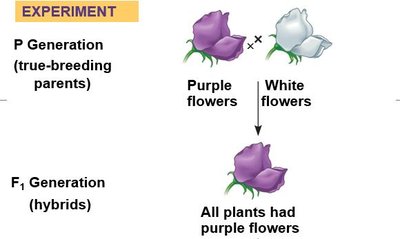
Gregor Mendel used pea plants to study inheritance patterns, taking advantage of their distinct traits, short generation time, and controlled mating. His experiments led to the formulation of fundamental laws of inheritance.
True-breeding: Organisms that produce offspring of the same variety over many generations.
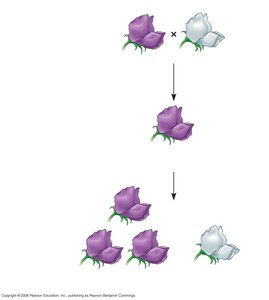
Hybridization: Crossing two different varieties to study inheritance.
Results of Mendel’s Crosses
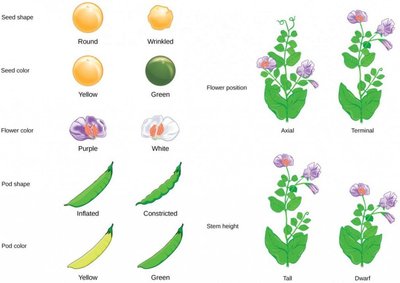
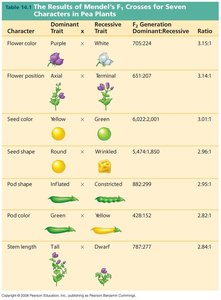
Mendel observed the inheritance of seven distinct traits in pea plants, noting the ratios of dominant to recessive phenotypes in the F2 generation.
Character | Dominant Trait | Recessive Trait | F2 Ratio |
|---|---|---|---|
Flower color | Purple | White | 3:1 |
Seed color | Yellow | Green | 3:1 |
Seed shape | Round | Wrinkled | 3:1 |
Pod shape | Inflated | Constricted | 2:1 |
Pod color | Green | Yellow | 2:1 |
Flower position | Axial | Terminal | 3:1 |
Stem length | Tall | Dwarf | 2:1 |
Law of Segregation
The law of segregation states that each individual has two alleles for each gene, and these alleles segregate during gamete formation, so each gamete receives only one allele.
Alleles: Variations in genes account for differences in inherited traits.
Dominant allele: Determines the phenotype when present.
Recessive allele: Expressed only when both alleles are recessive.
Degrees of dominance: Complete dominance, incomplete dominance, and codominance.
Law of Independent Assortment
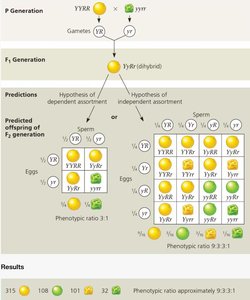
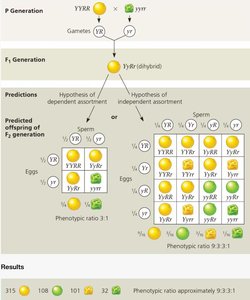
The law of independent assortment states that alleles of different genes segregate independently during gamete formation. This principle is observed in dihybrid crosses, where two traits are considered simultaneously.
Dihybrid cross: Cross involving two traits, each controlled by different genes.
Phenotypic ratio: Typical ratio for dihybrid cross is 9:3:3:1.



Punnett Squares and Probability
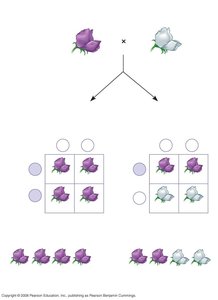
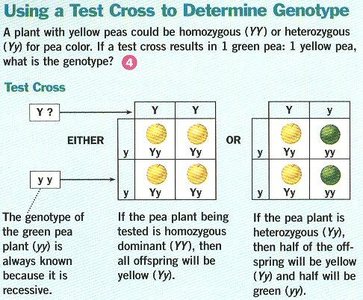
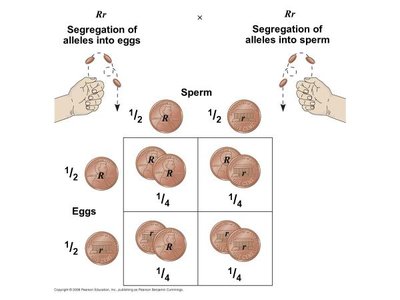
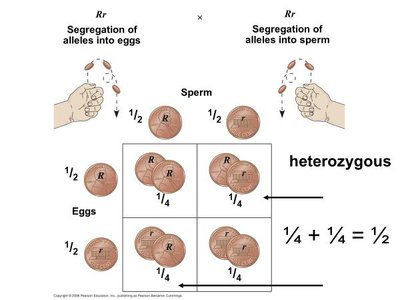
Punnett squares are diagrams used to predict the outcome of genetic crosses. They illustrate how alleles segregate and combine in offspring, allowing calculation of genotypic and phenotypic ratios.
Multiplication rule: The probability of two independent events occurring together is the product of their individual probabilities.
Addition rule: The probability of either of two mutually exclusive events occurring is the sum of their individual probabilities.
Examples and Applications
Genetic crosses can be used to predict the inheritance of traits such as ear lobe attachment, flower color, and plant height. The ratios of genotypes and phenotypes in offspring can be calculated using Punnett squares and probability rules.
Monohybrid cross: Cross between two individuals considering one trait.
Dihybrid cross: Cross between two individuals considering two traits.
Testcross: Used to determine the genotype of an individual with a dominant phenotype by crossing it with a homozygous recessive individual.
Example: If two organisms with genotype AaBb are mated, the probability of obtaining AABB in the F2 generation is , and the probability of AaBb is .
Example: In peas, crossing a tall plant with purple flowers (T_P_) with a dwarf plant with white flowers (ttpp) can produce various phenotypic ratios depending on the genotypes.
Additional info: These principles form the foundation for understanding inheritance patterns, genetic disorders, and applications in biotechnology and breeding.
