Back
BackGenetics, DNA Profiling, and Cell Cycle: Core Concepts for College Biology
Study Guide - Smart Notes
 Tailored notes based on your materials, expanded with key definitions, examples, and context.
DNA Profiling and Short Tandem Repeats (STRs)
Introduction to STRs and DNA Profiling
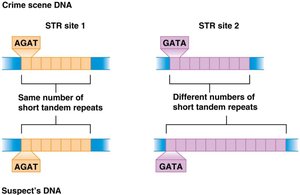
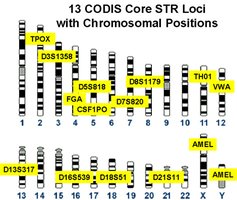
Short tandem repeats (STRs) are short sequences of DNA that are repeated in direct succession at specific locations in the genome. DNA profiling uses the variability in STRs among individuals to identify genetic relationships and for forensic investigations.
STRs: Short, repeating sequences of DNA, typically 2-6 base pairs in length, found at specific loci in the genome.
DNA Profile: A set of numbers representing the number of repeats at multiple STR loci, unique to each individual except identical twins.
Homozygous: An individual has the same number of repeats on both chromosomes at a locus.
Heterozygous: An individual has different numbers of repeats on each chromosome at a locus.
Inheritance: Each person inherits one chromosome of each pair from each parent, resulting in two STR numbers per site.
Accuracy and Reliability of DNA Profiling
DNA profiling is highly accurate due to the low probability of two unrelated individuals sharing the same STR profile. The odds of a random match are between 1 in and 1 in , making DNA evidence reliable for legal and forensic purposes.
Legal Standard: DNA profiles are considered unique and can establish identity beyond reasonable doubt.
Gel Electrophoresis in STR Analysis
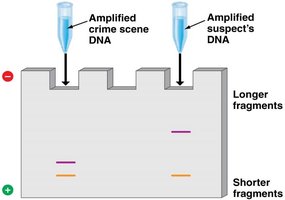
Gel electrophoresis is a laboratory technique used to separate DNA fragments by size, allowing for the determination of STR repeat numbers in DNA samples.
Process: DNA samples are amplified and loaded into a gel. An electric current separates fragments by length, with shorter fragments moving further.
Application: Comparing the banding patterns of crime scene DNA and suspect DNA to determine a match.
Forensic Applications and the Innocence Project
STR analysis has revolutionized forensic science, enabling the exoneration of wrongfully convicted individuals and the identification of true perpetrators.
Example: The Innocence Project uses DNA evidence to overturn wrongful convictions, as in the case of Malcolm Alexander, who was exonerated after 17 years in prison.
Challenges: Issues such as poor legal representation, flawed evidence, and destroyed samples can impede justice.
The Cell Cycle and Cell Division
Overview of the Cell Cycle
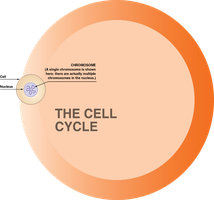
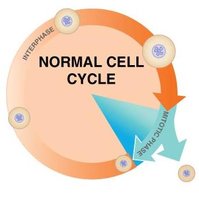
The cell cycle is the series of events that cells go through as they grow and divide. It ensures that genetic material is accurately replicated and distributed to daughter cells.
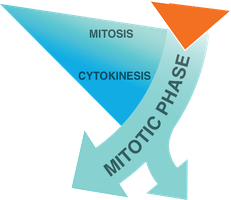
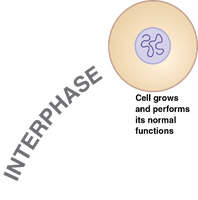
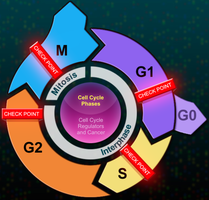
Phases: The cell cycle consists of interphase (G1, S, G2) and the mitotic phase (mitosis and cytokinesis).
Regulation: Healthy cells only enter mitosis when duplication is needed, controlled by checkpoints and signaling pathways.
Uncontrolled Cell Division and Cancer
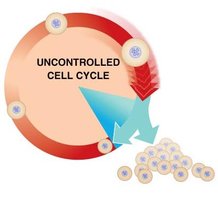
Uncontrolled cell division can lead to cancer, where cells bypass normal regulatory mechanisms and proliferate abnormally.
Causes: Mutations in genes that regulate the cell cycle, such as proto-oncogenes and tumor suppressor genes.
Consequences: Formation of tumors and potential spread (metastasis) to other tissues.
Genetics: Alleles, Inheritance, and Variation
Alleles and Chromosomes
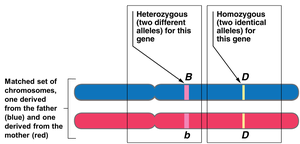
Alleles are different forms of a gene found at the same locus on homologous chromosomes. Each individual inherits one allele from each parent, forming a pair for each gene.
Homozygous: Two identical alleles for a gene.
Heterozygous: Two different alleles for a gene.
Dominant and Recessive Traits
Traits are determined by the combination of alleles. Dominant alleles mask the effect of recessive alleles in heterozygotes.
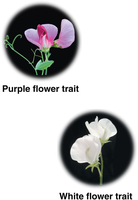
Dominant Trait: Expressed when at least one dominant allele is present (e.g., purple flower color in peas).
Recessive Trait: Expressed only when both alleles are recessive (e.g., white flower color in peas).
Carriers and Recessive Disorders
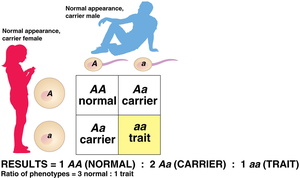
Many human genetic disorders are recessive. Carriers are heterozygous individuals who do not show symptoms but can pass the allele to offspring.
Carrier: Heterozygous for a recessive disorder allele (e.g., Aa).
Inheritance Pattern: Two carriers can produce affected offspring with a 1:4 probability.
Sources of Genetic Variation
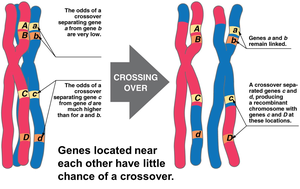
Sexual reproduction increases genetic diversity through independent assortment, crossing over, and random fertilization.
Independent Assortment: Chromosomes are distributed randomly to gametes during meiosis.
Crossing Over: Homologous chromosomes exchange segments, creating recombinant chromosomes.
Random Fertilization: Any sperm can fertilize any egg, further increasing variation.
Pleiotropy and Polygenic Inheritance
Some genes affect multiple traits (pleiotropy), while some traits are influenced by multiple genes (polygenic inheritance).
Pleiotropy: One gene influences several phenotypic characters.
Polygenic Inheritance: Multiple genes contribute to a single trait, often resulting in continuous variation (e.g., skin color, height).
Incomplete Dominance
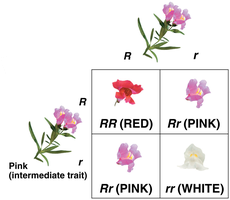
Incomplete dominance occurs when the heterozygote displays an intermediate phenotype between the two homozygotes.
Example: In snapdragons, crossing red (RR) and white (rr) flowers produces pink (Rr) offspring.
Punnett Squares and Pedigrees
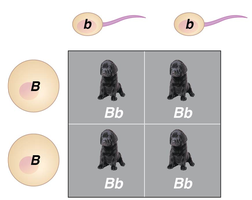
Punnett squares are used to predict the genotypes and phenotypes of offspring from genetic crosses. Pedigrees track the inheritance of traits in families.
Punnett Square: A grid that shows possible allele combinations from parental gametes.
Pedigree: A diagram that traces the inheritance of a trait through generations.