 Back
Genetics, Variation, and the Foundations of Evolutionary Theory
Study Guide - Smart Notes
 Tailored notes based on your materials, expanded with key definitions, examples, and context.
Genetics and Variation
Variation in Phenotypes
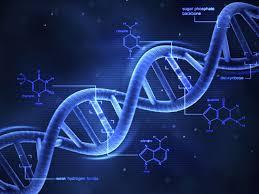
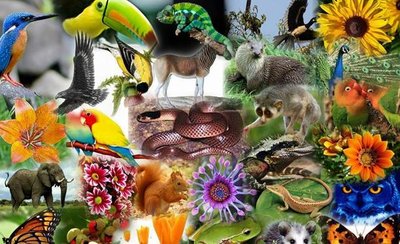
Variation in observable traits, or phenotypes, is a fundamental aspect of life and is responsible for the diversity of species on Earth. Phenotypic variation arises from differences in the genetic code, which is composed of DNA sequences inherited from parents.
Phenotype: The set of observable characteristics of an organism, such as fur color, height, or flower shape.
Genotype: The genetic makeup of an organism that determines its phenotype.
DNA: The molecule that carries genetic information in living organisms.
Variation: Differences in DNA sequences among individuals, leading to diversity in traits.
Example: Black fur vs. white fur in dogs is a result of genetic variation at specific loci.
Genetic Code and Loci
The genetic code consists of sequences of nucleotides (A, T, C, G) at specific locations, or loci, on the genome. Studying these loci helps scientists understand the correlation between genotype and phenotype.
Locus (plural: loci): A specific location on a chromosome where a gene or genetic marker is found.
Nucleotide: The basic building block of DNA, consisting of adenine (A), thymine (T), cytosine (C), and guanine (G).
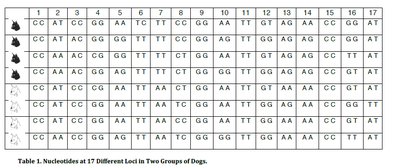
Example: Table of nucleotides at 17 loci in two groups of dogs, showing differences associated with fur color.
1 | 2 | 3 | 4 | 5 | 6 | 7 | 8 | 9 | 10 | 11 | 12 | 13 | 14 | 15 | 16 | 17 | |
|---|---|---|---|---|---|---|---|---|---|---|---|---|---|---|---|---|---|
Black dog 1 | CC | AT | AC | GC | AA | TC | TT | CC | GG | AA | TT | CC | GG | AA | AG | GT | AT |
Black dog 2 | CC | AT | AC | GC | AA | TC | TT | CC | GG | AA | TT | CC | GG | AA | AG | GT | AT |
White dog 1 | CC | AA | AC | GC | AA | TC | TT | CC | GG | AA | TT | CC | GG | AA | AG | GT | AT |
White dog 2 | CC | AA | AC | GC | AA | TC | TT | CC | GG | AA | TT | CC | GG | AA | AG | GT | AT |
Evolutionary Theory
Origins of Evolutionary Theory
The study of species diversity in the 1800s led to the development of the theory of evolution. Charles Darwin and Alfred Russel Wallace independently proposed that species evolve over time through mechanisms such as natural selection and adaptation.
Evolution: The process by which species change over time through genetic variation and natural selection.
Natural Selection: The mechanism by which advantageous traits become more common in a population due to differential survival and reproduction.
Common Ancestry: The concept that all species share a common ancestor and diverge over time.
Adaptation: Traits that enhance survival and reproduction in a specific environment.
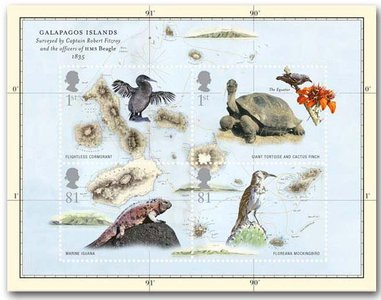
Example: Darwin's voyage on the HMS Beagle and Wallace's studies in the Malay Archipelago contributed to the development of evolutionary theory.
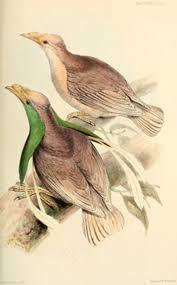
Key Figures in Evolutionary Theory
Charles Darwin and Alfred Russel Wallace are recognized as the founders of modern evolutionary theory. Their joint presentation in 1858 introduced the concept of natural selection to the scientific community.
Charles Darwin: Published 'On the Origin of Species' (1859), proposing natural selection as the primary mechanism of evolution.
Alfred Russel Wallace: Independently developed similar ideas and contributed to the understanding of environmental influences on adaptation.
Example: Both scientists emphasized the importance of variation and adaptation in the evolution of species.
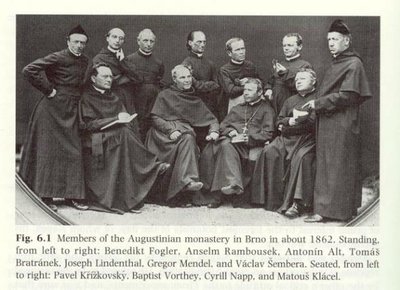
Mechanisms of Evolution and Heredity
While Darwin and Wallace described the process of evolution, the mechanism of heredity remained unclear until later discoveries. Early theories such as pangenesis and blended inheritance were eventually replaced by Mendelian genetics.
Pangenesis: Darwin's hypothesis that all parts of the body contribute to the genetic material passed to offspring.
Blended Inheritance: The idea that offspring are a blend of parental traits, which was later disproven.
Mendelian Genetics: Gregor Mendel's experiments with pea plants established the laws of heredity, showing that traits are inherited in discrete units (genes).
Example: Mendel's work with Pisum sativum (pea plants) demonstrated predictable patterns of inheritance.
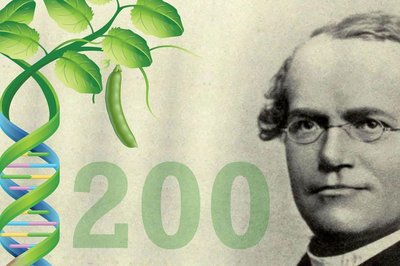
Variation and the Basis of Heredity
Quantitative Studies of Variation
Scientists such as Sir Francis Galton and Gregor Mendel investigated the basis of variation and the transmission of traits. Galton used statistical methods and studied twins, while Mendel focused on plant hybrids.
Quantitative Genetics: The study of traits that are influenced by multiple genes and can be measured numerically.
Biomarkers: Unique biological characteristics, such as fingerprints, used to study inheritance.
Example: Galton's experiments with peas and Mendel's laws of inheritance provided a foundation for modern genetics.
Summary Table: Key Concepts in Genetics and Evolution
Concept | Definition | Example/Application |
|---|---|---|
Phenotype | Observable traits of an organism | Fur color in dogs |
Genotype | Genetic makeup of an organism | Nucleotide sequence at specific loci |
Variation | Differences in genetic code among individuals | Seed diameter in peas |
Evolution | Change in species over time | Darwin's finches |
Natural Selection | Survival and reproduction of the fittest | Adaptation to environment |
Mendelian Genetics | Inheritance of traits in discrete units | Pea plant experiments |
Key Equations and Laws
Mendel's Laws of Heredity
Law of Segregation: Each individual has two alleles for each gene, which segregate during gamete formation.
Law of Independent Assortment: Genes for different traits assort independently during gamete formation.
Example Punnett Square Equation:
Hardy-Weinberg Equation:
Where p and q are the frequencies of two alleles in a population.
Conclusion
The study of genetics and variation provides the foundation for understanding the diversity of life and the mechanisms of evolution. Key figures such as Darwin, Wallace, Galton, and Mendel contributed to the development of evolutionary theory and the laws of heredity, which remain central to modern biology.
