 Back
BackGenome Evolution: Chromosomal Changes, Gene Duplication, and the Globin Gene Family
Study Guide - Smart Notes
 Tailored notes based on your materials, expanded with key definitions, examples, and context.
Genome Evolution and Chromosomal Changes
Introduction to Genome Evolution
Genome evolution refers to the processes by which the structure and content of genomes change over time. These changes can occur through mutations, chromosomal rearrangements, gene duplications, and other mechanisms. Understanding genome evolution helps explain the diversity of life and the genetic basis for evolutionary relationships among species.
Chromosomal Rearrangements and Speciation
Chromosomal rearrangements, such as fusions, fissions, duplications, and inversions, play a significant role in genome evolution and speciation. These changes can alter gene order and function, sometimes leading to reproductive isolation and the formation of new species.
Chromosomal Fusion: The joining of two chromosomes to form a single chromosome. For example, human chromosome 2 is the result of a fusion between two ancestral ape chromosomes.
Polyploidy: The presence of extra sets of chromosomes due to errors in meiosis. Polyploidy is common in plants and can lead to new species.
Comparative Genomics: Comparing the chromosomal organization of different species reveals evolutionary relationships and the history of chromosomal changes.
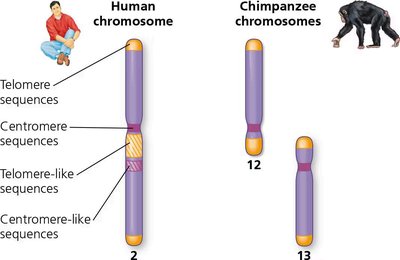
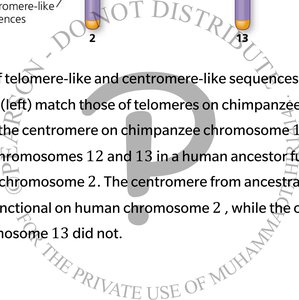
Example: Human chromosome 2 contains telomere-like and centromere-like sequences that match those of chimpanzee chromosomes 12 and 13, supporting the hypothesis of a chromosomal fusion event in human ancestry.
Comparative Genomics with Other Mammals
Comparisons between human and mouse chromosomes show that blocks of genes have remained together since their divergence from a common ancestor. This conservation of gene order, or synteny, provides evidence for evolutionary relationships.
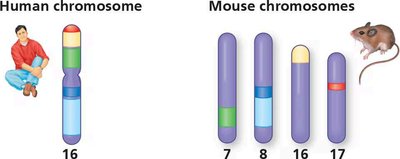
Example: Segments of human chromosome 16 are found on mouse chromosomes 7, 8, 16, and 17, indicating shared ancestry and chromosomal rearrangements over evolutionary time.
Gene Duplication and Divergence
Mechanisms of Gene Duplication
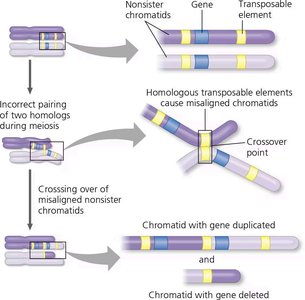
Gene duplication is a major source of genetic novelty. Duplicated genes can acquire new functions or become nonfunctional pseudogenes. Duplication can occur through unequal crossing over during meiosis, often facilitated by repetitive DNA sequences or transposable elements.
Unequal Crossing Over: Misalignment of homologous chromosomes during meiosis can result in one chromatid with a duplicated gene and another with a deleted gene.
Transposable Elements: These DNA sequences can facilitate misalignment and recombination, leading to gene duplication or deletion.
Example: The globin gene family arose through multiple rounds of gene duplication and divergence.
Evolution of the Globin Gene Family
The globin gene family is a classic example of gene duplication and divergence. The ancestral globin gene duplicated and diverged to produce the alpha and beta globin gene families, which are located on different chromosomes and have distinct functions in oxygen transport.
Alpha-Globin Family: Located on chromosome 16 in humans; includes several functional genes and pseudogenes.
Beta-Globin Family: Located on chromosome 11 in humans; includes genes expressed at different developmental stages.
Pseudogenes: Nonfunctional copies of genes that have accumulated mutations over time.
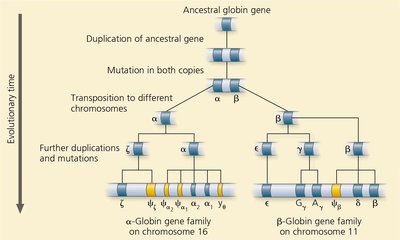
Example: The duplication and divergence of globin genes have produced specialized proteins such as myoglobin (for muscle oxygen storage) and plant leghemoglobin (for nitrogen fixation in root nodules).
Structure and Function of Globin Proteins
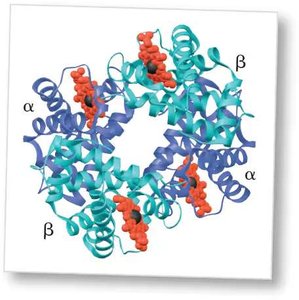
Globin proteins, such as hemoglobin, are composed of multiple subunits (alpha and beta chains) that bind oxygen. The structure of these proteins is highly conserved, but sequence differences reflect their evolutionary history.
Comparing Globin Amino Acid Sequences
Alignment of globin amino acid sequences from different family members reveals regions of similarity and divergence. These comparisons help reconstruct evolutionary relationships and identify functionally important residues.
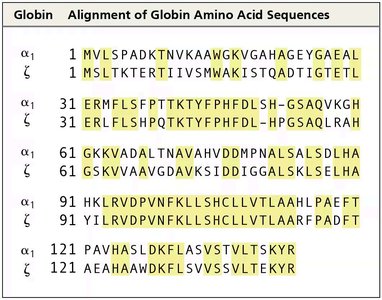
Example: The percent identity between globin sequences can be calculated to assess evolutionary distance and functional conservation.
