 Back
BackCh 21
Study Guide - Smart Notes
 Tailored notes based on your materials, expanded with key definitions, examples, and context.
Genomes: Structure and Function
Definition and Overview
The genome of an organism comprises all its genes and DNA, serving as the blueprint for its biological structure and function. Understanding genomes is fundamental to modern biology, as it enables the study of heredity, variation, and evolution.
Genome: The complete set of genetic material in an organism, including both coding and noncoding regions.
Gene: A segment of DNA that codes for a specific protein or functional RNA.
Chromosome: A DNA molecule with part or all of the genetic material of an organism.
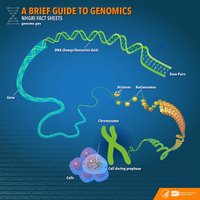
Studying Genomes
Modern genomics utilizes sequencing technologies and bioinformatics to analyze genome structure and variation.
Sequencing: Determining the order of nucleotides in DNA.
Bioinformatics: The application of computational tools to manage and analyze biological data.
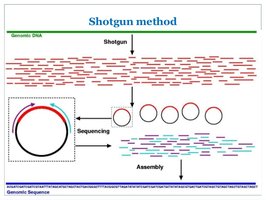
The Human Genome Project and Bioinformatics
Human Genome Project (HGP)
The Human Genome Project (1990–2003) was a landmark international effort to sequence the entire human genome.
Key facts: Each human cell contains 46 chromosomes, about 2 meters of DNA, 3 billion nucleotides, and approximately 30,000 genes.
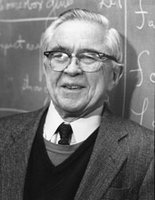
Francis Collins: Head of the HGP.
Impact: Enabled advances in medicine, genetics, and evolutionary biology.
Gene Density and Noncoding DNA
Gene Density and Genome Composition
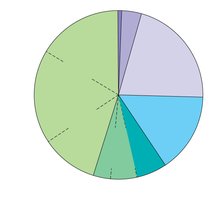
Human and mammalian genomes have low gene density, with a large proportion of noncoding DNA.
Introns: Noncoding regions within genes.
Intergenic DNA: DNA sequences located between genes.
Pseudogenes: Former genes that have accumulated mutations and are nonfunctional.
Repetitive DNA: DNA sequences present in multiple copies, including transposable elements.
98.5% of the human genome does not code for proteins, rRNAs, or tRNAs.
Genetic Variation: The Raw Material of Evolution
Importance of Variation
Genetic variation is essential for evolution. Without variation, populations cannot adapt or evolve. Mutations are the ultimate source of genetic variation.
Variation: Differences in DNA sequences among individuals.
Mutation: Any change in the DNA sequence.
Sources of Genetic Variation
Mechanisms Generating Variation
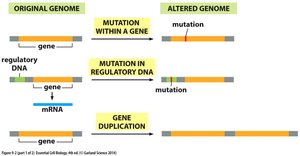
Variation arises through several mechanisms:
Mutation of a gene
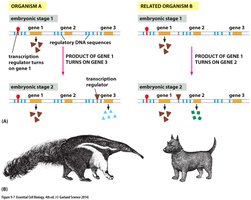
Mutation of regulatory sequences
Creation of a new gene
Duplication of a gene
Chromosome alteration
Chromosome duplication
Mutations
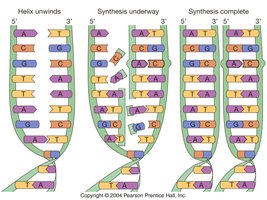
Mutations can occur due to external damaging agents, DNA polymerase errors, or viral infections.
Silent mutations: Do not change the amino acid sequence.
Replacement mutations: Change one amino acid for another.
Frame shift mutations: Insertions or deletions that alter the reading frame.
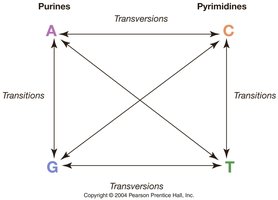
Substitution mutations: Replace one nucleotide with another.
Mutation Rates
Mutation rates vary among organisms and can be measured experimentally. For example, roundworms show a mutation rate of mutations per site per generation.
Gene Creation and Duplication
Creation of New Genes
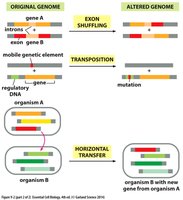
New genes can arise through exon duplication and exon shuffling, often due to meiotic errors.
Exon duplication: Copying of exons within a gene.
Exon shuffling: Recombination of exons from different genes.
Gene Duplication and Multigene Families
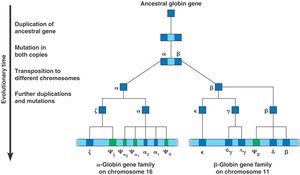
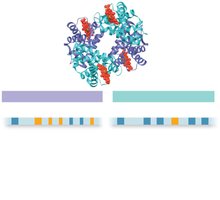
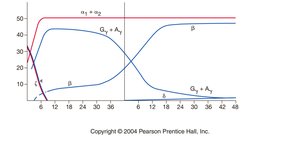
Gene duplication results in multigene families, such as rRNA and histone genes.
Multigene family: A group of genes with similar sequences and functions.
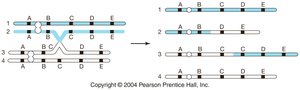
Duplication can occur via unequal crossing over, transposons, or retrotransposons.
Chromosomal Alterations and Polyploidy
Chromosomal Alterations
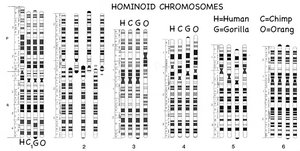
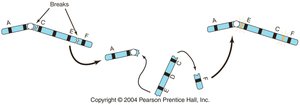
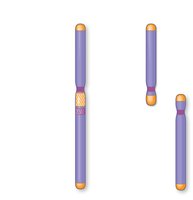
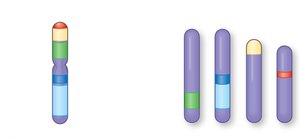
Chromosomal changes such as inversions and duplications can alter gene order and function.
Inversion: A segment of chromosome is reversed end to end.
Duplication: A segment of chromosome is copied.
Polyploidy
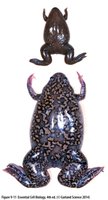
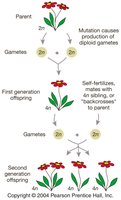
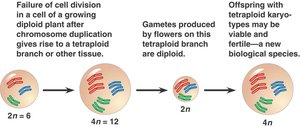
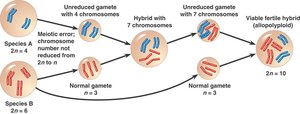
Polyploidy is the duplication of entire sets of chromosomes, common in plants and rare in animals.
Diploid (2n): Two sets of chromosomes.
Tetraploid (4n): Four sets of chromosomes.
Polyploidy can result from errors in meiosis or fertilization.
Homeotic Genes and Spatial Patterning
Homeotic Genes and Hox Genes
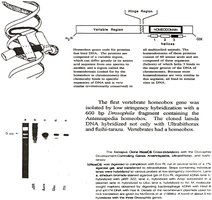
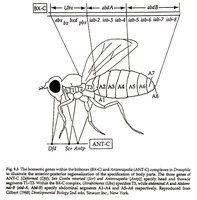
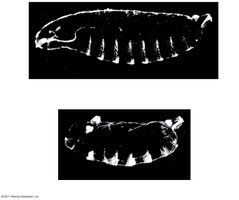
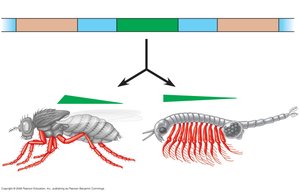
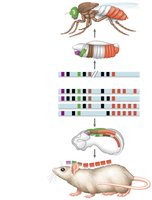
Homeotic genes contain a homeobox DNA-binding domain and regulate spatial development.
Homeobox: DNA sequence encoding the homeodomain.
Homeodomain: Protein domain that binds DNA.
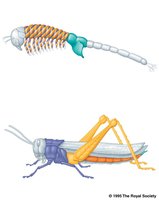
Hox genes: Homeotic genes in animals, specifying body segment identity.
Colinearity and Evolution
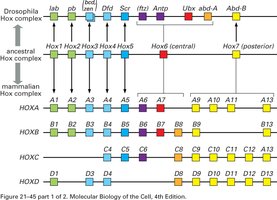
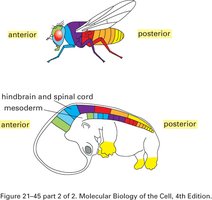
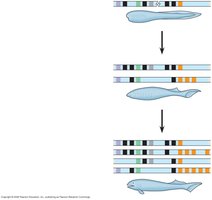
Hox genes display temporal and spatial colinearity, with their order in DNA reflecting their expression along the body axis.
Vertebrates have four Hox complexes, each with about 10 genes.
Duplications of Hox genes contributed to vertebrate evolution.
Summary Table: Types of Genetic Variation
Type of Variation | Mechanism | Example |
|---|---|---|
Mutation | Change in DNA sequence | Point mutation, insertion, deletion |
Gene Duplication | Copying of gene segments | Globin gene family |
Exon Shuffling | Recombination of exons | TPA gene evolution |
Chromosome Alteration | Inversion, translocation, duplication | Human-chimp chromosome differences |
Polyploidy | Duplication of entire genome | Plant speciation |
Conclusion
The study of genomes and genetic variation is central to understanding biological diversity, evolution, and development. Mechanisms such as mutation, gene duplication, chromosomal alterations, and polyploidy generate the raw material for evolutionary change and adaptation. Homeotic genes and Hox genes play crucial roles in spatial patterning and the evolution of complex body plans.
