 Back
BackGenomes and Their Evolution: Study Guide for Chapter 21 (Campbell Biology)
Study Guide - Smart Notes
 Tailored notes based on your materials, expanded with key definitions, examples, and context.
Genomics and Bioinformatics
Introduction to Genomics
Genomics is the study of the entire set of genes (genome) and their interactions within an organism. It encompasses the sequencing, mapping, and analysis of genomes to understand biological function and evolution.
Genomics: The comprehensive study of genomes, including their structure, function, evolution, and mapping.
Bioinformatics: The application of computational tools to store, analyze, and interpret biological data, especially large-scale genomic data.
Applications: Includes gene discovery, evolutionary studies, and medical diagnostics.
Sequencing and Analyzing Genomes
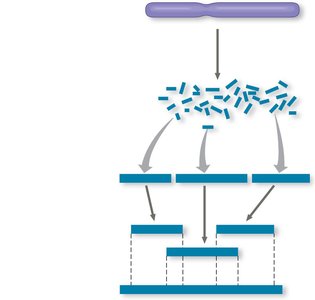
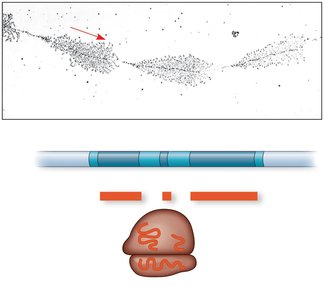
Modern genome sequencing involves fragmenting DNA, sequencing the fragments, and assembling them into a complete genome using computational methods.
DNA Fragmentation: DNA is cut into overlapping fragments for sequencing.
Cloning and Sequencing: Fragments are cloned into vectors and sequenced individually.
Assembly: Computer software orders the sequences into a complete genome.
Gene Cloning and Recombinant DNA Technology
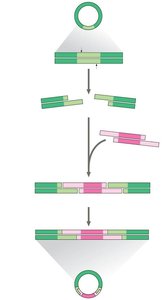
Gene cloning involves inserting a gene of interest into a plasmid vector, which is then introduced into a bacterial cell for replication and expression.
Restriction Enzymes: Used to cut DNA at specific sites, producing sticky ends for ligation.
DNA Ligase: Seals the strands to form recombinant DNA.
Applications: Production of proteins, gene therapy, and genetic engineering.
Identifying Genes and Their Functions
Gene Annotation and Functional Studies
Gene annotation is the process of identifying protein-coding genes within DNA sequences and predicting their functions.
Gene Annotation: Automated comparison of unknown genes to known genes in databases.
Functional Confirmation: Techniques like RNA-seq and CRISPR-Cas9 are used to study gene function by observing phenotypic changes after gene knockout.
Proteomics and Systems Biology
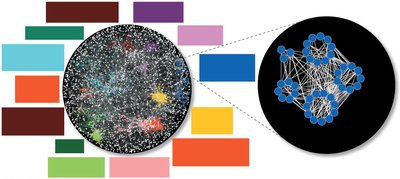
Proteomics is the large-scale study of proteins, their properties, and their functional integration in biological systems. Systems biology integrates genomics, proteomics, and other data to understand complex biological networks.
Proteome: The entire set of proteins expressed by a cell or organism.
Systems Biology: Focuses on the interactions and integration of genes and proteins within biological systems.
Medical Applications
Genomic technologies are used in medicine to study gene expression patterns in diseases such as cancer.
Cancer Genome Atlas: Project comparing gene sequences and expression in cancer vs. normal cells.
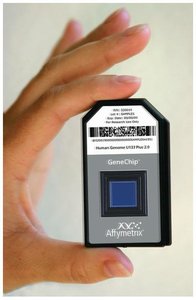
Microarrays: Silicon chips containing thousands of gene probes used to analyze gene expression.
Genome Structure and Variation
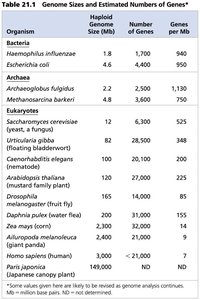
Genome Size, Gene Number, and Density
Genomes vary widely in size, number of genes, and gene density across different organisms.
Gene Density: Number of genes per megabase (Mb) of DNA; varies between prokaryotes and eukaryotes.
Alternative Splicing: Allows vertebrate genomes to produce multiple polypeptides from a single gene.
Noncoding DNA and Repetitive Elements
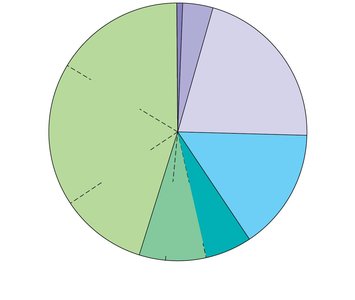
Much of the genome consists of noncoding DNA, including pseudogenes and repetitive sequences.
Pseudogenes: Former genes that have accumulated mutations and are nonfunctional.
Repetitive DNA: Includes transposable elements and other repeated sequences.
Sequence Conservation: Some noncoding regions are highly conserved, indicating important functions.
Transposable Elements and Genome Evolution
Transposons and Retrotransposons
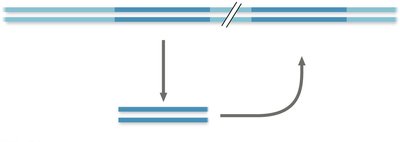
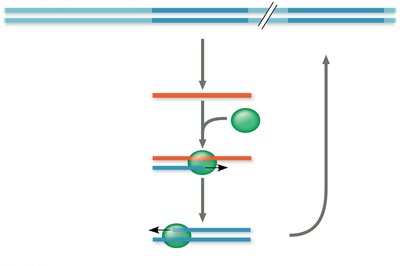
Transposable elements are DNA sequences that can move within the genome, contributing to genetic diversity and evolution.
Transposons: Move via a DNA intermediate, require transposase enzyme.
Retrotransposons: Move via an RNA intermediate, require reverse transcriptase.
Alu Elements: A family of repetitive sequences in primates, some of which regulate gene expression.
LINE-1 (L1): Retrotransposons that may affect gene expression and neuronal diversity.
Other Repetitive DNA
Simple sequence DNA and short tandem repeats (STRs) are common in centromeres and telomeres, playing structural roles.
STRs: Repeating units of 2–5 nucleotides; number of repeats varies among individuals.
Multigene Families and Genome Evolution
Multigene Families
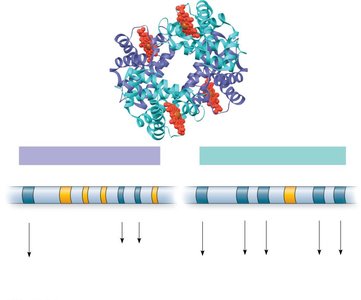
Multigene families are collections of two or more identical or similar genes, often coding for related proteins.
Identical DNA Sequences: Often clustered, such as rRNA gene families.
Globin Gene Families: Human α-globin and β-globin gene families are examples of multigene families with related functions.
Genome Evolution Mechanisms
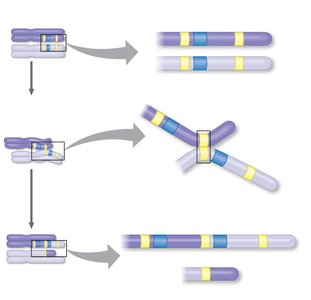
Genome evolution is driven by mutation, duplication, rearrangement, and polyploidy.
Polyploidy: Extra sets of chromosomes can lead to gene diversification.
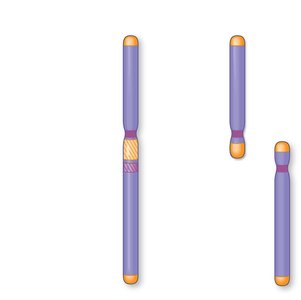
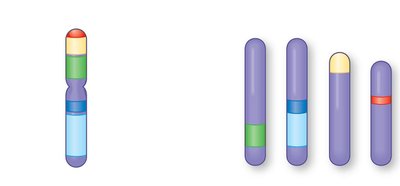
Chromosome Structure Alterations: Fusion, duplication, and rearrangement of chromosomes contribute to evolutionary change.
Evolution of Genes with Related and Novel Functions
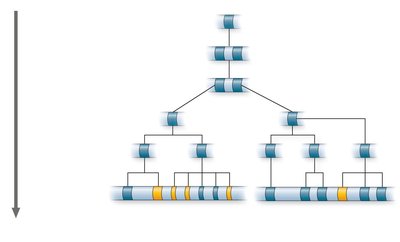
Gene duplication and mutation can lead to families of genes with related functions or novel functions.
Globin Genes: Evolved from a common ancestral gene through duplication and divergence.
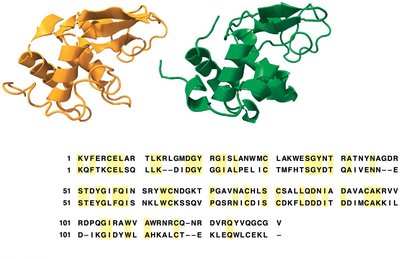
Lysozyme and α-lactalbumin: Example of gene duplication leading to novel functions.
Exon Duplication and Shuffling
Errors in meiosis can result in exon duplication or shuffling, creating new gene variants.
Exon Shuffling: Mixing and matching of exons within or between genes, leading to new protein functions.
Role of Transposable Elements in Genome Evolution
Transposable elements can facilitate recombination, alter gene expression, and create new sites for alternative splicing.
Effects: Usually detrimental, but occasionally advantageous for evolution.
Comparative Genomics and Evolutionary Development
Comparing Genome Sequences
Comparative genomics reveals evolutionary relationships and clarifies mechanisms of development and diversity.
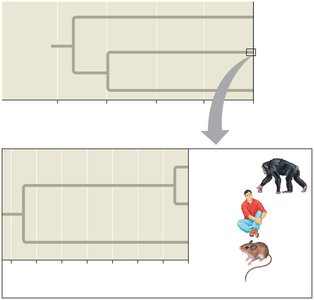
Phylogenetic Trees: Used to represent relationships among species based on genome comparisons.
Highly Conserved Genes: Help clarify relationships among distantly related species.
Comparing Closely Related Species
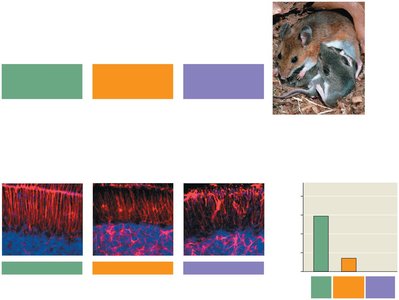
Genomes of closely related species are organized similarly, but differ in sequence and gene expression.
Human vs. Chimpanzee: Differ by 1.2% at single base pairs and 2.7% due to insertions/deletions.
FOXP2 Gene: Rapidly evolving in humans, associated with speech and language.
Comparing Genomes Within a Species
Genetic variation within humans is due to single nucleotide polymorphisms, inversions, deletions, and duplications.
Copy-Number Variants: Useful for studying human evolution and health.
Evolutionary Developmental Biology (Evo-Devo)
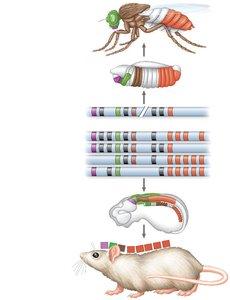
Evo-devo compares developmental processes across organisms, revealing conserved genes and regulatory sequences.
Homeotic Genes: Include a homeobox sequence, highly conserved across animals.
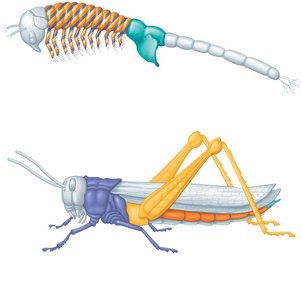
Hox Genes: Control body plan and segment identity in animals.
Regulatory Sequence Changes: Can lead to major changes in body form.
Summary Table: Genome Features Across Domains
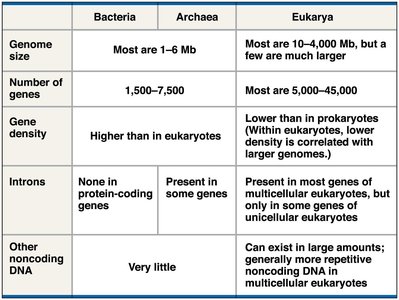
This table compares genome size, gene number, gene density, introns, and noncoding DNA across Bacteria, Archaea, and Eukarya.
Bacteria | Archaea | Eukarya | |
|---|---|---|---|
Genome size | Most are 1–6 Mb | Most are 1–6 Mb | Most are 10–4,000 Mb, but a few are much larger |
Number of genes | 1,500–7,500 | 1,500–7,500 | Most are 5,000–45,000 |
Gene density | Higher than in eukaryotes | Higher than in eukaryotes | Lower than in prokaryotes (Within eukaryotes, lower density is correlated with larger genomes.) |
Introns | None in protein-coding genes | Present in some genes | Present in most genes of multicellular eukaryotes, but only in some genes of unicellular eukaryotes |
Other noncoding DNA | Very little | Very little | Can exist in large amounts; generally more repetitive noncoding DNA in multicellular eukaryotes |
Key Equations and Concepts
Gene Density Formula:
Alternative Splicing: (in vertebrates)
