 Back
Genomics, Genetic Engineering, and the Human Genome Project: Key Concepts and Advances
Study Guide - Smart Notes
 Tailored notes based on your materials, expanded with key definitions, examples, and context.
Genetic Engineering and Patenting of Life
Super Oil-Eating Bacteria and the Birth of Molecular Genetics
Genetic engineering has enabled the creation of unique microorganisms capable of degrading environmental pollutants. The development of oil-eating bacteria marked a significant milestone in biotechnology, demonstrating the practical application of genetic manipulation for environmental remediation.
Genetic Engineering: The process of altering the genetic material of organisms to achieve desired traits, such as enhanced metabolic pathways.
Oil-Eating Bacteria: Genetically engineered strains of Pseudomonas species capable of breaking down hydrocarbons in oil spills.
Plasmids: Small, circular DNA molecules in bacteria that can carry genes for degradative pathways and drug resistance.
Patent Precedent: The patenting of genetically engineered organisms, such as oil-eating bacteria, set legal precedents for biotechnology.
Key Example: The creation of multiplasmid hydrocarbon-degrading Pseudomonas strains, as described in the patent US4259444A.

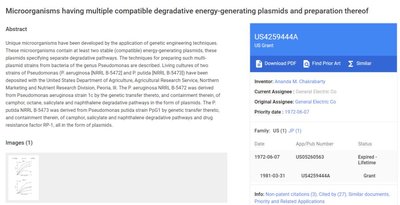
Additional info: The patenting of living organisms was confirmed by the U.S. Supreme Court in Diamond v. Chakrabarty (1980), which ruled that human-made microorganisms are patentable.

Technological Advances in Molecular Genetics
Discovery and Structure of DNA
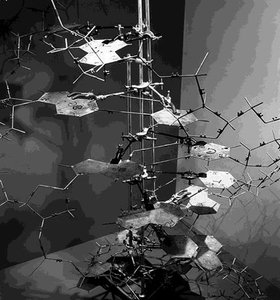
The discovery of DNA's structure in 1953 was a pivotal event in biology, providing the foundation for understanding heredity and gene expression.
DNA Structure: Double helix model proposed by Watson and Crick, based on X-ray diffraction data.
Key Properties: DNA is composed of nucleotides (adenine, thymine, cytosine, guanine) and stores genetic information.
X-ray Diffraction: Technology used to reveal the helical structure of DNA.

Sequencing and Amplification of DNA
Advances in DNA sequencing and amplification have revolutionized genetic research, enabling rapid analysis and manipulation of genetic material.
DNA Sequencing: Determining the order of nucleotides in DNA, first achieved in 1977.
Polymerase Chain Reaction (PCR): Technique developed in 1987 for synthetic amplification of DNA, allowing for the replication of specific DNA segments.
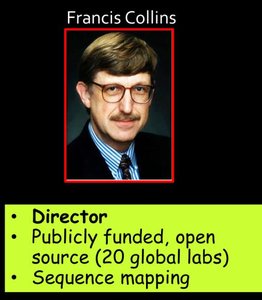
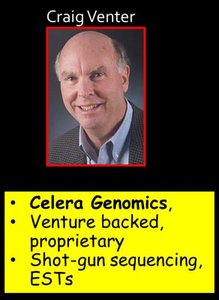
Key Figures: Kary Mullis (PCR), Francis Collins (Human Genome Project), Craig Venter (Celera Genomics).

The Human Genome Project (HGP)
Overview and Goals
The Human Genome Project (1990-2003) was a global, collaborative effort to sequence the entire human genome. It aimed to provide open access to genetic information and advance biomedical research.
Public Consortium: Led by the National Human Genome Research Institute, directed by Francis Collins.
Open Source Principle: All sequence data was made publicly available within 24 hours of assembly.
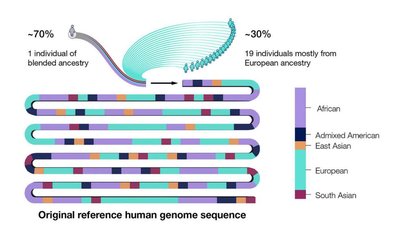
Composite Genome: Sequencing was performed on material from multiple de-identified individuals, both male and female.

Sequencing Methods: Hierarchical Positional Cloning vs. Whole Genome Shotgun
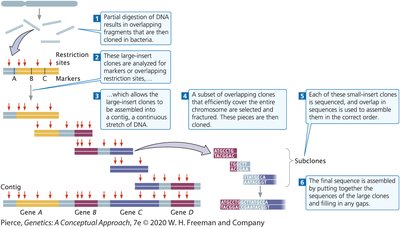
Two major approaches were used to sequence the human genome: hierarchical positional cloning (public consortium) and whole genome shotgun sequencing (Celera Genomics).
Hierarchical Positional Cloning: Involves fragmenting genomic DNA with restriction enzymes, sequencing fragments, and aligning them using molecular markers.
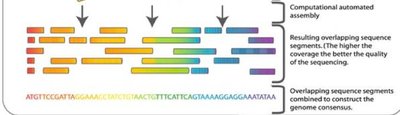
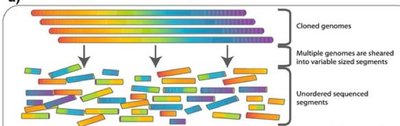
Whole Genome Shotgun Sequencing: Involves randomly fragmenting the genome, sequencing all fragments, and computationally assembling the sequence.
Comparison: Hierarchical method is slower but more accurate; shotgun method is faster but relies heavily on computational assembly.

Findings from the Human Genome Project
The HGP revealed fundamental insights into human genetics, gene regulation, and sequence homology across species.
Genome Size: Haploid human DNA is approximately 3.2 billion base pairs (bp).
Protein-Coding Sequences: Only about 2% of the genome codes for proteins; 98% is non-coding.
Gene Regulation: Small RNA molecules, such as siRNA and miRNA, regulate gene expression.
Inter-human Differences: Sequence differences are about 0.1% of the genome, with single nucleotide polymorphisms (SNPs) occurring every 1/1000 bp.
Gene Count: Humans have approximately 22,300 genes, but gene number does not correlate with organism complexity.
Organism | Number of Genes |
|---|---|
Human | 22,300 |
Mouse | 22,000 |
Fruit fly | 13,500 |
Roundworm (C. elegans) | 19,000 |
Yeast | 6,600 |
Rice | 37,500 |
Sequence Homology and Evolutionary Insights
Comparative genomics provides insights into evolutionary relationships and genetic similarity between species.
Human-Human Homology: 99.9%
Human-Chimpanzee Homology: 98.8%
Human-Mouse Homology: 85%
Human-Fruit Fly Homology: 70%
Human-Banana Homology: 60%
Comparison | % Homology |
|---|---|
Human-Human | 99.9% |
Human-Chimp | 98.8% |
Human-Mouse | 85% |
Human-Fruit Fly | 70% |
Human-Banana | 60% |
Patenting Human DNA and Legal Implications
Patenting of Human Genes
The patenting of human genes raised ethical and legal questions about ownership of genetic information. The Supreme Court ruled in 2013 that naturally occurring DNA segments are not patentable.
Legal Precedent: Oil-eating bacteria were patented, setting a precedent for patenting life forms.
Human Genes: Attempts were made to patent over 6,500 human genes, but the Supreme Court ruled that isolated, unmodified DNA is a product of nature and not patent eligible.
Impact: Ensured that human genome data remains accessible for research and medical applications.
Summary Table: Key Events and Concepts
Event/Concept | Year | Significance |
|---|---|---|
Structure of DNA discovered | 1953 | Foundation for molecular genetics |
Genetically engineered bacteria | 1972 | Environmental biotechnology, patent precedent |
DNA sequencing | 1977 | Enabled genome analysis |
PCR developed | 1987 | Rapid DNA amplification |
Human Genome Project | 1990-2003 | Sequencing the human genome |
Supreme Court ruling on gene patents | 2013 | DNA is not patentable if unmodified |
Recap: Properties of Hereditary Material
DNA is the hereditary material in most organisms.
Key properties include stability, ability to replicate, and capacity to encode information.
Technological advances have enabled manipulation, sequencing, and comparison of genetic material.
