 Back
Global Change and Climate: Biogeochemical Cycles, Greenhouse Effect, and Climate Change
Study Guide - Smart Notes
 Tailored notes based on your materials, expanded with key definitions, examples, and context.
Global Change and Biogeochemical Cycles
Earth's Surface Temperature and Atmospheric Influence
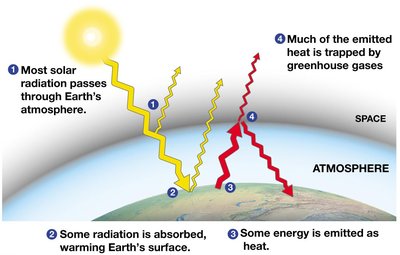
Earth's surface temperature is regulated by the atmosphere, which interacts with electromagnetic radiation from the sun. The sun emits a spectrum of radiation, including ultraviolet, visible, and infrared waves. Only a fraction of this energy reaches Earth's surface, and the atmosphere plays a crucial role in determining how much is absorbed or reflected.
Electromagnetic Radiation: Objects emit radiation based on their temperature. The sun's surface (~6000°C) emits about 1366.5 watts/m2, but only 342 W/m2 reaches the top of Earth's atmosphere.
Atmospheric Absorption: The atmosphere absorbs and reflects some of this energy, influencing global climate.
Biogeochemical Cycles and Climate
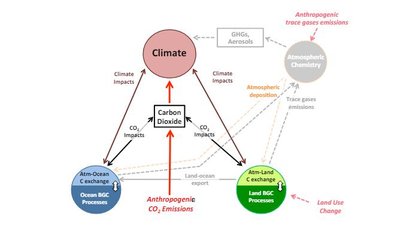
Biogeochemical cycles, such as the carbon cycle, are fundamental to understanding global climate. These cycles describe the movement of elements like carbon through the biosphere, atmosphere, hydrosphere, and lithosphere. Human activities, especially the burning of fossil fuels, have altered these cycles, increasing greenhouse gas concentrations and impacting climate.
Carbon Cycle: Carbon dioxide (CO2) is exchanged between the atmosphere, oceans, and land. Anthropogenic emissions disrupt this balance.
Climate Impacts: Changes in biogeochemical cycles affect atmospheric chemistry and climate patterns.
The Greenhouse Effect
Mechanism and Importance
The greenhouse effect is the warming of Earth's surface due to the retention of heat by greenhouse gases in the atmosphere. These gases absorb infrared energy emitted from Earth's surface, preventing it from escaping into space and thus warming the planet.
Key Greenhouse Gases: Water vapor (H2O), carbon dioxide (CO2), methane (CH4), and nitrous oxide (N2O).
Planetary Comparisons: Mars (3°C), Earth (34°C), Venus (468°C) – differences due to atmospheric composition.
Flux and Climate: The flux of greenhouse gases into and out of the atmosphere directly affects global temperature.
Global Warming and Temperature Trends
Recent Increases in Greenhouse Gases
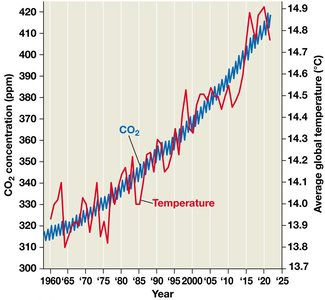
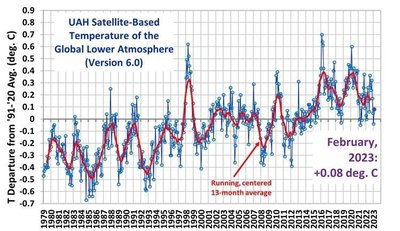
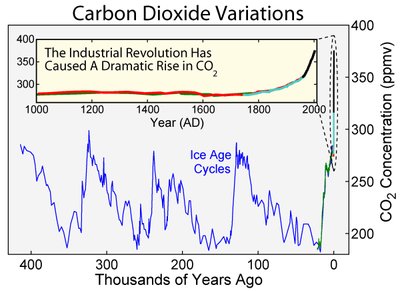
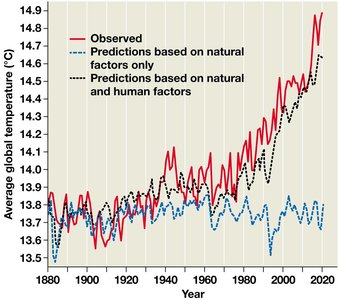
Human activities have led to a significant increase in greenhouse gases, resulting in global warming. This is evidenced by rising average global temperatures over the past century.
CO2 and Temperature: There is a strong correlation between atmospheric CO2 concentration and global temperature.
Long-Term Trends: Satellite and ground-based measurements show a consistent increase in global temperatures.
Global Warming vs. Climate Change
Definitions and Distinctions
Global warming refers specifically to the increase in Earth's average surface temperature due to rising greenhouse gases. Climate change encompasses broader changes in the statistical properties of global climate, including temperature, precipitation, and weather patterns over long periods.
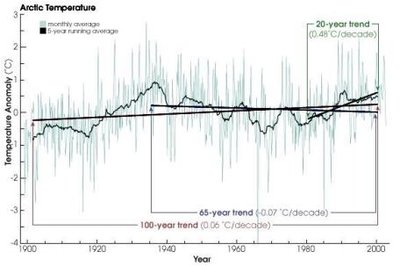
Temperature Anomalies: Deviations from long-term means, either warmer or colder.
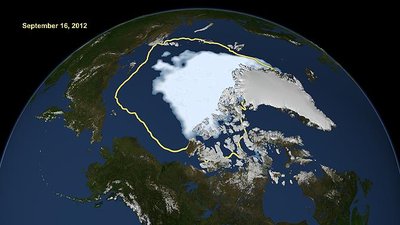
Glacier and Arctic Sea Ice: Shrinkage with warming temperatures.
Precipitation: Increases in some areas, decreases in others.
Vegetation and Animals: Changes in distribution and persistence due to altered climate.
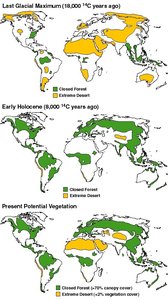
Effects of Climate Change
Vegetation and Animal Responses
Climate change affects the timing of vegetation growth and reproduction, which in turn impacts food webs and animal populations. For example, mismatches in timing between plant growth and animal breeding can reduce survival rates.
Phenological Shifts: Early emergence of caterpillars before oak leaves, leading to starvation.
Songbird Breeding: Lack of adjustment in nesting season results in fewer caterpillars to feed young, lowering breeding success.
Climate Change Mitigation
Strategies and International Cooperation
Mitigating climate change requires coordinated international efforts to decrease greenhouse gas production and alter the carbon cycle. This can be achieved by reducing CO2 emissions and increasing carbon sinks.
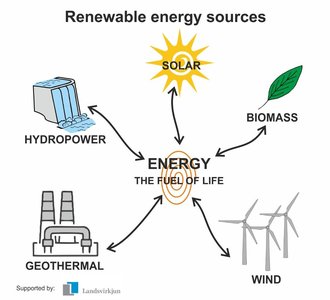
Alternate Energy Sources: Transitioning from fossil fuels to renewable energy sources such as wind, hydroelectric, solar, geothermal, and biofuels.
Nuclear Power: Provides 14% of the world's electricity but presents challenges related to waste, safety, and security.
Scientific Literacy and Decision-Making
Importance of Understanding Science and Technology
Scientific literacy is essential for informed decision-making in a democracy. Understanding science and technology enables individuals to participate in discussions and decisions about the prudent use of technological powers.
“We have a civilization based on science and technology, and we’ve cleverly arranged things so that almost no one understands science and technology. That is as clear a prescription for disaster as you can imagine. ... We must be involved in the decision-making process.” Carl Sagan, The demon-haunted world: science as a candle in the dark. New York: Random House. 1995
Summary Table: Greenhouse Gases and Their Effects
Greenhouse Gas | Source | Effect on Climate |
|---|---|---|
Water Vapor (H2O) | Evaporation, transpiration | Major contributor to greenhouse effect |
Carbon Dioxide (CO2) | Fossil fuel combustion, respiration | Long-term warming |
Methane (CH4) | Agriculture, landfills | High warming potential |
Nitrous Oxide (N2O) | Fertilizers, combustion | Contributes to warming |
Key Equations
Radiative Forcing: The change in energy flux in the atmosphere due to greenhouse gases. where is radiative forcing, is a constant, is current CO2 concentration, and is pre-industrial CO2 concentration.
Additional info:
Climate change is a central topic in General Biology, especially in chapters related to Ecology, Ecosystems, and Conservation Biology.
Understanding biogeochemical cycles and the greenhouse effect is foundational for studying global environmental change.
