 Back
Global Ecology, Urban Ecology, Agriculture, and Climate Change: Study Notes
Study Guide - Smart Notes
 Tailored notes based on your materials, expanded with key definitions, examples, and context.
Global Ecology
Introduction to Global Ecology
Global ecology examines the interactions between living organisms and their abiotic environment at the largest scale, focusing on the flow of energy and cycling of nutrients within the biosphere. All organisms are embedded in the biosphere, and their activities are interconnected through ecosystem processes.
Ecosystem Services
Provisioning Services: Products obtained from ecosystems, such as food, timber, and fibers.
Regulating Services: Benefits from ecosystem processes that regulate climate, floods, and waste.
Cultural Services: Non-material benefits like recreation and mental/physical health.
Supporting Services: Fundamental processes such as primary productivity and nutrient cycling that support all other ecosystem services.
Energy Flow Through Ecosystems
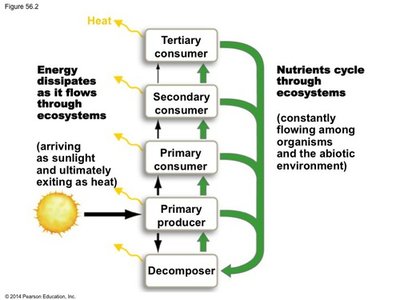
Energy enters ecosystems primarily through photosynthesis by primary producers and, in some environments, through chemosynthesis. Energy is not created or destroyed but flows through the system, being transformed and dissipated as heat at each step.
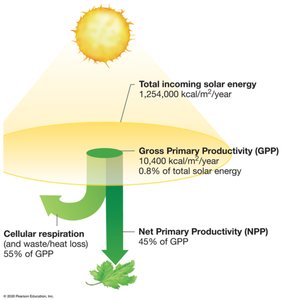
Gross Primary Productivity (GPP): Total chemical energy produced by photosynthesis per unit area per time.
Net Primary Productivity (NPP): Energy stored as new biomass, calculated as , where R is respiration and heat loss.
Only about 0.8% of total solar energy is converted into GPP, and about 45% of GPP becomes NPP.
Trophic Levels and Energy Dissipation
Organisms are organized into trophic levels based on their source of energy. Energy flows one way through these levels, with significant loss at each transfer due to respiration, heat, and waste.
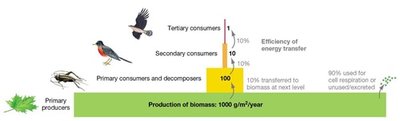
Only about 10% of energy is transferred from one trophic level to the next; 90% is lost.
This limits the number of trophic levels and the population sizes of top predators.
Biomagnification
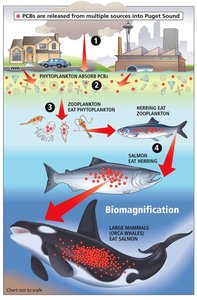
Biomagnification refers to the increasing concentration of pollutants as they move up trophic levels in a food web. Top predators, including humans, are most affected by these toxins.
Pollutants enter at the base (e.g., phytoplankton) and become more concentrated at higher trophic levels.
Global Patterns of Productivity
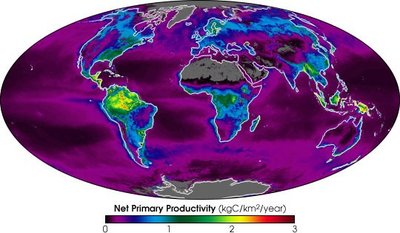
Net primary productivity (NPP) is not uniform across the planet. Terrestrial environments generally have higher NPP than marine environments due to greater sunlight exposure and nutrient availability. Highest NPP is found in wet tropics, declining toward the poles and deserts. Open oceans, despite low productivity per unit area, contribute significantly to global NPP due to their vast size.
Nutrient Cycling Within Ecosystems
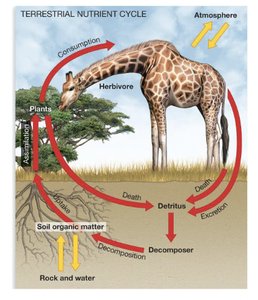
Nutrients cycle through ecosystems via uptake by plants, assimilation, consumption by herbivores and omnivores, and return to the environment through death and decomposition. Abiotic factors such as temperature, moisture, and oxygen availability control the rate of nutrient cycling.
The Global Water Cycle
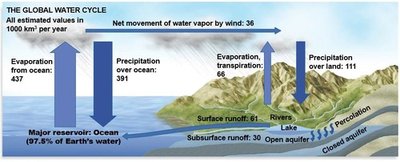
The water cycle describes the continuous movement of water among major reservoirs: oceans, atmosphere, groundwater, and ice. Key processes include evaporation, precipitation, transpiration, runoff, and percolation.
The Global Nitrogen Cycle
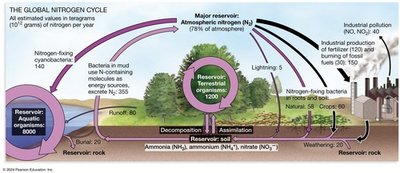
Nitrogen must be converted from atmospheric N2 to biologically usable forms (NH4+ or NO3-) through nitrogen fixation, primarily by bacteria. Human activities such as fertilizer production and fossil fuel combustion have greatly altered the nitrogen cycle, leading to pollution and acid rain.
The Global Carbon Cycle
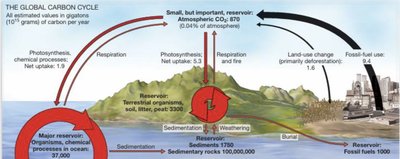
Carbon cycles between major reservoirs: oceans, sediments, rocks, terrestrial biomass, and the atmosphere. Photosynthesis removes CO2 from the atmosphere, while respiration and combustion release it. Human activities, especially fossil fuel burning and deforestation, are disrupting the balance of the carbon cycle and increasing atmospheric CO2.
Global Climate Change
Human-driven increases in greenhouse gases are causing rapid climate change, altering energy flow, nutrient cycling, and temperature. Greenhouse gases trap heat, raising global temperatures and leading to more extreme weather events, feedback loops, and shifts in species distributions.
Urban Ecology
Introduction to Urban Ecology
Urban ecology studies the interactions between humans and natural systems in urban environments. Urban ecosystems are characterized by high fragmentation, novel resource inputs, and strong anthropogenic control.
Urban Heat Island Effect
Urban areas are warmer than surrounding regions due to concrete, reduced vegetation, and heat retention by buildings. Human activities further increase temperatures, with differences of 2–5ºF (and up to 9–18ºF at night).
Common Species in Cities
Mammals: Raccoons, squirrels, foxes, coyotes, opossums, rats (mostly generalists).
Birds: Pigeons, crows, geese, sparrows.
Pests: Cockroaches, mosquitos, bedbugs; some insects (e.g., ants) provide ecosystem services.
Landscape Heterogeneity and Social Inequality
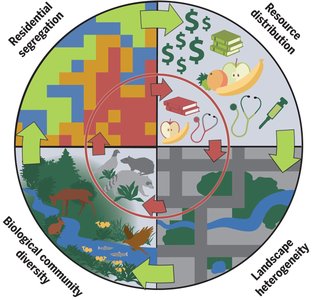
Cities are mosaics of habitat patches, barriers, and resource gradients. Heterogeneity affects population dynamics, species interactions, and community assembly. Social inequality leads to ecological heterogeneity, with wealth, race, and policy influencing ecological outcomes.
Wealth and the Luxury Effect
The luxury effect describes the correlation between wealth and biodiversity in urban areas. Wealthier neighborhoods often have greater biodiversity due to intentional landscaping, older vegetation, and more investment in green spaces. Historical policies like redlining have created persistent ecological differences.
Ecological Consequences of Segregation
Reduced habitat quality and quantity
Increased fragmentation and genetic drift
Altered food web complexity and increased ecological traps and sink habitats
Uneven selection pressures (heat, noise, pollution)
Disease Ecology and Urban Inequality
Structural racism and social neglect affect biodiversity, sanitation, and disease prevalence. Increased pest species and lower sanitation lead to higher disease risk in marginalized communities.
Intersectionality in Urban Ecology
Wealth, race, gender, and indigeneity all drive ecological outcomes in cities. Urban ecology must consider layered social histories and move beyond income metrics to understand and address ecological patterns.
Agriculture and Ecology
Agriculture as a Planetary-Scale Experiment
Agriculture has dramatically increased the human population and altered land cover, nutrient cycles, biodiversity, and atmospheric chemistry. The Green Revolution led to increased yields but also ecological costs such as nutrient runoff and pollution.
Agroecosystems vs. Natural Ecosystems
Both have producers, consumers, and decomposers, with energy flow and nutrient cycling.
Agroecosystems are simplified, with crops bred for yield and massive external inputs (fertilizer, pesticides).
Nutrient-Use Efficiency and Eutrophication
Excess fertilizer use leads to eutrophication: algal blooms, oxygen depletion (hypoxia), and fish kills. Efficiency in nutrient use is critical for sustainability.
Evolutionary Dynamics of Crops and Pests
Yield ceilings are reached due to genetic limits.
Monocultures promote disease and pest outbreaks, leading to an evolutionary arms race and rapid resistance development.
Diversity as Evolutionary Insurance
Genetic diversity: Multiline crops reduce disease spread.
Species diversity: Crop rotation, intercropping, and agroforestry increase stability and reduce pest evolution.
Livestock Systems and Ecology
Large amounts of grain are fed to livestock, leading to nutrient pollution and rapid evolution of antibiotic resistance (superbugs).
Ecosystem Services in Agriculture
Pollination, pest control, nutrient retention, and soil formation are essential services threatened by overuse of chemicals.
Landscape management (e.g., buffer strips) can mitigate negative impacts.
Sustainability as an Evolutionary Problem
There is a mismatch between short-term agricultural goals (yield, profit) and evolutionary processes (resistance, persistence). Sustainable practices include improved irrigation, crop rotation, integrated pest management, and biological control.
Global Climate Change
Drivers and Evidence of Climate Change
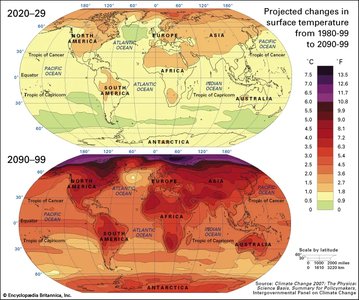
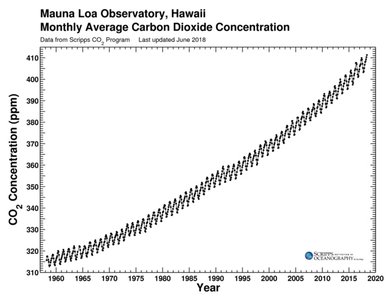
Climate change is driven by land use change, biodiversity loss, and increased greenhouse gas emissions. The carbon cycle is disrupted by fossil fuel combustion and deforestation, leading to rising atmospheric CO2 and global temperatures.
The Greenhouse Effect
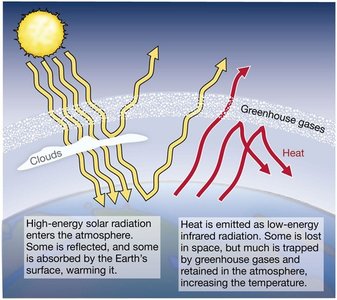
Greenhouse gases (CO2, CH4, N2O, water vapor) trap heat in the atmosphere, causing global temperatures to rise. The greenhouse effect is natural but is being amplified by human activities.
Global Temperature Changes and Feedback Loops
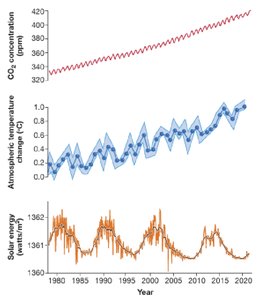
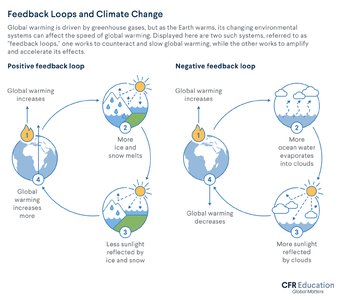
Global average temperatures have increased by about 1.25ºC above pre-industrial levels, with even small changes having large ecological impacts. Feedback loops can amplify (positive) or dampen (negative) climate change effects.
Geographic Range Shifts and Evolutionary Responses
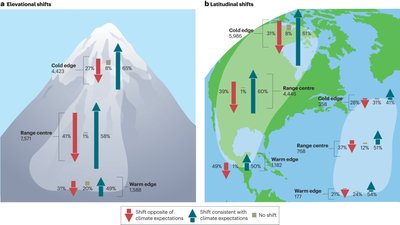
Species are shifting their ranges in response to changing temperatures and moisture, often moving to higher elevations or latitudes. Some species show evolutionary responses, such as increased heat tolerance or reduced body size, but many cannot adapt quickly enough and are at risk of extinction.
Ocean Responses to Climate Change
Oceans are warming, leading to sea level rise, altered currents, acidification, and deoxygenation.
Ocean acidification reduces calcium carbonate availability, threatening corals and other marine organisms.
NPP and Tipping Points
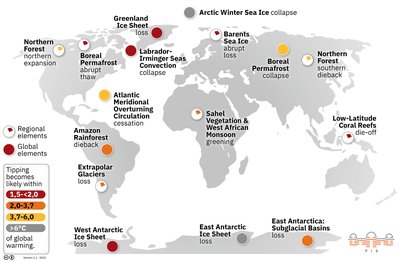
Some ecosystems are shifting from carbon sinks to carbon sources, and tipping points may lead to sudden, irreversible changes in global cycles (e.g., Amazon rainforest dieback, coral reef collapse).
Solutions to Climate Change
Transition to renewable energy sources (solar, wind).
Policy involvement and prioritizing long-term sustainability over short-term profits.
Addressing global inequities, as wealthier nations drive emissions while poorer nations suffer the consequences.
