Back
Green Algae and Land Plants: Evolution, Adaptations, and Diversity
Study Guide - Smart Notes
 Tailored notes based on your materials, expanded with key definitions, examples, and context.
Green Algae and Land Plants
Introduction to Green Algae and Land Plants
Green algae and land plants (collectively called Viridiplantae) are essential photosynthetic organisms that have shaped terrestrial and aquatic ecosystems. Green algae are primarily aquatic, while land plants dominate terrestrial environments. The evolution of land plants from green algae marked a major transition in Earth's history, enabling the colonization of land and the development of complex terrestrial ecosystems.
Why Do Biologists Study Green Algae and Land Plants?
Biologists study these organisms because they are foundational to life on Earth, providing food, fuel, fibers, and pharmaceuticals. They are also central to industries such as agriculture, forestry, and horticulture, but can also become weeds or invasive species.
Plant Ecosystem Services
Plants and Ecosystem Services
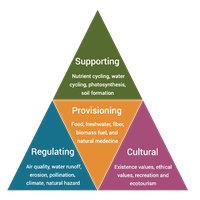
An ecosystem includes all living organisms and nonliving components in an area. Ecosystem services are the benefits that humans obtain from ecosystems, and plants are crucial providers of these services:
Supporting: Nutrient cycling, water cycling, photosynthesis, soil formation
Provisioning: Food, freshwater, fiber, biomass fuel, natural medicine
Regulating: Air quality, water runoff, erosion, pollination, climate regulation
Cultural: Recreation, ethical values, ecotourism
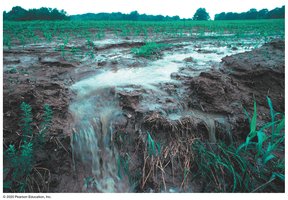
De-vegetation and Soil Erosion
Plants stabilize soil with their roots. When vegetation is removed, soil erosion increases, leading to loss of fertile land and water pollution.
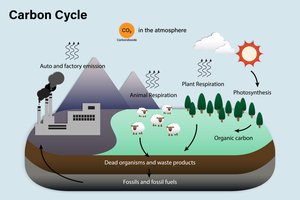
Plants as Primary Producers and the Carbon Cycle
Land plants are dominant primary producers, converting sunlight into sugars through photosynthesis. This process supports all other terrestrial organisms and is a key part of the carbon cycle, reducing atmospheric CO2 and maintaining air quality.
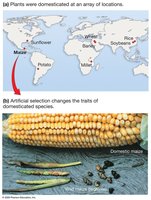
Plants Provide Food, Fuel, Fiber, Building Materials, and Medicines
Food: Artificial selection has dramatically changed plant species to suit human needs.
Fuel: Historically, wood was the main fuel source; now, fossil fuels derived from ancient plants are used.
Fiber and Building Materials: Woody plants provide lumber and fibers for paper and construction.
Medicines: About 25% of US prescriptions contain plant-derived molecules, often synthesized by plants as defense against herbivores.
Evolution and Diversity of Green Plants
Analyzing Morphological Traits
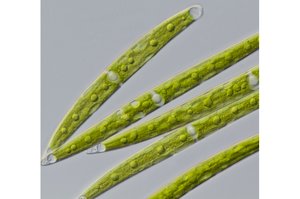
Green algae can be unicellular, multicellular, or colonial, and inhabit marine, freshwater, or moist terrestrial environments. Most green algae are aquatic, while most land plants are terrestrial.
Similarities Between Green Algae and Land Plants
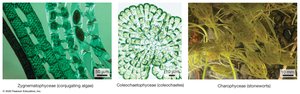
Freshwater green algae are hypothesized to be closely related to land plants based on similarities in chloroplast structure, thylakoid arrangement, cell walls, sperm, and peroxisomes. DNA sequence analysis supports this relationship, especially among three main green algal groups.
Major Morphological Differences Among Land Plants
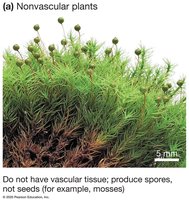
Nonvascular plants: Lack vascular tissue, reproduce via spores (e.g., mosses).
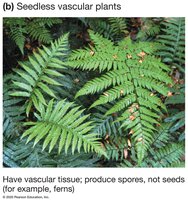
Seedless vascular plants: Have vascular tissue, reproduce via spores (e.g., ferns).
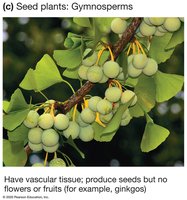
Seed plants: Have vascular tissue and produce seeds (e.g., gymnosperms and angiosperms).
Plant Phylogeny
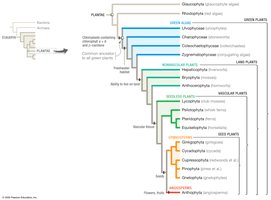
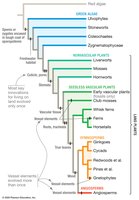
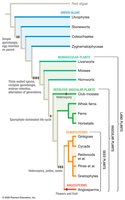
Phylogenetic trees show the evolutionary relationships among green algae and land plants, highlighting key innovations such as vascular tissue, seeds, and flowers.
Adaptations for Terrestrial Life
Transition to Land: Adaptations to Dry Conditions and Sunlight
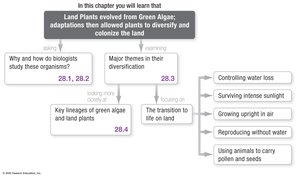
Early land plants faced challenges such as water loss, intense sunlight, and the need for structural support. Key adaptations included:
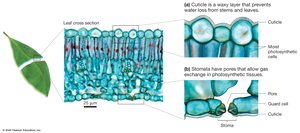
Cuticle: A waxy, watertight sealant covering aboveground parts, preventing water loss but also limiting CO2 uptake.
Stomata: Pores surrounded by guard cells that allow gas exchange while minimizing water loss.
Protection from UV Irradiation
Land plants evolved UV-absorbing compounds to protect against DNA damage from sunlight, a problem less severe in aquatic environments due to water's UV absorption.

Upright Growth and Vascular Tissue
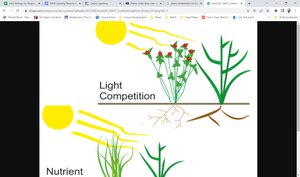
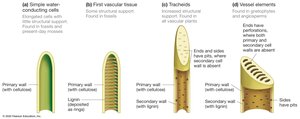
Competition for light and space led to the evolution of upright growth. Fossil evidence shows the development of elongated, water-conducting cells organized into vascular tissue, providing structural support and efficient water transport.
Mapping Evolutionary Changes
Key adaptations such as cuticle, stomata, and vascular tissue evolved as plants colonized land. Some features, like vessel elements, evolved independently in different lineages (convergent evolution).
Reproduction in Dry Conditions
Adaptations for Reproduction on Land
Land plants evolved several reproductive adaptations to thrive in dry environments:
Spores: Encased in sporopollenin, making them resistant to drying and allowing wind dispersal.
Gametangia: Complex, multicellular reproductive organs that protect gametes from desiccation and damage.
Embryo retention: Embryos are retained and nourished by the parent plant.
Protective, Complex Reproductive Organs
Plants produce distinct male (antheridia) and female (archegonia) gametangia, analogous to animal testes and ovaries.
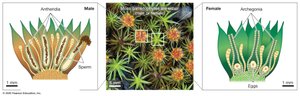
Alternation of Generations
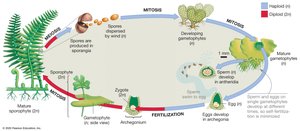
All land plants exhibit alternation of generations, alternating between multicellular haploid (gametophyte) and diploid (sporophyte) stages. In green algae, the multicellular form is typically haploid, with only the zygote being diploid.
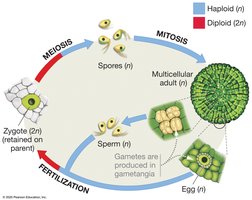
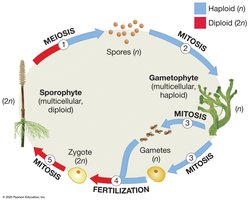
Gametophyte- and Sporophyte-Dominant Life Cycles
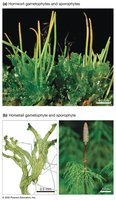
Nonvascular plants have a gametophyte-dominant life cycle, with the sporophyte dependent on the gametophyte. In contrast, vascular plants (ferns and seed plants) have a sporophyte-dominant life cycle, with the sporophyte being larger and longer-lived.
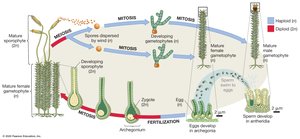
Homospory vs. Heterospory
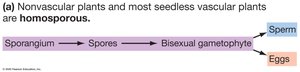
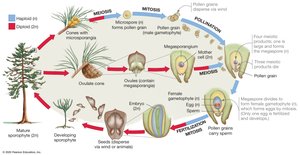
Nonvascular and most seedless vascular plants are homosporous (produce one type of spore), while seed plants are heterosporous (produce microspores and megaspores, leading to male and female gametophytes, respectively).
Type | Spore Production | Gametophyte |
|---|---|---|
Homosporous | One type of spore | Bisexual gametophyte |
Heterosporous | Microspores (male), Megaspores (female) | Separate male and female gametophytes |

Pollen and Seeds
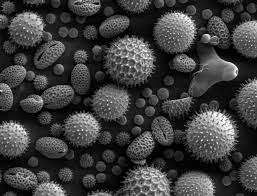
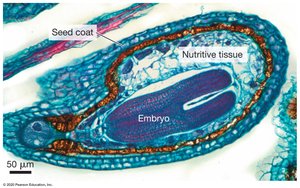
Pollen grains allow seed plants to reproduce without water, as sperm are transported through the air. Seeds contain an embryo and a food supply within a protective coat, enabling dispersal and survival in harsh conditions.
Heterospory in Gymnosperms
In gymnosperms, microspores develop into pollen grains (male gametophytes), and megaspores develop into female gametophytes.
Angiosperms: Flowering Plants
Structure and Diversity of Angiosperms
Angiosperms are the most diverse group of land plants, with over 350,000 species. Their success is largely due to the evolution of the flower, which enhances reproductive efficiency.
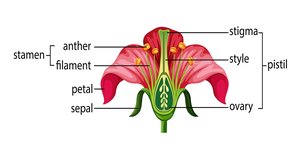
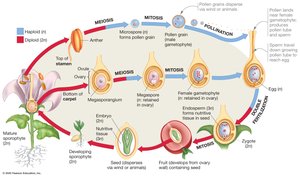
Stamen: Contains the anther, where microsporangia develop.
Carpel: Contains the ovary, which houses ovules and megasporangia.
Pollination and Fruit
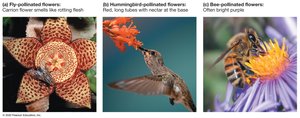
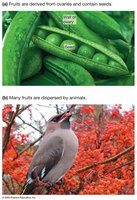
Flowers attract specific pollinators through scent, shape, and color, increasing the probability of successful pollination. Fruits, derived from the ovary, protect seeds and aid in their dispersal, often by attracting animals.
Plant Phylogeny and Evolutionary Innovations
Phylogenetic trees highlight the evolutionary innovations that allowed plants to reproduce efficiently on land, such as flowers and fruits in angiosperms.
Angiosperm Radiation
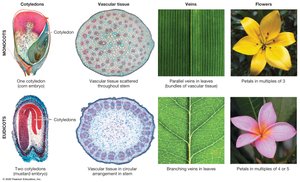
Angiosperms are divided into two major groups based on morphological traits, such as the number of cotyledons, arrangement of vascular tissue, leaf venation, and flower parts.