 Back
Green Algae and Land Plants: Structure, Function, and Life Cycles
Study Guide - Smart Notes
 Tailored notes based on your materials, expanded with key definitions, examples, and context.
Green Algae and Land Plants
Evolution and Classification of Land Plants
Land plants evolved from freshwater green algae and developed adaptations for terrestrial life. The major groups include nonvascular plants, seedless vascular plants, and seed plants, each with distinct evolutionary traits andlife cycles.
Viridiplantae: The clade that includes green algae and land plants (embryophytes).
Nonvascular plants: First land plants, lacking tracheids and unable to support large vertical growth.
Seedless vascular plants: Possess vascular tissue and sporophyte-dominant life cycles; lignin enables vertical growth.
Seed plants: Divided into gymnosperms (naked seeds) and angiosperms (enclosed seeds).
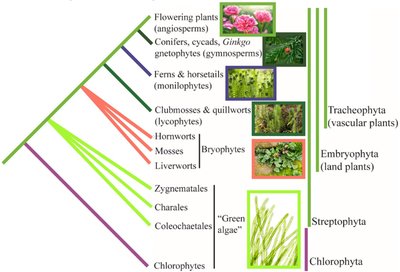
Example: Phylogenetic tree showing relationships among major plant groups.
Adaptations for Terrestrial Life
Plants evolved structural features to retain water and facilitate gas exchange, crucial for survival on land.
Cuticle: Waxy film covering the epidermis, prevents water loss.
Stomata: Pores for gas exchange, regulated by guard cells.
Vascular tissue: Transports water, minerals, and nutrients; includes xylem and phloem.
Lignin: Strengthens cell walls, enabling tall growth.
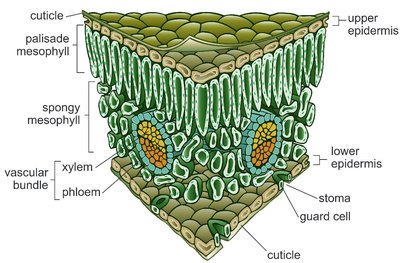
Example: Leaf cross-section illustrating cuticle, stomata, and vascular tissues.
Vascular Tissue Structure and Function
Vascular tissues are specialized for transport and support in plants.
Xylem: Transports water and minerals; contains tracheids and vessel elements.
Tracheids: Long cells with secondary cell walls for rigidity.
Phloem: Transports sugars, amino acids, and nutrients; contains sieve tube elements and companion cells.
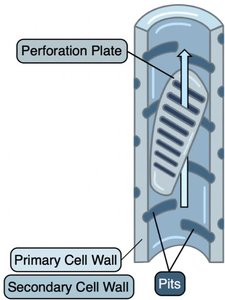
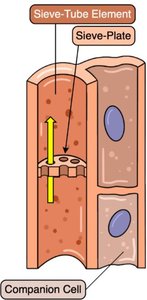
Example: Diagrams of xylem and phloem cell types.
Plant Organs: Roots and Leaves
Roots and leaves are specialized organs in vascular plants, each with distinct functions.
Roots: Absorb water and nutrients, anchor the plant.
Leaves: Specialized for photosynthesis; types include microphylls (single strand of vascular tissue) and megaphylls (branched vascular system).
Example: Leaf adaptations for water retention and photosynthesis.
Plant Life Cycles and Reproduction
Alternation of Generations
Plants exhibit alternation of generations, with both haploid (gametophyte) and diploid (sporophyte) multicellular stages.
Gametophyte: Haploid stage producing gametes.
Sporophyte: Diploid stage producing spores via meiosis.
Sporophylls: Modified leaves bearing sporangia.
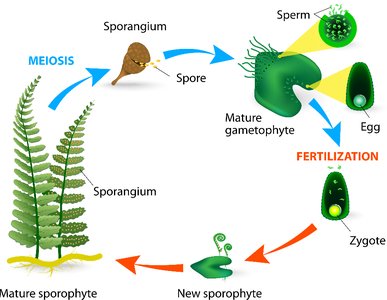
Example: Diagram of alternation of generations in ferns.
Spore Production: Homospory vs. Heterospory
Plants produce spores for reproduction, with two main strategies:
Homospory: One type of spore produced.
Heterospory: Two types of spores—microspores (male gametophytes) and megaspores (female gametophytes).
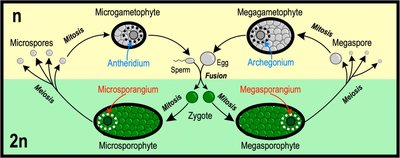
Example: Heterospory illustrated with microsporangia and megasporangia.
Pollen, Seeds, and Flowers
Seed plants evolved specialized reproductive structures.
Pollen: Male gametophyte surrounded by sporopollenin, enables fertilization without water.
Seeds: Embryo and food supply encased in a protective coat.
Flowers: Reproductive organs of angiosperms, facilitate pollination and seed development.
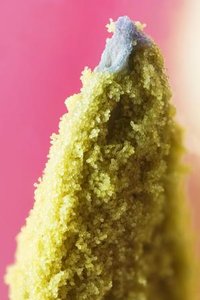
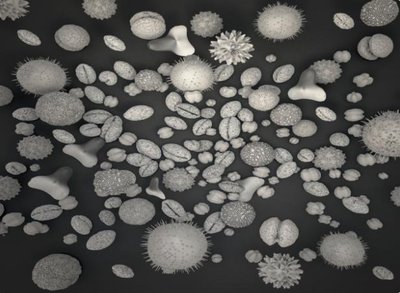
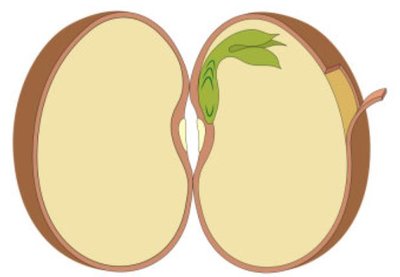
Example: Images of pollen grains and seed structure.
Nonvascular Plants (Bryophytes)
Bryophyte Diversity and Life Cycle
Bryophytes include mosses, liverworts, and hornworts. They lack lignin-reinforced vascular tissue and have gametophyte-dominant life cycles.
Bryophytes: Homosporous, often with separate male and female gametophytes.
Rhizoids: Root-like structures for anchorage, not true roots.
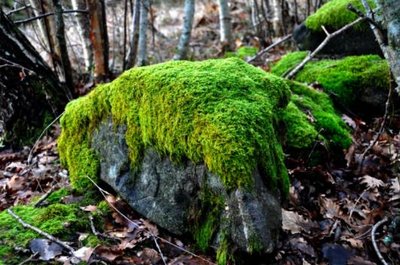
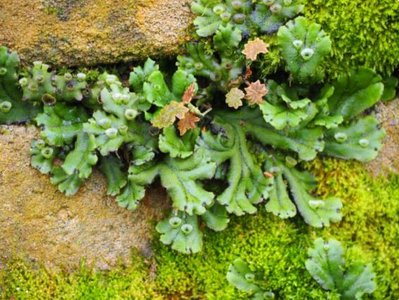
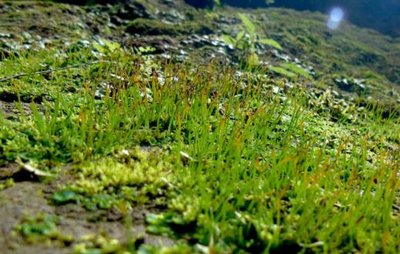
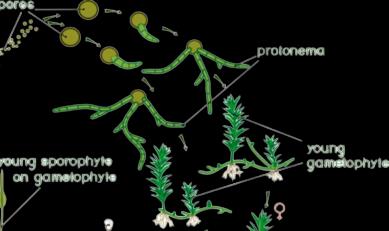
Example: Images of bryophyte diversity and phylogeny.
Bryophyte Reproduction
Bryophytes require water for sperm movement and have specialized reproductive structures.
Gametangia: Organs producing gametes; archegonia (female), antheridia (male).
Monoicous: Both gametes on same gametophyte; Dioicous: Gametes on separate gametophytes.
Sporophyte: Small structure with foot, seta, and capsule (sporangium).
Protonema: Early stage of gametophyte development from spores.
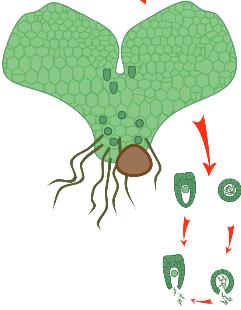
Example: Diagrams of bryophyte reproductive structures and development.
Seedless Vascular Plants
Life Cycle and Ecological Impact
Seedless vascular plants, such as ferns and lycophytes, have sporophyte-dominant life cycles and reproduce via spores.
Tracheophytes: Vascular plants with lignin-reinforced tissue.
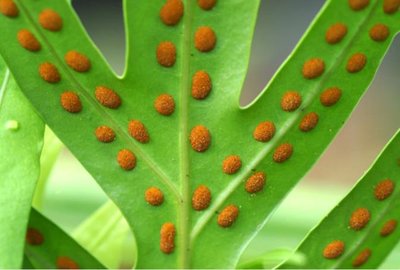
Ferns: Produce sori (clusters of sporangia) on leaves.
Gametophyte: Contains antheridium, archegonium, and rhizoids.
Ecological impact: Responsible for significant CO2 removal, contributing to coal formation.
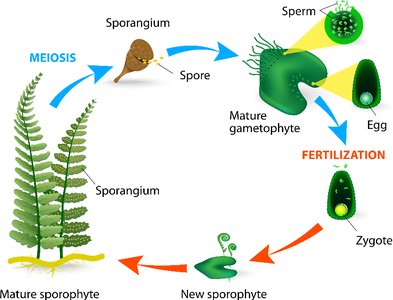
Example: Sori on fern leaves and alternation of generations diagram.
Seed Plants: Gymnosperms and Angiosperms
Gymnosperms
Gymnosperms produce naked seeds, typically in cones, and have monoecious or dioecious reproductive structures.
Conifers: Needle-like leaves, sporangia in cones (strobili).
Pollen tube: Delivers sperm to ovule for fertilization.
Seed development: Megasporocyte undergoes meiosis, megaspore forms female gametophyte, fertilization produces seed.
Example: Gymnosperm reproductive cycle and cone structure.
Angiosperms
Angiosperms are the most diverse group of seed plants, characterized by flowers and fruit.
Monocots: One cotyledon; Eudicots: Two cotyledons.
Flower structure: Sepals, petals, stamen (filament and anther), carpel (stigma, style, ovary).
Fruit: Develops from ovary after fertilization, surrounds seeds.
Example: Flower anatomy and fruit development.
Flower Types and Pollination
Flowers can be complete or incomplete, perfect or imperfect, and pollination can be self or cross-pollination.
Double fertilization: One sperm fertilizes egg (embryo), other forms endosperm (nutritive tissue).
Example: Double fertilization and pollination syndromes.
Summary Table: Major Plant Groups and Features
Group | Vascular Tissue | Dominant Life Cycle | Reproductive Structure |
|---|---|---|---|
Bryophytes | No | Gametophyte | Gametangia, spores |
Seedless Vascular | Yes | Sporophyte | Sporangia, spores |
Gymnosperms | Yes | Sporophyte | Cones, seeds, pollen |
Angiosperms | Yes | Sporophyte | Flowers, seeds, pollen, fruit |
Additional info: Table summarizes key features of major plant groups for comparison.
