 Back
Guided Study: Evolution and Diversity of Invertebrates
Study Guide - Smart Notes
 Tailored notes based on your materials, expanded with key definitions, examples, and context.
Q1. The eating of food by animals is known as ____________.
Background
Topic: Animal Nutrition
This question is testing your understanding of the basic process by which animals obtain energy and nutrients from their environment.
Key Terms:
Ingestion: The process of taking in food.
Digestion: The breakdown of food into smaller components.
Step-by-Step Guidance
Recall the term used to describe the act of taking food into the body.
Think about how this process differs from absorption or digestion.
Consider the main steps in animal nutrition: ingestion, digestion, absorption, and elimination.
Try solving on your own before revealing the answer!
Final Answer: Ingestion
"Ingestion" is the term for the eating of food by animals. It is the first step in the process of obtaining nutrients.
Q2. Briefly contrast how fungi get their nutrients with how a human does.
Background
Topic: Modes of Nutrition
This question is testing your understanding of the differences between heterotrophic nutrition in animals and absorptive nutrition in fungi.
Key Terms:
Absorptive nutrition: Fungi secrete enzymes to break down food outside their bodies and absorb the nutrients.
Ingestion: Humans take food into their bodies and digest it internally.
Step-by-Step Guidance
Recall how fungi obtain nutrients from their environment.
Compare this to how humans obtain nutrients.
Think about the location of digestion in each organism (external for fungi, internal for humans).
Try solving on your own before revealing the answer!
Final Answer:
Fungi absorb nutrients after breaking down food outside their bodies, while humans ingest food and digest it internally.
Q3. You discover a new organism that produces haploid gametes by mitosis. Is this organism an animal? Briefly explain your answer.
Background
Topic: Animal Life Cycles
This question is testing your understanding of how animals produce gametes and the difference between mitosis and meiosis in gamete formation.
Key Terms:
Gametes: Reproductive cells (sperm and egg).
Mitosis: Cell division that results in identical cells.
Meiosis: Cell division that produces gametes with half the chromosome number.
Step-by-Step Guidance
Recall how animals typically produce gametes (meiosis).
Consider what it means if gametes are produced by mitosis.
Think about which groups of organisms use mitosis for gamete production (hint: not animals).
Try solving on your own before revealing the answer!
Final Answer:
No, animals produce gametes by meiosis, not mitosis. Organisms that produce gametes by mitosis are typically fungi or plants.
Q4. What is meant when scientists refer to the Cambrian explosion?
Background
Topic: Evolutionary History
This question is testing your knowledge of a major event in the history of life on Earth.
Key Terms:
Cambrian explosion: A period of rapid diversification of animal life about 540 million years ago.
Diversity: The variety of life forms.
Step-by-Step Guidance
Recall the time period of the Cambrian explosion.
Think about what happened to animal diversity during this time.
Consider the significance of this event in evolutionary history.
Try solving on your own before revealing the answer!
Final Answer:
The Cambrian explosion refers to a period when many major animal groups appeared in the fossil record in a relatively short time.
Q5. True or false: Vertebrates largely outnumber invertebrates. If false, make it a correct statement.
Background
Topic: Animal Diversity
This question is testing your understanding of the relative abundance of vertebrates and invertebrates.
Key Terms:
Vertebrates: Animals with a backbone.
Invertebrates: Animals without a backbone.
Step-by-Step Guidance
Recall the definitions of vertebrates and invertebrates.
Think about the number of species in each group.
Consider which group is more diverse and numerous.
Try solving on your own before revealing the answer!
Final Answer:
False. Invertebrates vastly outnumber vertebrates.
Q6. In Greek, protos means “first,” deuteron means “second,” and stoma means “mouth.” Use this information to explain why the terms protostome and deuterostome are accurate descriptors.
Background
Topic: Animal Development
This question is testing your understanding of embryonic development in animals.
Key Terms:
Protostome: The mouth develops from the first opening in the embryo.
Deuterostome: The mouth develops from the second opening.
Step-by-Step Guidance
Recall the meaning of the Greek roots.
Think about the sequence of mouth and anus formation in protostomes and deuterostomes.
Consider how these terms relate to embryonic development.
Try solving on your own before revealing the answer!
Final Answer:
Protostome means "first mouth" (mouth forms first), deuterostome means "second mouth" (mouth forms second).
Q7. Complete the following table, which compares radial symmetry with bilateral symmetry.
Background
Topic: Animal Body Plans
This question is testing your understanding of symmetry in animal body plans.
Key Terms:
Radial symmetry: Body parts arranged around a central axis.
Bilateral symmetry: Body has left and right sides, with a distinct head and tail.
Step-by-Step Guidance
Recall the definitions of radial and bilateral symmetry.
Think of examples of organisms with each type of symmetry.
Describe the arrangement of body parts for each type.
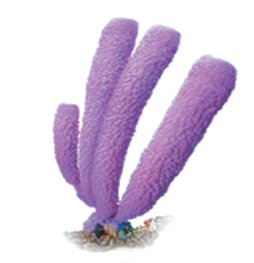
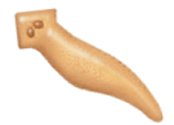
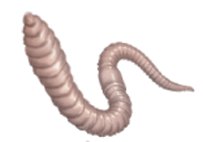
Try solving on your own before revealing the answer!
Final Answer:
Radial symmetry: Body parts arranged around a central axis (e.g., cnidarians). Bilateral symmetry: Body has left and right sides (e.g., flatworms, earthworms).
