 Back
Guided Study: Evolution of Plant and Fungal Diversity (Chapter 17)
Study Guide - Smart Notes
 Tailored notes based on your materials, expanded with key definitions, examples, and context.
Q1. List three challenges that the first land-dwelling plants would have needed to overcome.
Background
Topic: Plant Evolution and Adaptation
This question explores the environmental and physiological obstacles faced by early plants as they transitioned from aquatic to terrestrial habitats.
Key Terms:
Desiccation: Loss of water to the environment.
Structural support: Ability to remain upright without buoyancy.
Reproduction: Ensuring successful reproduction outside water.
Step-by-Step Guidance
Consider the differences between aquatic and terrestrial environments, especially regarding water availability.
Think about how plants would need to support themselves without the buoyancy of water.
Reflect on how reproduction would be affected by the absence of water for gamete transport.
Identify three specific challenges based on these considerations.
Try solving on your own before revealing the answer!
Final Answer:
Three challenges: preventing water loss, providing structural support, and adapting reproductive strategies for land.
Early land plants needed to evolve mechanisms to avoid desiccation, develop tissues for support, and find new ways to reproduce without water.
Q2. Two adaptations that land plants have for minimizing water loss are __________ and __________.
Background
Topic: Plant Adaptations for Water Conservation
This question tests your knowledge of specific structures or mechanisms that help plants retain water in terrestrial environments.
Key Terms:
Cuticle: Waxy layer covering plant surfaces.
Stomata: Pores for gas exchange, regulated to minimize water loss.
Step-by-Step Guidance
Recall the main structures that help plants reduce water loss.
Think about how these adaptations function in dry environments.
Identify two adaptations based on their roles in water conservation.
Try solving on your own before revealing the answer!
Final Answer:
Cuticle and stomata.
The cuticle prevents water evaporation, while stomata regulate gas exchange and water loss.
Q3. Complete the following table, which describes adaptations of land plants for terrestrial life.
Background
Topic: Plant Adaptations for Terrestrial Environments
This question asks you to match plant adaptations to their functions in obtaining resources, supporting the plant body, and reproduction/dispersal.
Key Terms:
Roots: Absorb water and minerals from soil.
Vascular tissue: Supports plant and transports resources.
Seeds/spores: Enable reproduction and dispersal.
Step-by-Step Guidance
For each category (obtaining resources, support, reproduction), think about the main adaptation plants evolved.
Match roots and leaves to resource acquisition.
Associate vascular tissue and lignin with structural support.
Link seeds, spores, and flowers to reproduction and dispersal.
Try solving on your own before revealing the answer!
Final Answer:
Obtaining resources: roots and leaves; Supporting the plant body: vascular tissue and lignin; Reproduction and dispersal: seeds, spores, flowers.
Each adaptation addresses a specific challenge of terrestrial life.
Q4. The first group of land plants is called __________. List two adaptations that they lack.
Background
Topic: Early Land Plants (Bryophytes)
This question focuses on the characteristics and limitations of the earliest land plants.
Key Terms:
Bryophytes: Nonvascular plants (e.g., mosses).
Vascular tissue: Specialized for transport and support.
Seeds: Structures for reproduction and dispersal.
Step-by-Step Guidance
Recall the name of the first land plant group.
Think about what adaptations they lack compared to later plants.
Identify two missing adaptations (e.g., vascular tissue, seeds).
Try solving on your own before revealing the answer!
Final Answer:
Bryophytes; they lack vascular tissue and seeds.
These limitations restrict their size and habitat.
Q5. A rose bush is what kind of plant? When did this type of plant first appear?
Background
Topic: Classification and Evolution of Angiosperms
This question tests your understanding of plant classification and evolutionary history.
Key Terms:
Angiosperms: Flowering plants.
Evolutionary timeline: When major plant groups appeared.
Step-by-Step Guidance
Identify the plant group to which a rose bush belongs.
Recall the approximate time angiosperms first appeared.
Use evolutionary context to answer both parts.
Try solving on your own before revealing the answer!
Final Answer:
A rose bush is an angiosperm; angiosperms first appeared about 140 million years ago.
Angiosperms are distinguished by their flowers and fruit.
Q6. Which of the following types of plants have the following characteristics: originated 360 mya, produce seeds that are not in specialized chambers, were abundant during the age of dinosaurs?
Background
Topic: Gymnosperms and Plant Evolution
This question asks you to identify a plant group based on evolutionary and reproductive traits.
Key Terms:
Gymnosperms: Seed plants with "naked" seeds.
Angiosperms: Seed plants with seeds in fruit.
Bryophytes and seedless vascular plants: Do not produce seeds.
Step-by-Step Guidance
Review the characteristics: seed production, age, abundance during the age of dinosaurs.
Match these traits to the correct plant group.
Eliminate groups that do not fit (e.g., bryophytes, angiosperms).
Try solving on your own before revealing the answer!
Final Answer:
Gymnosperms.
Gymnosperms produce seeds not enclosed in fruit and were dominant during the Mesozoic era.
Q14. Figure 17.18B on page 364 of your textbook illustrates an elegant experiment that tests the hypothesis that a plant’s “sym” genes are necessary to form mycorrhizae with fungi. Clearly indicate the following: what hypothesis they were testing, how they tested their hypothesis, and identify their control and their results.
Background
Topic: Plant-Fungal Symbiosis and Genetic Control
This question examines an experiment investigating the genetic basis for mycorrhizal formation in plants.
Key Terms:
Mycorrhizae: Symbiotic association between plant roots and fungi.
sym gene: Gene required for symbiosis.
Control: Experimental group used for comparison.
Step-by-Step Guidance
Identify the hypothesis: that the sym gene is necessary for mycorrhizal formation.
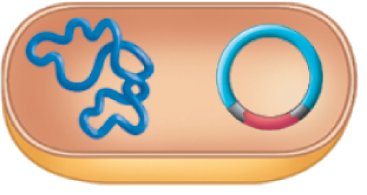
Describe the experimental setup: introducing the sym gene into mutant plants and applying fungal spores.
Identify the control: mutant plants without the sym gene.
Observe the results: presence or absence of mycorrhizae in each group.
Try solving on your own before revealing the answer!
Final Answer:
Hypothesis: sym gene is required for mycorrhizal formation. Mutant plants without sym gene do not form mycorrhizae; transgenic plants with sym gene do.
The experiment demonstrates the necessity of the sym gene for symbiosis.
