 Back
BackHistology: Plant and Animal Tissues, Organs, and Cellular Structure
Study Guide - Smart Notes
 Tailored notes based on your materials, expanded with key definitions, examples, and context.
Histology
Introduction to Histology
Histology is the microscopic study of plant and animal cells and tissues. Understanding normal tissue structure is essential for recognizing abnormal or diseased tissues, a field known as histopathology. Certain diseases can be diagnosed by analyzing tissue samples.
Plant Structure and Organs
Basic Morphology of Vascular Plants
Vascular plants have evolved three basic organs: roots, stems, and leaves. These organs are organized into a root system (below ground) and a shoot system (above ground). Roots absorb water and minerals, while shoots perform photosynthesis and provide sugars to roots.
Angiosperms and Gymnosperms
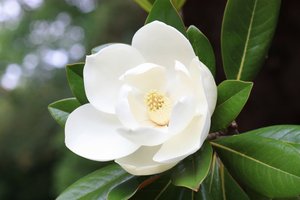
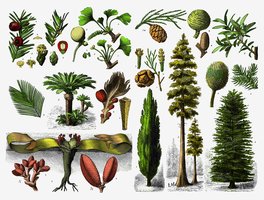
Seed-bearing plants are classified as angiosperms and gymnosperms. Angiosperms are more diverse and adapted to terrestrial habitats, producing flowers and fruits. Gymnosperms bear naked seeds on sporophylls and have fewer species due to lack of seed protection.
Angiosperms: Vascular plants with seeds enclosed in fruits; examples include fruit trees (mango, apple), grains (rice, wheat), and flowering plants (roses, lilies).
Gymnosperms: Plants with naked seeds; examples include pine, spruce, cypress, and cycads.
Monocots and Dicots
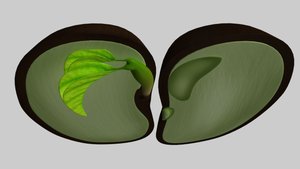
Angiosperms are further divided into monocotyledons (monocots) and dicotyledons (dicots) based on the number of seed leaves (cotyledons). Monocots have one cotyledon, while dicots have two. Structural differences are observed in roots, stems, leaves, and flowers.
Roots
Root Functions and Types
Roots anchor the plant, absorb minerals and water, and store carbohydrates. Most eudicots and gymnosperms have a taproot system (main vertical root with lateral roots), while most monocots have a fibrous root system (adventitious roots and lateral roots).
Taproot system: Main vertical root with lateral roots (eudicots, gymnosperms).
Fibrous root system: Adventitious roots from stems/leaves, with lateral roots (monocots).
Root hairs: Increase surface area for absorption.
Specialized Root Adaptations
Prop roots: Modified adventitious roots for support; absorb water when young, provide structural support as they mature.
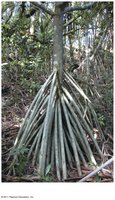
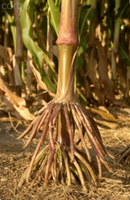
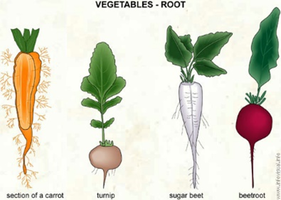
Storage roots: Underground organs modified to store nutrients; examples include sweet potato, cassava, turnip, carrot.
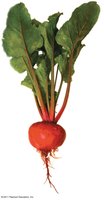
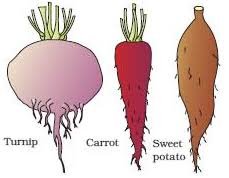
Strangling aerial roots: Roots that anchor and support plants by attaching to structures; absorb water and nutrients from the environment.
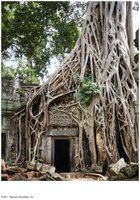
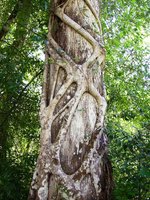
Pneumatophores: Roots that grow upward for oxygen absorption in swampy areas; found in mangroves.
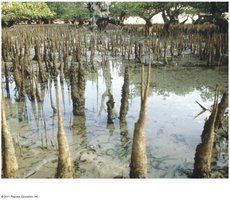
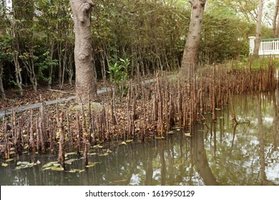
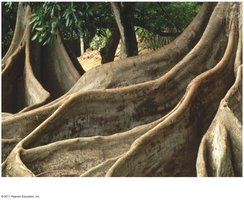
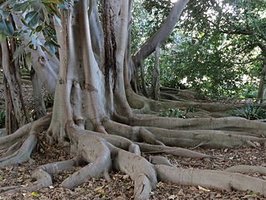
Buttress roots: Large, wide roots for support in shallow, nutrient-poor soils; prevent trees from falling.
Stems
Stem Structure and Function
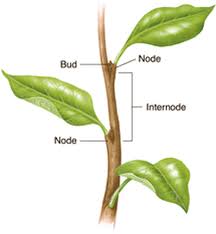
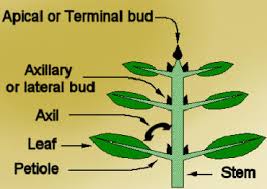
Stems consist of nodes (leaf attachment points) and internodes (segments between nodes). Axillary buds can form lateral shoots, while apical buds cause elongation. Apical dominance maintains dormancy in axillary buds.
Leaves
Leaf Structure and Function
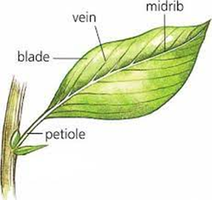
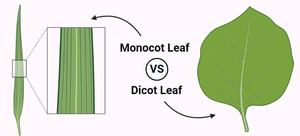
Leaves are the main photosynthetic organs, consisting of a blade and a petiole (stalk joining leaf to stem). Monocots have parallel veins, while eudicots have branching veins. Leaf morphology is used in angiosperm classification.
Leaf Adaptations
Tendrils: Provide support for climbing plants.
Storage leaves: Conduct photosynthesis and store water.
Reproductive leaves: Produce plantlets for asexual reproduction.
Bracts: Protect flowers and attract pollinators.
Plant Tissues
Types of Plant Tissues
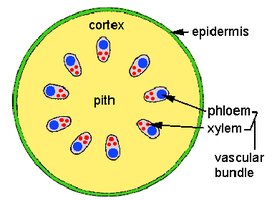
Each plant organ contains three tissue systems: dermal, vascular, and ground tissues. These systems are continuous throughout the plant.
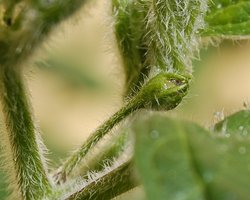
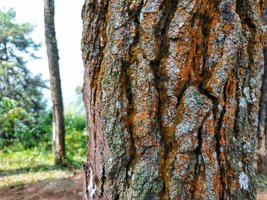
Dermal tissue: Epidermis in nonwoody plants; periderm in woody plants. Cuticle prevents water loss. Trichomes defend against insects.
Vascular tissue: Xylem (water/mineral transport) and phloem (organic nutrient transport). The stele is the collective vascular tissue in roots, stems, and leaves.
Ground tissue: Internal (pith) and external (cortex) to vascular tissue; functions in storage, photosynthesis, and support.
Plant Cells
Major Types of Plant Cells
Cellular differentiation leads to specialized plant cell types:
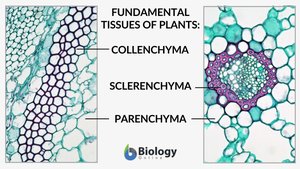
Parenchyma: Thin, flexible walls; least specialized; metabolic functions; can divide and differentiate.
Collenchyma: Grouped in strands; support young shoots; thicker, uneven walls; flexible support.
Sclerenchyma: Rigid, thick secondary walls with lignin; dead at maturity; includes sclereids (short, irregular) and fibers (long, slender).
Water-conducting cells (xylem): Tracheids (all vascular plants) and vessel elements (angiosperms, some gymnosperms); dead at maturity; form vessels for water transport.
Sugar-conducting cells (phloem): Sieve-tube elements (alive, lack organelles); sieve plates allow fluid flow; companion cells support sieve-tube elements.
Animal Tissues
Categories of Animal Tissues
Animal tissues are classified into four main categories: epithelial, connective, muscle, and nervous tissues.
Epithelial Tissue
Epithelial tissue covers organisms and internal organs, providing protection, sensory reception, and glandular secretion. Cells are closely joined and may be cuboidal, columnar, or squamous. Arrangements include simple, stratified, or pseudostratified layers.
Connective Tissue
Connective tissue binds and supports other tissues, with cells scattered in an extracellular matrix. Types of fibers include collagenous (strength), elastic (stretch), and reticular (joining tissues). Major types: loose, cartilage, fibrous, adipose, blood, bone.
Muscle Tissue
Muscle tissue consists of long fibers that contract in response to nerve signals. Types include skeletal (voluntary movement), smooth (involuntary activities), and cardiac (heart contraction).
Nervous Tissue
Nervous tissue senses stimuli and transmits signals. It contains neurons (impulse transmission) and glial cells (support and nourishment).
Comparison Table: Monocots vs Dicots
Differences in Roots, Seeds, and Vascular System
Feature | Monocots | Dicots |
|---|---|---|
Roots | Fibrous root system | Taproot system |
Seeds | One cotyledon | Two cotyledons |
Vascular System | Scattered vascular bundles | Ringed vascular bundles |
Key Definitions and Examples
Histology: Microscopic study of plant and animal cells and tissues.
Angiosperms: Seed-bearing plants with flowers and fruits.
Gymnosperms: Seed-bearing plants with naked seeds.
Roots: Anchor, absorb, and store carbohydrates.
Animal tissues: Epithelial, connective, muscle, nervous.
