 Back
History of Life on Earth: General Biology Study Notes
Study Guide - Smart Notes
 Tailored notes based on your materials, expanded with key definitions, examples, and context.
History of Life on Earth
Introduction to the Fossil Record and Macroevolution
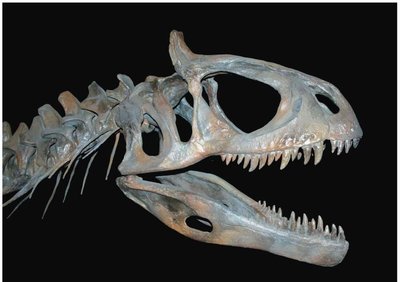
The fossil record provides evidence for macroevolutionary changes, documenting the emergence, extinction, and diversification of life forms over geological time. Past organisms were often very different from those alive today, and the fossil record reveals broad evolutionary patterns such as the origin of terrestrial vertebrates, mass extinctions, and the evolution of flight in birds.
Macroevolution: Large-scale evolutionary changes that occur over long time periods.
Fossil Record: The preserved remains or traces of organisms in sedimentary strata.
Examples: Emergence of terrestrial vertebrates, mass extinctions, origin of flight.

Early Earth Conditions and the Origin of Life
Life originated on Earth under unique chemical and physical conditions. The process likely involved several stages, including the abiotic synthesis of organic molecules, formation of macromolecules, packaging into protocells, and the emergence of self-replicating molecules.
Abiotic Synthesis: Formation of organic molecules without biological processes.
Protocells: Simple, membrane-bound structures that could maintain internal environments and replicate.
Self-Replicating Molecules: RNA is hypothesized to be the first genetic material due to its catalytic and information storage properties.

Synthesis of Organic Compounds on Early Earth
Earth formed about 4.6 billion years ago. Its early atmosphere contained water vapor and gases from volcanic eruptions. Experiments by Oparin, Haldane, Miller, and Urey demonstrated the formation of amino acids in reducing environments. Other hypotheses suggest organic molecules formed in deep sea vents, near volcanoes, or were delivered by meteorites.
Reducing Atmosphere: An environment rich in hydrogen and lacking oxygen, favorable for organic synthesis.
Miller-Urey Experiment: Demonstrated abiotic synthesis of amino acids.
Self-Replicating RNA and Protocells
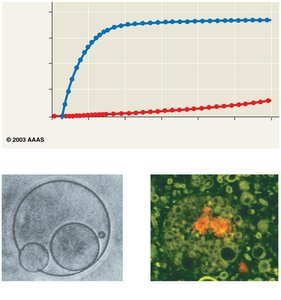
RNA is believed to have been the first genetic material due to its ability to store information and catalyze reactions (ribozymes). Protocells could form spontaneously from lipids and organic molecules, divide, and absorb RNA, setting the stage for cellular life.
Ribozymes: RNA molecules with catalytic activity.
Protocell Formation: Lipids self-assemble into vesicles in water, which can encapsulate RNA.
Fossil Record and Fossil Formation
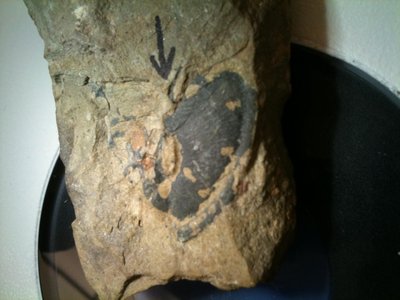
Fossils are the remains or traces of organisms preserved in sedimentary rock. The fossil record is biased toward species that were abundant, widespread, and had hard parts. Fossil formation includes permineralization, replacement, casts, molds, and preservation in resin or ice.
Permineralization: Minerals replace organic material.
Replacement: Original material replaced by minerals.
Casts and Molds: Impressions left by organisms.
Fossil Resin: Preservation in substances like amber.



Dating Rocks and Fossils
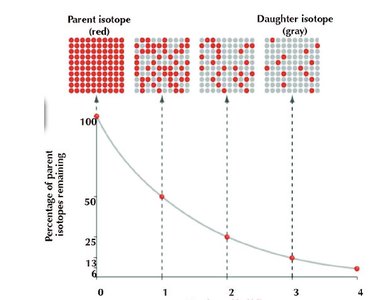
Relative dating uses sedimentary strata (stratigraphy) to determine the order of events. Absolute dating uses radiometric techniques based on the known half-lives of isotopes. Radiocarbon dating is effective up to 75,000 years; older rocks require other isotopes.
Stratigraphy: Study of rock layers and layering.
Radiometric Dating: Uses decay of radioactive isotopes to estimate age.
Half-Life: Time required for half of the parent isotope to decay.
The Geologic Record
The geologic record divides Earth's history into four eons: Hadean, Archaean, Proterozoic, and Phanerozoic. The Phanerozoic eon is further divided into three eras: Paleozoic, Mesozoic, and Cenozoic. Major events, such as mass extinctions, mark the boundaries between eras.
Eons: Largest divisions of geologic time.
Eras: Subdivisions of eons, marked by significant events.
Periods, Epochs, Ages: Finer subdivisions of time.


Important Events Before the Cambrian Paleozoic
Key milestones include the formation of Earth, changes in atmosphere, appearance of stromatolites (prokaryotes), accumulation of oxygen, first eukaryotes, evolution of multicellularity, and Ediacaran fossils.
Stromatolites: Layered structures formed by prokaryotes.
Oxygen Revolution: Increase in atmospheric O2 due to photosynthesis.
Ediacaran Biota: Early multicellular organisms.
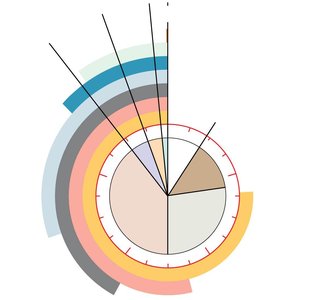

The First Single-Celled Organisms
Stromatolites are the oldest known fossils, dating back 3.5 billion years. Prokaryotes were Earth's sole inhabitants for over 1.5 billion years. The "oxygen revolution" led to the extinction of many prokaryotes, while others adapted to use cellular respiration.
Stromatolites: Evidence of ancient prokaryotic life.
Cellular Respiration: Adaptation to increased oxygen levels.
The First Eukaryotes and Endosymbiosis
The oldest eukaryotic fossils date back 1.8 billion years. The endosymbiont theory proposes that mitochondria and plastids originated from prokaryotes living within larger cells. Serial endosymbiosis suggests mitochondria evolved before plastids.
Endosymbiont Theory: Explains the origin of mitochondria and plastids.
Evidence: Organelles have their own DNA, ribosomes, and membranes.
Early Multicellular Eukaryotes and the Cambrian Explosion
Multicellular eukaryotes appeared about 1.2 billion years ago. The Ediacaran biota consisted of soft-bodied organisms. The Cambrian Explosion (535–525 million years ago) marks the rapid appearance of diverse animal phyla and predator-prey interactions.
Cambrian Explosion: Sudden diversification of animal life.
Predator-Prey Interactions: First evidence in the fossil record.
Moving to Land
Fungi, plants, and animals began colonizing land about 500 million years ago. Vascular tissue in plants appeared 420 million years ago. Arthropods and tetrapods became the most widespread land animals, with tetrapods evolving from lobe-finned fishes.
Vascular Tissue: Enables internal transport in plants.
Tetrapods: Four-limbed vertebrates.
Mass Extinctions and Their Consequences
Mass extinctions are periods when extinction rates increase dramatically due to global environmental changes. Five major mass extinctions have occurred, each eliminating at least 50% of marine species. The Cretaceous and Permian extinctions are notable examples.
Cretaceous Extinction: Meteorite impact, extinction of dinosaurs.
Permian Extinction: Volcanism, ocean acidification, extinction of 96% of marine species.
Adaptive Radiation: Rapid evolution of new species following mass extinction.
Continental Drift and Biogeography
Continental drift describes the movement of Earth's plates, affecting climate, speciation, and the distribution of organisms. Biogeography studies the distribution of species and ecosystems across geographic space and time.
Continental Drift: Movement of continents over geological time.
Allopatric Speciation: Speciation due to geographic separation.
Biogeography: Study of species distribution.
The Evolution of Development (Evo-Devo)
Evo-Devo explores the interface between evolutionary and developmental biology. Changes in developmental genes, such as Hox genes, can result in new morphological patterns. Gene duplication and regulation contribute to diversity.
Homeotic Genes: Control placement and organization of body parts.
Hox Genes: Provide positional information during development.
Gene Regulation: Differences in gene expression can lead to morphological diversity.
Review Questions
List three characteristics of a species that would maximize the chances of later finding representatives in the fossil record.
During which of the geologic eras did each of the following events occur: vertebrates evolved, life moved onto land, pollinating insects appear, dominance of the dinosaurs, radiation of reptiles, rise of forests, radiation of birds & mammals.
Why is the Cambrian period often referred to as the “Cambrian explosion?”
How can the biogeographic distribution of species provide insight into their evolution, relate to continental drift?
Fossil Formation Method | Description | Example |
|---|---|---|
Permineralization | Minerals replace organic material | Coprolite (fossilized excrement) |
Replacement | Original material replaced by minerals | Olenelloid Trilobite |
Casts and Molds | Impressions left by organisms | Ammonite |
Resin Preservation | Organisms trapped in resin | Copal, amber |
Geologic Eon | Era | Period | Major Events |
|---|---|---|---|
Phanerozoic | Cenozoic | Quaternary, Neogene, Paleogene | Origin of humans, expansion of mammals |
Phanerozoic | Mesozoic | Cretaceous, Jurassic, Triassic | Dominance of dinosaurs, origin of birds |
Phanerozoic | Paleozoic | Permian, Carboniferous, Devonian, Silurian, Ordovician, Cambrian | Radiation of reptiles, rise of forests, Cambrian explosion |
Proterozoic | -- | Ediacaran | First multicellular eukaryotes |
Archaean | -- | -- | First prokaryotes, stromatolites |
Hadean | -- | -- | Formation of Earth |
Additional info: Academic context was added to clarify fossil formation methods, geologic time divisions, and evolutionary concepts. Tables were inferred and expanded for completeness.
