 Back
Homeostasis and Feedback Mechanisms in Animals
Study Guide - Smart Notes
 Tailored notes based on your materials, expanded with key definitions, examples, and context.
Homeostasis and Feedback
Introduction to Homeostasis
Homeostasis is the process by which living organisms maintain a stable internal environment despite changes in external conditions. This regulation is essential for the proper functioning of cells and, ultimately, the survival of the organism.
Homeostasis: The maintenance of a "steady state" or internal balance regardless of external environment.
Examples of regulated variables include body temperature, blood pH, and glucose concentration.

Cell Communication and Signal Transduction
Signal Transduction Pathways
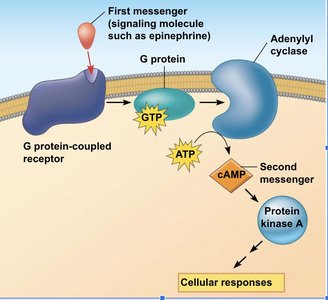
Cells communicate using signaling molecules that trigger a series of events inside the cell, known as a signal transduction pathway. This process allows cells to respond to changes in their environment.
Three parts of a signal transduction pathway:
Reception: A signaling molecule binds to a receptor protein on the cell surface.
Transduction: The receptor activates a series of intracellular events, often involving secondary messengers.
Response: The cell carries out a specific activity, such as gene expression or enzyme activation.
Example of a cellular response: Activation of a metabolic pathway, secretion of a hormone, or changes in gene expression.
Secondary messengers (e.g., cAMP): Small molecules that amplify the signal inside the cell, allowing for a larger and more coordinated response. Adenylyl cyclase cannot directly activate protein kinase A; instead, it produces cAMP, which acts as the secondary messenger to activate protein kinase A.
Regulating and Conforming: Thermoregulation
Regulators vs. Conformers
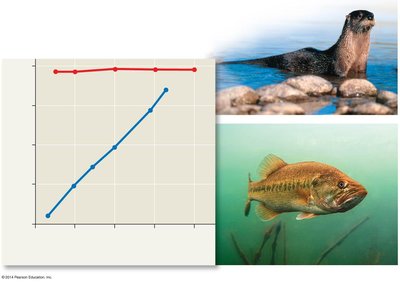
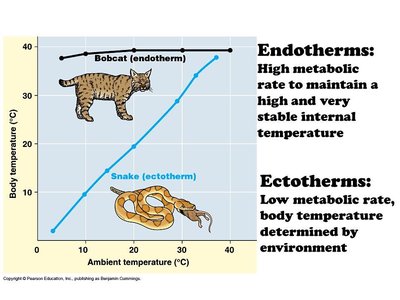
Animals use different strategies to cope with environmental changes. Some maintain stable internal conditions (regulators), while others allow their internal state to change with the environment (conformers).
Regulator: Uses internal control mechanisms to maintain stability despite external fluctuations (e.g., river otter).
Conformer: Allows internal conditions to vary with the environment (e.g., largemouth bass).
Endotherms: Temperature regulators with high metabolic rates (e.g., mammals, birds).
Ectotherms: Temperature conformers with low metabolic rates (e.g., reptiles, fish).
Some animals regulate certain variables while conforming to others.
Mechanisms of Homeostasis
Set Points, Stimuli, Sensors, and Responses
Homeostatic control systems operate by detecting deviations from a set point and initiating responses to correct them.
Fluctuations above or below a set point serve as a stimulus.
A sensor detects the stimulus and triggers a response that returns the variable to the set point.
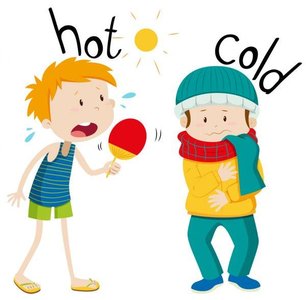
Example: When body temperature rises or falls, mechanisms such as sweating or shivering are activated to restore balance.
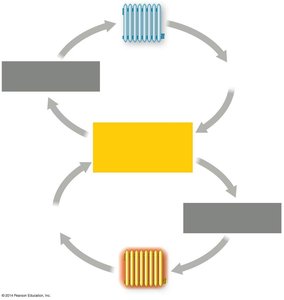
Example: Thermostat Analogy
A thermostat regulates room temperature by turning a heater on or off to maintain a set temperature, similar to how biological systems maintain homeostasis.
Blood Glucose Regulation
Insulin and Glucagon Feedback Loops
The regulation of blood glucose levels is a classic example of homeostasis, involving the hormones insulin and glucagon produced by the pancreas.
When blood glucose rises (e.g., after eating), beta cells in the pancreas release insulin:
Body cells take up more glucose.
Liver stores glucose as glycogen.
Blood glucose level declines to the set point.
When blood glucose falls (e.g., after fasting), alpha cells in the pancreas release glucagon:
Liver breaks down glycogen and releases glucose into the blood.
Blood glucose level rises to the set point.
Condition | Hormone Released | Target/Effect | Result |
|---|---|---|---|
High blood glucose | Insulin (from beta cells) | Body cells, liver | Glucose uptake/storage, blood glucose decreases |
Low blood glucose | Glucagon (from alpha cells) | Liver | Glycogen breakdown, blood glucose increases |
Feedback Mechanisms
Negative Feedback
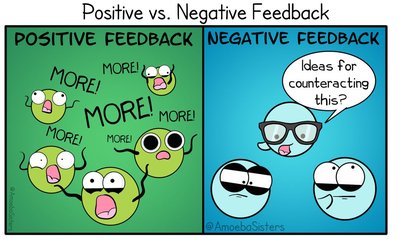
Negative feedback is the primary mechanism for maintaining homeostasis. It works by counteracting changes from the set point, thus stabilizing the system.
Example: Regulation of body temperature, blood glucose, and blood pH.
Positive Feedback
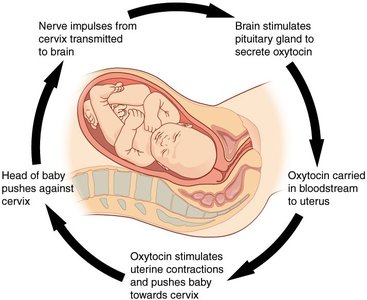
Positive feedback amplifies a stimulus and moves the system further from the set point. It is less common in homeostasis but plays a role in specific biological processes.
Example: The process of childbirth, where the release of oxytocin intensifies uterine contractions until delivery is complete.
Summary Table: Feedback Mechanisms
Feedback Type | Definition | Example | Role in Homeostasis |
|---|---|---|---|
Negative Feedback | Reduces deviation from set point | Blood glucose regulation, temperature regulation | Maintains stability |
Positive Feedback | Amplifies deviation from set point | Childbirth (oxytocin release) | Drives process to completion |
Additional Info
Homeostasis is a central concept in physiology and is covered in detail in Chapter 40 of most introductory biology textbooks.
Disruptions in homeostasis can lead to disease or dysfunction.
