 Back
Homeostasis and Thermoregulation in Animals: Principles of Form and Function
Study Guide - Smart Notes
 Tailored notes based on your materials, expanded with key definitions, examples, and context.
Principles of Form & Function
General Themes of Biology and Physiology
Understanding the physiology of multicellular organisms requires knowledge of several unifying themes in biology. These include the relationship between structure and function, the hierarchical organization of living systems, and the importance of homeostasis in maintaining stable internal conditions.
Structure and Function: Biological structures are adapted to their functions at all levels, from molecules to organ systems.
Hierarchical Organization: Living organisms are organized into cells, tissues, organs, and organ systems, each with specialized roles.
Homeostasis: The maintenance of a stable internal environment despite external fluctuations is a key concept in physiology.
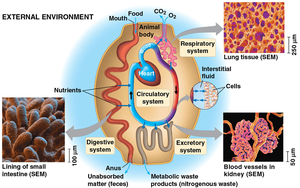
Example: The circulatory, respiratory, digestive, and excretory systems work together to maintain the internal environment of animals.
Characteristics of Living Organisms
Living organisms share several defining characteristics, which can be observed in both animals and plants.
Order: Highly organized structures and functions.
Regulation: Ability to maintain homeostasis.
Growth and Development: Controlled by genetic information.
Energy Processing: Acquisition and use of energy (e.g., photosynthesis in plants, metabolism in animals).
Response to Environment: Ability to sense and react to stimuli.
Reproduction: Production of offspring.
Evolutionary Adaptation: Populations evolve over generations.
Example: Plants perform photosynthesis, while animals consume food for energy.
Unique Characteristics of Animals and Plants
Animals: Multicellular, heterotrophic, lack cell walls, have nervous and muscle tissue, and typically reproduce sexually.
Plants: Multicellular, autotrophic (photosynthetic), have cell walls made of cellulose, and exhibit alternation of generations in their life cycle.
Generalized Body Plans and Hierarchical Organization
Both animals and plants exhibit hierarchical organization, with specialized tissues and organ systems adapted to their lifestyles.
Animals: Major organ systems include circulatory, respiratory, digestive, excretory, nervous, and muscular systems.
Plants: Major organ systems include the root system and shoot system, with tissues such as dermal, vascular, and ground tissue.
Example: The animal body plan supports movement and rapid response, while the plant body plan supports photosynthesis and growth toward resources.
Homeostasis
Definition and Importance
Homeostasis is the steady-state physiological condition of the body. It refers to the ability of an organism to maintain internal equilibrium by adjusting its physiological processes. This is essential for survival, as it allows organisms to function optimally despite changes in the external environment.
Examples of Homeostatic Regulation: Thermoregulation, pH balance, osmoregulation, energetic homeostasis, oxygen availability, blood sugar, blood CO2, blood pressure, water balance, ion concentrations (e.g., Ca+).
General Model of Homeostasis
The general model of homeostasis involves several key components:
Stimulus: A change in an internal variable (e.g., temperature, glucose level).
Sensor: Detects the change and sends information to the control center.
Control Center: Processes the information and initiates a response.
Response: Returns the variable to the normal range, restoring equilibrium.
This process is often regulated by negative feedback mechanisms, which counteract the initial change.
Negative vs. Positive Feedback
Feedback mechanisms are essential for homeostasis:
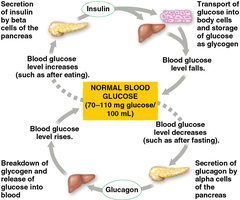
Negative Feedback: Reduces or reverses the effect of the stimulus, maintaining stability. Example: Regulation of blood glucose levels.
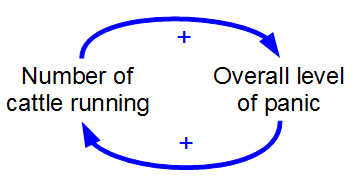
Positive Feedback: Amplifies the effect of the stimulus, often driving processes to completion. Example: Blood clotting, or the increase in panic in a herd of cattle.
Thermoregulation as an Example of Homeostasis
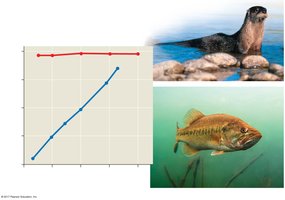
Thermoregulation is the process by which animals maintain their internal body temperature within a tolerable range, despite fluctuations in environmental temperature. Organisms may be classified as regulators or conformers with respect to temperature:
Regulators: Use internal mechanisms to control internal change in the face of external fluctuation (e.g., river otter).
Conformers: Allow their internal condition to vary with external changes (e.g., largemouth bass).
Endotherms vs. Ectotherms; Homeotherms vs. Poikilotherms
Endotherms: Generate heat by metabolism (e.g., mammals, birds).
Ectotherms: Gain heat from external sources (e.g., reptiles, amphibians, fish).
Homeotherms: Maintain a relatively constant body temperature.
Poikilotherms: Body temperature varies with the environment.
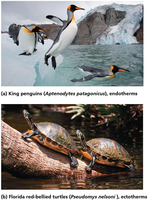
Homeostasis: Thermoregulation Model
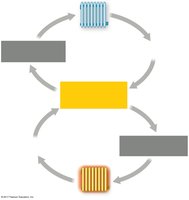
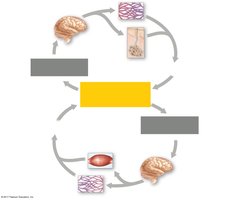
The regulation of body temperature in mammals is a classic example of homeostasis, involving negative feedback. The hypothalamus acts as a thermostat, detecting changes in body temperature and activating mechanisms to restore normal temperature.
When body temperature rises: The hypothalamus activates cooling mechanisms such as sweating and dilation of blood vessels.
When body temperature falls: The hypothalamus activates warming mechanisms such as shivering and constriction of blood vessels.
Mini-Quiz: Application of Concepts
Sample Questions
Q5: The river otter is a regulator rather than a conformer with regard to temperature because it uses internal mechanisms to control internal change in the face of external fluctuation.
Q6: The correct sequence of bodily responses to increased temperature is: 3 (Body temperature increases), 1 (Thermostat in hypothalamus activates cooling mechanisms), 4 (Sweat glands secrete sweat, and blood vessels in skin dilate), 2 (Body temperature decreases).
Summary Table: Comparison of Regulators and Conformers
Characteristic | Regulator | Conformer |
|---|---|---|
Internal Condition | Maintained constant | Varies with environment |
Example | River otter (temperature) | Largemouth bass (temperature) |
Energy Cost | High (due to regulation) | Low (due to conformity) |
Additional info: These concepts are foundational for understanding animal physiology and are directly relevant to Campbell Biology Ch. 1, 40, and 35.1.
