 Back
Homeostasis, Endocrine and Nervous Systems, and Energy Regulation in Animals
Study Guide - Smart Notes
 Tailored notes based on your materials, expanded with key definitions, examples, and context.
Homeostasis and Feedback Mechanisms
Definition and Importance of Homeostasis
Homeostasis is the process by which organisms maintain a stable internal environment despite changes in external conditions. This regulation is essential for the proper functioning of cells and organs, ensuring survival and optimal physiological performance.
Homeostasis involves dynamic equilibrium, where physiological variables are kept within narrow limits.
Examples include regulation of body temperature, blood glucose, and pH.
Negative and Positive Feedback Loops
Feedback loops are mechanisms that organisms use to maintain homeostasis. They can be classified as negative or positive based on their effect on the original stimulus.
Negative Feedback: A process that reduces or counteracts a change, bringing the system back to its set point. This is the most common mechanism for maintaining homeostasis.
Example: Regulation of blood glucose levels by insulin and glucagon.
Positive Feedback: A process that amplifies a change, moving the system further from its set point. Positive feedback is less common and usually occurs in specific situations, such as childbirth or blood clotting.
Example: Release of oxytocin during childbirth, which intensifies uterine contractions.
Note: Positive feedback cannot contribute to long-term homeostasis because it drives systems away from equilibrium.
Coordination of Animal Responses: Endocrine and Nervous Systems
Overview of Control Systems
Animals use two major systems to coordinate responses to stimuli and maintain homeostasis: the endocrine system and the nervous system.
Endocrine System: Utilizes hormones (signaling molecules) that travel through the bloodstream to target cells with specific receptors. Acts globally, with slower but longer-lasting effects. Regulates growth, reproduction, and metabolism.
Nervous System: Uses electrochemical signals (action potentials and neurotransmitters) that travel along neurons to specific locations. Acts rapidly and specifically, with fleeting effects. Controls reflexes, movement, and rapid responses.
Types of Hormone Signaling
Peptide Hormones: Water-soluble, composed of amino acids. Cannot easily cross cell membranes but travel freely in the bloodstream.
Steroid Hormones: Lipid-soluble, derived from cholesterol. Can easily cross cell membranes but require carrier proteins in the blood.
Key Concept: The polarity of the hormone determines its transport and mechanism of action.
Signal Transduction Pathways
Signal transduction pathways convert extracellular signals (such as hormones) into intracellular responses, often leading to gene activation or changes in cell function.
Example: Epinephrine (adrenaline) can trigger different responses in various tissues depending on the receptor type and intracellular signaling proteins present.
One Hormone, Multiple Effects
A single hormone can elicit different responses in different cell types due to variations in receptor types and intracellular signaling pathways.
Example: Epinephrine causes increased heart rate in cardiac muscle but stimulates glucose release in liver cells.
Endocrine and Neuroendocrine Signaling
Types of Signaling Molecules
Hormones: Released by endocrine cells, travel in the bloodstream, and affect distant target cells (endocrine signaling).
Neurotransmitters: Released by neurons, act on adjacent neurons, muscles, or glands across synapses (synaptic signaling).
Neurohormones: Released by neurosecretory cells, enter the bloodstream, and act on distant targets (neuroendocrine signaling).
Simple and Complex Neuroendocrine Pathways
Simple Endocrine Pathway: A stimulus triggers hormone release from an endocrine gland, which acts on target cells. Example: Secretin release from the duodenum stimulates the pancreas to secrete bicarbonate, neutralizing stomach acid.
Simple Neuroendocrine Pathway: The nervous system detects a stimulus and triggers hormone release. Example: Suckling stimulates sensory neurons, leading to oxytocin release from the posterior pituitary, causing milk ejection (positive feedback).
Complex Neuroendocrine Pathway: Involves hormone cascades, where hormones from one gland stimulate another gland to release additional hormones. Example: The hypothalamus-pituitary-thyroid axis regulates metabolism via thyroid hormones (T3 and T4).
Blood Glucose Regulation and Diabetes
Hormonal Control of Blood Glucose
Blood glucose levels are tightly regulated by two hormones produced in the pancreas:
Insulin: Secreted by beta cells; lowers blood glucose by promoting uptake into cells and storage as glycogen.
Glucagon: Secreted by alpha cells; raises blood glucose by stimulating glycogen breakdown and glucose release from the liver.
Disruption of Homeostasis: Diabetes Mellitus
Type I Diabetes: Autoimmune destruction of beta cells leads to insulin deficiency. Requires insulin injections and dietary management.
Type II Diabetes: Cells become resistant to insulin; the pancreas overproduces insulin and may eventually stop producing it. Managed by diet, exercise, and sometimes medication.
Key Point: Studying disease conditions like diabetes helps us understand normal physiological regulation.
Metabolism and Bioenergetics in Animals
Basal Metabolic Rate (BMR) and Energy Use
Metabolism refers to all chemical reactions in an organism. The basal metabolic rate (BMR) is the energy expended at rest, necessary for basic physiological functions.
Endotherms: Use metabolic heat to regulate body temperature; have higher BMRs (e.g., mammals, birds).
Ectotherms: Rely on external heat sources; have lower BMRs (e.g., reptiles, amphibians).
Size Effect: Smaller endotherms have higher energy demands per unit mass due to greater surface area-to-volume ratios.
Chemoheterotrophy
Animals are chemoheterotrophs, obtaining both energy and carbon from organic compounds.
They must consume food to meet their energy and carbon needs.
Adaptations for Exchange and Transport
Overview of Exchange Processes
Animals must exchange gases, nutrients, and wastes with their environment. Adaptations maximize the efficiency of these processes.
Hydrolysis: Chemical breakdown of food by water, essential for digestion.
Diffusion: Movement of molecules from high to low concentration, important for gas exchange and nutrient absorption.
Adaptations: Specialized structures (e.g., villi in intestines, alveoli in lungs) increase surface area for exchange.
Examples of Adaptations
Plants and animals have evolved various physical and physiological adaptations to optimize energy and nutrient acquisition in different environments.
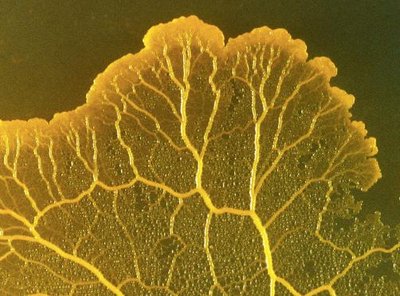
Example: The highly branched structure of slime molds maximizes surface area for nutrient absorption.
Representative Microorganisms
Bacteria and Protists
Microorganisms such as bacteria and protists play essential roles in nutrient cycling and as model organisms in physiology studies.
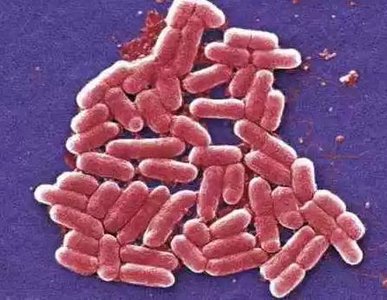
Example: Escherichia coli (E. coli) is a common bacterium used in research to study metabolism and gene regulation.
Summary Table: Comparison of Endocrine and Nervous Systems
Feature | Endocrine System | Nervous System |
|---|---|---|
Signaling Molecule | Hormones | Neurotransmitters |
Transmission | Bloodstream (global) | Neurons (specific) |
Speed | Slow | Fast |
Duration | Long-lasting | Short-lived |
Examples | Growth, metabolism | Reflexes, movement |
