 Back
Homeostasis, Endocrine Signaling, Osmoregulation, and Temperature Regulation
Study Guide - Smart Notes
 Tailored notes based on your materials, expanded with key definitions, examples, and context.
Homeostasis and Endocrine Signaling
Homeostasis
Homeostasis is the process by which animals maintain a stable internal environment despite external fluctuations. This is essential for multicellular organisms, as cellular specialization requires the maintenance of internal conditions distinct from the external environment.
Key Point 1: Homeostasis regulates variables such as body temperature, blood pH, and glucose concentration.
Key Point 2: Negative feedback mechanisms are central to homeostasis, counteracting changes to restore balance.
Example: Regulation of blood glucose levels by insulin and glucagon.
Regulating vs. Conforming
Animals can be classified as regulators or conformers based on their response to environmental changes.
Regulators: Use internal mechanisms to maintain stable internal conditions regardless of external environment (e.g., mammals regulate body temperature).
Conformers: Allow internal conditions to change in response to external environment (e.g., some fish change body temperature with water temperature).
Major regulated conditions: Temperature, water, salt, and pH.
Endocrine System
Overview of Endocrine Signaling
The endocrine system is a collection of glands that produce hormones, which are chemical messengers influencing nearly every cell, tissue, and organ in the body. Hormones are produced by almost all organ systems, but the endocrine glands are the most influential.
Key Point 1: Endocrine signals are distributed throughout the body via the bloodstream.
Key Point 2: Hormones can have multiple effects depending on the target cell and its location.
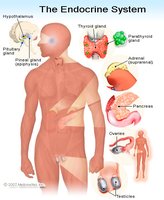
Major Endocrine Glands and Their Hormones
Hypothalamus: Integrates nervous and endocrine systems.
Pituitary gland: Releases hormones that regulate other glands.
Thyroid gland: Produces thyroid hormones (T3, T4) and calcitonin.
Adrenal glands: Secrete epinephrine, norepinephrine, glucocorticoids, and mineralocorticoids.
Pancreas: Produces insulin and glucagon.
Ovaries/Testes: Produce sex hormones (estrogens, progestins, androgens).
Pineal gland: Produces melatonin.
Parathyroid glands: Produce parathyroid hormone (PTH).
Hormone Pathways
Hormones can be released in response to internal or external stimuli, and their effects depend on the pathway involved.
Simple endocrine pathways: Respond to internal changes (e.g., pH regulation in the duodenum).
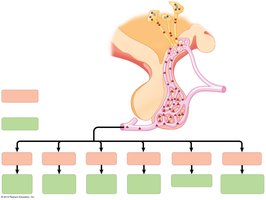
Neuroendocrine pathways: Respond to external stimuli, integrating nervous and endocrine signals (e.g., hypothalamus-pituitary axis).
Endocrine vs. Exocrine Glands
Endocrine glands: Secrete hormones directly into the bloodstream or extracellular matrix.
Exocrine glands: Secrete products via ducts to external environments (e.g., sweat, salivary glands).
Multiple Effects of Hormones
Epinephrine: Increases blood glucose and flow to muscles, decreases blood flow to digestion.
Juvenile hormone: Regulates development and behavior in insects, effects depend on life stage.
Evolution of Hormone Function
Key Point: Hormone functions can diverge between species over evolutionary time.
Example: Thyroid hormone stimulates metabolism in mammals and tail resorption in frog metamorphosis.
Osmoregulation and Excretion
Osmoregulation
Osmoregulation is the process by which animals control solute concentrations in interstitial fluids, balancing water gains and losses. The osmolarity of a solution determines its solute concentration and affects water movement.
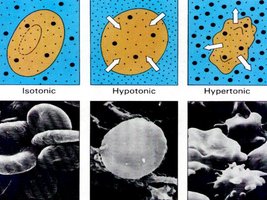
Isotonic: Equal solute concentration inside and outside the cell.
Hypotonic: Lower solute concentration outside; water enters the cell.
Hypertonic: Higher solute concentration outside; water leaves the cell.
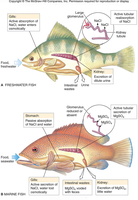
Osmoregulation in Freshwater and Marine Fish
Freshwater fish: Live in hypotonic environments, prevent salt loss, actively absorb NaCl across gills, and excrete excess water via kidneys.
Marine fish: Live in hypertonic environments, actively drink seawater, absorb salt in intestines, secrete excess salt via gills, and maintain body fluids at lower concentration than seawater.
Nitrogenous Waste
Animals must excrete nitrogenous waste produced from the breakdown of proteins and nucleic acids. The type and quantity of waste affect water balance.
Invertebrate Excretory Systems
Protonephridia: Found in flatworms; networks of dead-end tubules connected to external openings.
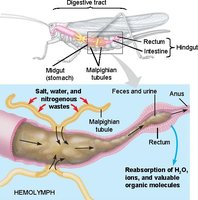
Malpighian tubules: Found in terrestrial arthropods; diffuse wastes without filtration.
Vertebrate Excretory System
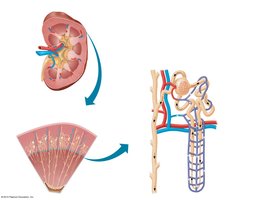
Vertebrates possess kidneys that function in both osmoregulation and excretion, removing nitrogenous waste and regulating salt and water concentrations.
Key Point: Kidneys contain nephrons, the functional units responsible for filtration, reabsorption, secretion, and excretion.
Excretory Process
Filtration: Filtering body fluids via physical force.
Reabsorption: Reclaiming valuable solutes.
Secretion: Adding nonessential solutes and wastes.
Excretion: Releasing processed solution from the body.
Kidney Function and Nephron Transport
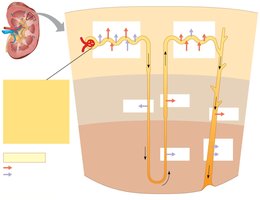
Proximal tubule: Reabsorbs water, ions, and nutrients.
Loop of Henle: Descending limb reabsorbs water; ascending limb reabsorbs salts.
Distal tubule: Further reabsorption and secretion.
Collecting duct: Final concentration of urine.
Temperature Regulation
Enzyme Activity and Temperature
Enzymes have an optimum temperature range, generally between 0°C and 40°C, due to biochemical stability constraints.
Ectothermy
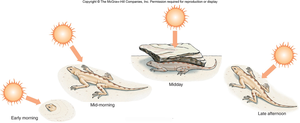
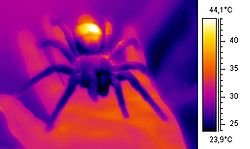
Ectotherms: Animals whose body temperature is determined by external sources of heat.
Behavioral adjustments: Ectotherms regulate body temperature by selecting microhabitats (e.g., basking or seeking shade).
Metabolic adjustments: Ectotherms can adjust metabolic rates to compensate for temperature changes, maintaining activity in varying environments.
Endothermy
Endotherms: Animals that generate enough internal heat to maintain stable body temperature.
Key Point: Endotherms require higher caloric intake to fuel heat production.
Heat loss: Occurs via radiation, conduction, convection, and evaporation.
Heat gain: Achieved through shivering and increased insulation.
Summary Table: Osmoregulation Strategies in Fish
Type | Environment | Water Balance | Salt Balance |
|---|---|---|---|
Freshwater Fish | Hypotonic | Excess water enters by osmosis; excreted via kidneys | Actively absorb NaCl across gills; salt replaced by food |
Marine Fish | Hypertonic | Lose water by osmosis; drink seawater to replace loss | Absorb salt in intestines; secrete excess salt via gills |
Summary Table: Excretory Systems
Organism | Excretory Structure | Function |
|---|---|---|
Flatworm | Protonephridia | Filtration and excretion via tubules |
Arthropod | Malpighian tubules | Diffusion of wastes; reabsorption in rectum |
Vertebrate | Kidney (nephron) | Filtration, reabsorption, secretion, excretion |
Summary Table: Endocrine vs. Exocrine Glands
Type | Secretion | Destination | Examples |
|---|---|---|---|
Endocrine | Hormones | Bloodstream/internal environment | Thyroid, pituitary, adrenal glands |
Exocrine | Enzymes, metabolites | Ducts/external environment | Salivary, sweat, mammary glands |
