 Back
Homeostasis, Thermoregulation, Osmoregulation, and Hormonal Control in Animals
Study Guide - Smart Notes
 Tailored notes based on your materials, expanded with key definitions, examples, and context.
Homeostasis
Definition and Importance
Homeostasis refers to the maintenance of a stable internal environment within an organism, despite external fluctuations. This process is essential for optimal functioning of physiological systems and survival.
Set Points: Human set points include body temperature, blood glucose concentration, and electrolyte (ion) balance.
Mechanisms: Homeostasis is achieved through morphological, physiological, and behavioral adaptations.
Examples: Sweating to cool down, shivering to warm up, and behavioral changes like seeking shade.
Thermoregulation
Mechanisms of Temperature Regulation
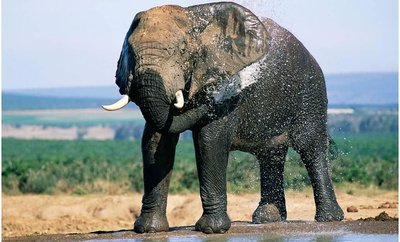
Thermoregulation is the process by which organisms maintain their body temperature within certain boundaries, even when the surrounding temperature is different.
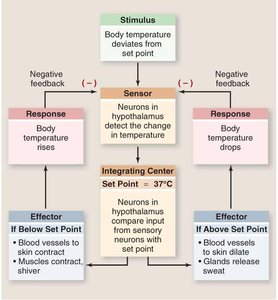
Set Point: Human body temperature is typically 37°C (98.6°F).
Hypothalamus: Acts as the body's thermostat, detecting temperature changes and initiating responses.
High Temperature Responses: Sweating and dilation of blood vessels in the skin.
Low Temperature Responses: Shivering and constriction of blood vessels in the skin.
Enzyme Activity and Temperature
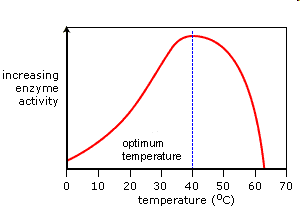
Enzymes are sensitive to temperature changes. Cold temperatures slow down reactions, while excessive heat can denature enzymes, rendering them inactive.
Q10 Effect: Enzyme reaction rates typically double with a 10°C increase in temperature.
Optimum Temperature: Each enzyme has a temperature at which it functions best.
Adaptations to Temperature
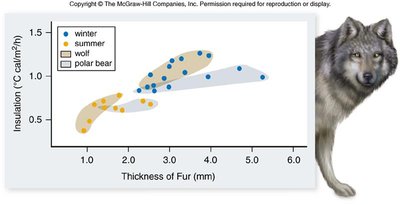
Animals exhibit various adaptations to regulate temperature, including insulation, behavioral changes, and physiological mechanisms.
Insulation: Thickness of fur or fat layers affects heat retention.
Behavioral: Seeking shade, burrowing, or basking.
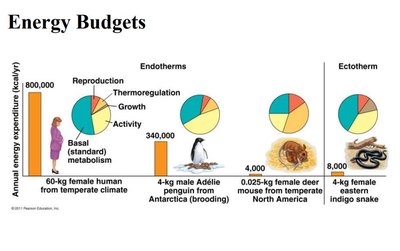
Energy Budgets in Endotherms and Ectotherms
Energy expenditure varies between endotherms (animals that generate heat internally) and ectotherms (animals that rely on external sources).
Endotherms: Higher energy costs for thermoregulation.
Ectotherms: Lower energy costs, rely on environmental heat.
Osmoregulation and Osmotic Balance
Osmolarity and Types of Osmoregulation
Osmoregulation is the control of water and solute concentrations within the body. It is crucial for maintaining cellular function and overall homeostasis.
Osmoconformers: Organisms whose internal environment is isotonic to their surroundings (e.g., marine invertebrates).
Osmoregulators: Organisms that actively regulate their internal osmolarity, often differing from their environment (e.g., freshwater and marine vertebrates).
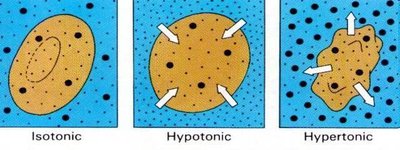
Hypertonic: Higher solute concentration inside the organism than outside.
Hypotonic: Lower solute concentration inside the organism than outside.
Isotonic: Equal solute concentration inside and outside.
Osmoregulatory Organs
Different animal groups have specialized organs for osmoregulation and excretion.
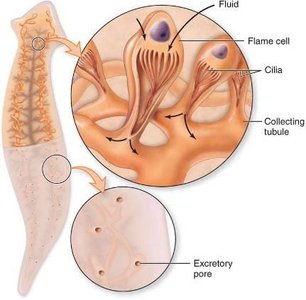
Flatworms: Protonephridia with flame cells.
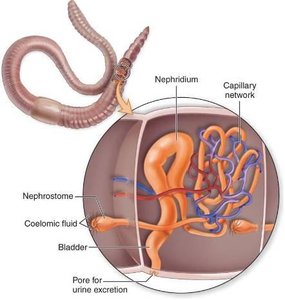
Annelids and Molluscs: Nephridia.
Crustaceans: Antennal glands.
Insects & Spiders: Malpighian tubules.
Vertebrates: Kidneys with nephrons.
Nitrogenous Waste and Excretory Systems
Types of Nitrogenous Waste
Animals produce different types of nitrogenous waste depending on their habitat and evolutionary adaptations.
Ammonia: Least energetically expensive, highly toxic, requires lots of water to excrete (common in aquatic animals).
Urea: Less toxic, water soluble, requires moderate energy (common in mammals).
Uric Acid: Most energetically expensive, saves the most water, least toxic (common in birds and reptiles).
Waste Type | Energy Cost | Toxicity | Water Requirement |
|---|---|---|---|
Ammonia | Low | High | High |
Urea | Moderate | Moderate | Moderate |
Uric Acid | High | Low | Low |
Vertebrate Kidney Function
The vertebrate kidney is the primary organ for excretion and osmoregulation. It produces urine by filtering blood, reabsorbing needed substances, and secreting waste.
Freshwater Fishes: Hyperosmotic regulators, produce dilute urine, absorb salt through gills.
Marine Fishes: Hypoosmotic regulators, produce concentrated urea, secrete salt through gills.
Terrestrial Mammals: Lose water through skin, respiration, urination, and defecation; gain water from food, drinking, and metabolic water.
Structure of the Excretory System
The excretory system in vertebrates consists of the kidney, ureter, urinary bladder, and urethra. The nephron is the functional unit of the kidney.
Nephron Components: Glomerulus, Bowman's capsule, proximal convoluted tubule, loop of Henle, distal convoluted tubule, collecting duct.
Hormonal Regulation and Negative Feedback
Endocrine System Overview
The endocrine system consists of glands, tissues, and cells that secrete hormones. Hormones are chemical messengers that regulate physiological processes and maintain homeostasis, often via negative feedback loops.
Functions: Water balance, metabolism, response to environmental stress, reproduction, growth, and development.
Classes of Hormones
Peptide/Protein Hormones: Hydrophilic, bind to cell membrane receptors, fast response (e.g., insulin, prolactin).
Steroid Hormones: Lipophilic, enter cells, bind to cytoplasmic or nuclear receptors, change protein synthesis (e.g., estradiol, testosterone).
Amine Hormones: Derived from amino acids.
Prostaglandins: Eicosanoids, local signaling molecules.
Hormone Reception and Clearance
Hormones act only on cells with specific receptors. Once their function is complete, hormones are degraded and excreted, with clearance rate measured in half-life.
Hypothalamic-Pituitary-Adrenal (HPA) Axis
The HPA axis is a major regulatory pathway for growth, metabolism, stress response, and reproduction. The hypothalamus links the nervous and endocrine systems, while the pituitary gland controls other endocrine glands. The adrenal glands produce corticosteroids and other hormones.
Glucocorticoids: Cortisol (humans), corticosterone (other species), regulate metabolism, immune function, reproduction, memory, development, emotions, and activity.
Reproductive Hormones: Estrogens and progesterones regulate reproductive organs, somatic growth, and mammary tissue development.
Negative Feedback Loops
Negative feedback loops are essential for maintaining homeostasis. When a physiological parameter deviates from its set point, sensors detect the change and trigger effectors to restore balance.
Example: Regulation of body temperature by the hypothalamus.
Summary Table: Osmoregulation Strategies
Strategy | Environment | Example Organisms |
|---|---|---|
Osmoconformer | Marine | Marine invertebrates, Chondrichthyes |
Osmoregulator | Freshwater/Marine | Freshwater vertebrates, marine vertebrates |
Summary Table: Hormone Classes
Class | Solubility | Mechanism | Examples |
|---|---|---|---|
Peptide/Protein | Hydrophilic | Bind to membrane receptors | Insulin, prolactin |
Steroid | Lipophilic | Enter cell, bind to cytoplasmic/nuclear receptors | Estradiol, testosterone |
Amine | Variable | Bind to membrane or intracellular receptors | Thyroxine, epinephrine |
Prostaglandin | Lipophilic | Local signaling | Prostaglandin E2 |
Additional info: These notes expand on the original content by providing definitions, examples, and structured explanations suitable for General Biology students. All images included are directly relevant to the adjacent paragraphs and reinforce key concepts.
