 Back
Homeostasis, Thermoregulation, Osmoregulation, and Hormonal Control in Animals
Study Guide - Smart Notes
 Tailored notes based on your materials, expanded with key definitions, examples, and context.
Homeostasis
Definition and Importance
Homeostasis refers to the maintenance of a stable internal environment within an organism, despite external fluctuations. This process is essential for optimal cellular function and survival.
Set Points: Human homeostasis involves set points for body temperature, blood glucose, electrolyte (ion) concentrations, and more.
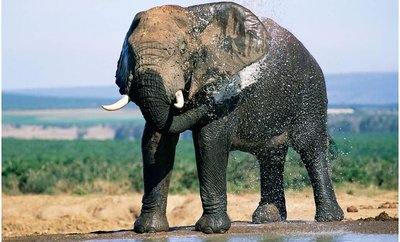
Mechanisms: Homeostasis is achieved through morphological, physiological, and behavioral adaptations.
Examples: Sweating, shivering, and behavioral changes like seeking shade or water.
Thermoregulation
Mechanisms of Temperature Regulation
Thermoregulation is the process by which animals maintain their body temperature within certain boundaries, even when the surrounding temperature is different.
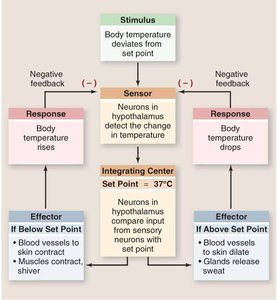
Set Point: Human body temperature is typically maintained at 37°C (98.6°F).
Hypothalamus: Acts as the control center for temperature regulation.
High Temperature: Sweating and dilation of blood vessels in the skin help dissipate heat.
Low Temperature: Shivering and constriction of blood vessels in the skin help conserve heat.
Enzyme Activity and Temperature
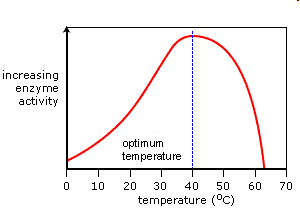
Enzymes are sensitive to temperature changes. Cold temperatures slow down reactions, while excessive heat can denature enzymes.
Q10 Effect: Enzyme reaction rates typically double with a 10°C increase in temperature.
Optimum Temperature: Each enzyme has an optimum temperature for activity.
Adaptations to Temperature
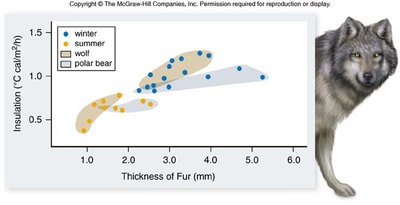
Animals exhibit various adaptations to regulate temperature, including insulation, evaporative cooling, and behavioral strategies.
Insulation: Fur thickness and fat layers provide insulation.
Evaporative Cooling: Mechanisms like sweating or panting.
Behavioral: Seeking shade, burrowing, or basking.
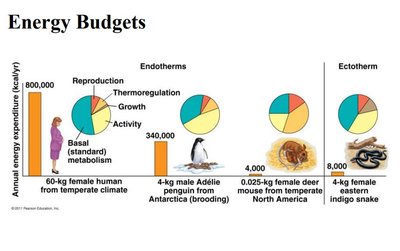
Effects of Climate Change
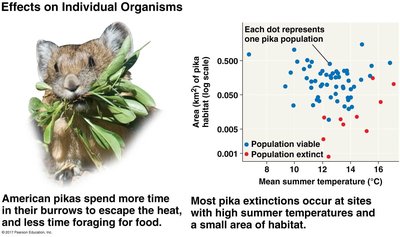
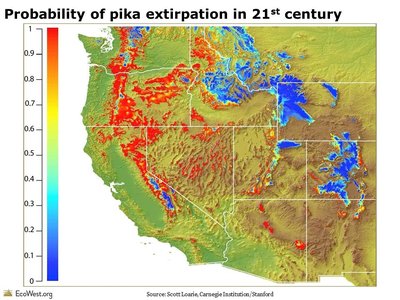
Climate change impacts thermoregulation and species distribution, especially in desert and arctic environments.
Energetic Costs: Increased temperatures raise energetic costs for cooling.
Range Contraction: Species with higher cooling costs experience range contraction.
Extinction Risk: Species like pikas are at risk of extinction in areas with high summer temperatures.
Osmoregulation and Osmotic Balance
Osmolarity and Solute Regulation
Osmoregulation is the process by which organisms maintain the balance of water and solutes in their bodies.
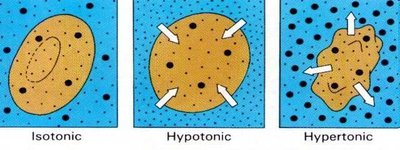
Osmoconformers: Organisms whose internal environment is isotonic to their surroundings (e.g., marine invertebrates, Chondrichthyes).
Osmoregulators: Organisms that actively regulate their internal osmolarity (e.g., freshwater vertebrates, marine vertebrates).
Hypertonic/Hypotonic/Isotonic: Describes the relative solute concentration between the cell and its environment.
Osmoregulatory Organs
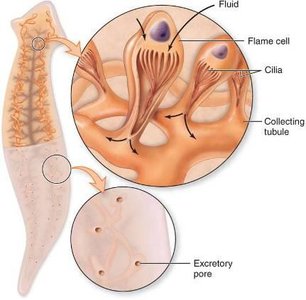
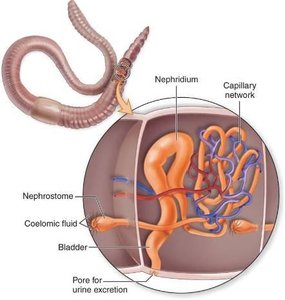
Different animal groups have specialized organs for osmoregulation and excretion.
Flatworms: Protonephridia with flame cells.
Annelids and Molluscs: Nephridia.
Crustaceans: Antennal glands.
Insects & Spiders: Malpighian tubules.
Vertebrates: Kidneys and nephrons.
Nitrogenous Waste
Animals eliminate nitrogenous waste in different forms, depending on their habitat and evolutionary adaptations.
Ammonia: Least energetically expensive, highly toxic, requires lots of water (common in aquatic animals).
Urea: Less toxic, water soluble, requires moderate energy (common in mammals).
Uric Acid: Most energetically expensive, saves the most water, less toxic (common in birds and reptiles).
Waste Type | Energy Cost | Toxicity | Water Requirement |
|---|---|---|---|
Ammonia | Low | High | High |
Urea | Moderate | Moderate | Moderate |
Uric Acid | High | Low | Low |
Vertebrate Kidney Function
The vertebrate kidney is central to osmoregulation and excretion.
Freshwater Fishes: Hyperosmotic regulators; produce dilute urine, absorb salt through gills.
Marine Fishes: Hypoosmotic regulators; produce concentrated urea, secrete salt through gills.
Terrestrial Mammals: Balance water loss and gain through skin, respiration, urination, defecation, food, drinking, and metabolic water.
Excretory System
Structure and Function
The excretory system removes waste products and maintains water and electrolyte balance.
Organs: Kidney, ureter, urinary bladder, urethra.
Nephron: Functional unit of the kidney, consisting of glomerulus, Bowman's capsule, proximal and distal convoluted tubules, loop of Henle, and collecting duct.
ADH and Water Balance
Antidiuretic hormone (ADH) regulates water reabsorption in the kidneys.
Osmoreceptors: Detect blood concentration.
Baroreceptors: Detect blood volume or pressure.
Hypothalamus: Produces ADH.
Posterior Pituitary: Stores and releases ADH.
Kidney: ADH increases aquaporins, leading to more water reabsorption.
Result: Increased blood volume, less concentrated blood, smaller and more concentrated urine.
Endocrine System and Hormonal Regulation
Overview of the Endocrine System
The endocrine system consists of glands, tissues, and cells that secrete hormones for cell-to-cell communication and homeostasis.
Hormones: Chemical messengers that regulate water balance, metabolism, stress response, reproduction, growth, and development.
Negative Feedback Loops: Most homeostatic regulation occurs via negative feedback.
Classes of Hormones
Peptide/Protein Hormones: Hydrophilic, bind to cell membrane, fast response (e.g., insulin, prolactin, oxytocin).
Steroid Hormones: Lipophilic, enter cells, trigger gene expression, slower response (e.g., estradiol, testosterone, cortisol).
Amine Hormones: Derived from amino acids.
Prostaglandins: Eicosanoids, local signaling molecules.
Hormone Reception and Clearance
Receptors: Protein molecules on plasma membrane or in cytoplasm; specificity for each hormone.
Clearance: Hormones are degraded by liver and kidney, excreted in bile or urine; measured by half-life.
Hypothalamic-Pituitary-Adrenal (HPA) Axis
The HPA axis mediates growth, metabolism, stress response, and reproduction.
Hypothalamus: Links nervous and endocrine systems, coordinates homeostatic functions.
Pituitary: Master gland controlling other endocrine glands.
Adrenal Glands: Produce corticosteroids, androgens, epinephrine, and norepinephrine.
Glucocorticoids
Glucocorticoids (e.g., cortisol, corticosterone) are steroid hormones involved in the slower response to stressors.
Functions: Affect metabolism, immune function, reproduction, memory, development, emotions, and activity.
Regulation: CORT regulation of energy metabolism.
Reproductive Hormones
Reproductive hormones are essential for mating behavior, organ formation, and reproductive cycles.
Estrogens: Somatic growth, mammary growth, reproductive organs.
Progesterones: Mammary tissue growth, uterus lining, maintain corpus luteum.
FSH and LH: Follicle-stimulating hormone and luteinizing hormone regulate reproductive cycles.
How Natural Estrogens Work
Target Organs: Breast, bone, liver, reproductive organs, cardiovascular system.
Production: Produced from cholesterol, synthesized from testosterone, secreted from ovaries and testes.
Fat Soluble: Pass directly into cells, receptors in cytoplasm and nucleus.
Summary Table: Osmoregulation Strategies
Strategy | Internal Environment | Example Organisms |
|---|---|---|
Osmoconformer | Isotonic | Marine invertebrates, Chondrichthyes |
Osmoregulator | Hypertonic/Hypotonic | Freshwater vertebrates, marine vertebrates |
Summary Table: Hormone Classes
Class | Solubility | Mechanism | Examples |
|---|---|---|---|
Peptide/Protein | Hydrophilic | Bind to membrane, second messenger | Insulin, prolactin |
Steroid | Lipophilic | Enter cell, gene expression | Estradiol, testosterone |
Amine | Varies | Varies | Epinephrine |
Prostaglandin | Lipophilic | Local signaling | Prostaglandins |
Key Equations
Q10 Effect:
Osmosis: (Osmotic pressure, where is the van 't Hoff factor, is concentration, is gas constant, is temperature)
Additional info:
Some content was inferred and expanded for academic completeness, including detailed explanations of hormone classes, osmoregulatory organs, and feedback mechanisms.
