 Back
Hormonal and Cellular Communication: Mechanisms and Pathways
Study Guide - Smart Notes
 Tailored notes based on your materials, expanded with key definitions, examples, and context.
Coordination of Communication in Animals
Endocrine and Nervous System Overview
The endocrine system and nervous system are the two primary systems responsible for communication within multicellular organisms. The endocrine system uses hormones—chemical messengers secreted into the bloodstream—while the nervous system transmits electrical signals along neurons.
Endocrine system: Secretes hormones into the blood for long-distance signaling.
Nervous system: Uses electrical impulses and neurotransmitters for rapid, targeted communication.
Types of Secreted Signaling Molecules
Classification of Chemical Signals
Secreted chemical signals can be classified based on their range and mechanism of action:
Local regulators: Act over short distances (e.g., paracrine and autocrine signals).
Hormones: Travel through the bloodstream to distant target cells.
Neurohormones: Released by neurons into the blood, affecting distant targets.
Pheromones: Released into the environment to communicate between individuals of the same species.
Local Regulators
Paracrine and Autocrine Signaling
Local regulators are chemical signals that act over short distances, typically by diffusion. They can be further divided into:
Paracrine signals: Affect neighboring cells near the secreting cell.
Autocrine signals: Affect the secreting cell itself.
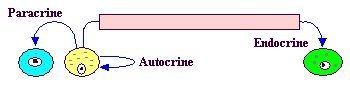
Types of Local Regulators
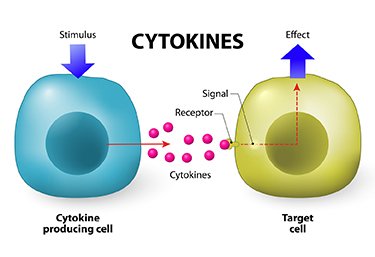
Cytokines: Proteins important in immune responses, inflammation, and cell communication.
Growth factors: Stimulate cell proliferation and differentiation.
Neurotransmitters: Chemical messengers released by neurons at synapses.
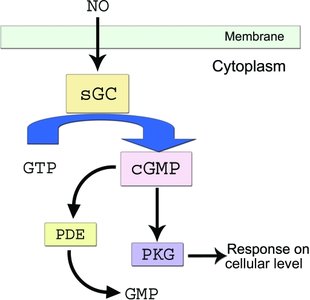
Nitric oxide (NO): A gas that acts as a signaling molecule in the cardiovascular, nervous, and immune systems.
Prostaglandins: Lipid compounds involved in injury response, platelet aggregation, and vasodilation.
Cytokines
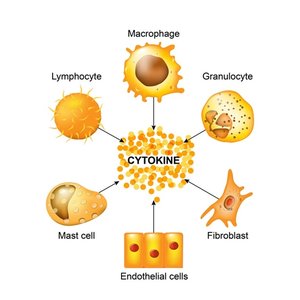
Cytokines are a diverse group of proteins secreted by various cell types, including immune cells, that mediate and regulate immunity, inflammation, and hematopoiesis.
Nitric Oxide (NO) as a Local Regulator
Nitric oxide is a gaseous signaling molecule that diffuses across cell membranes and triggers various physiological responses, such as vasodilation (widening of blood vessels).
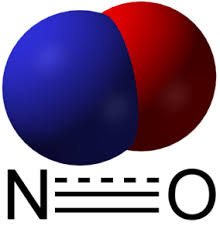
NO activates the enzyme guanylyl cyclase, increasing levels of cyclic GMP (cGMP), which mediates cellular responses.
Hormones and Long-Distance Signaling
Endocrine and Exocrine Glands
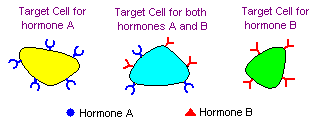
Endocrine glands secrete hormones directly into the bloodstream, while exocrine glands release substances through ducts to the outside of the body or into the digestive tract. Hormones act on target cells that possess specific receptors for the hormone.
Types of Hormones
Hormones can be classified into three major chemical classes:
Polypeptides: Chains of amino acids (e.g., insulin).
Amines: Derived from amino acids (e.g., epinephrine, thyroxine).
Steroid hormones: Derived from cholesterol (e.g., cortisol, sex hormones).
Hormone Solubility and Receptor Location
Water-soluble hormones (polypeptides and most amines): Bind to cell-surface receptors.
Lipid-soluble hormones (steroids and some amines): Pass through cell membranes and bind to intracellular receptors.
Hormone Signaling Pathways
General Steps in Hormone Signaling
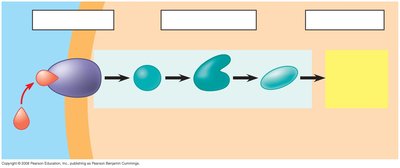
Hormone signaling involves three main steps:
Reception: Hormone binds to its specific receptor.
Signal transduction: The signal is relayed and amplified inside the cell, often through a cascade of molecular events.
Response: The cell carries out a specific activity, such as gene expression or metabolic change.
Water-Soluble vs. Lipid-Soluble Hormone Pathways
Water-soluble hormones: Bind to cell-surface receptors, triggering signal transduction pathways that often involve secondary messengers (e.g., cAMP, Ca2+).
Lipid-soluble hormones: Diffuse through the plasma membrane and bind to intracellular receptors, often directly affecting gene expression.
Signal Transduction Mechanisms
G Protein-Coupled Receptors (GPCRs)
GPCRs are a large family of cell-surface receptors that activate G proteins, which in turn regulate various intracellular signaling pathways.
Activation of adenylyl cyclase to produce cAMP (a secondary messenger).
Regulation of ion channels and other enzymes.
Receptor Tyrosine Kinases (RTKs)
RTKs are membrane receptors that, upon ligand binding, dimerize and autophosphorylate, initiating a cascade of phosphorylation events inside the cell.
Activate pathways such as MAP kinase, JAK-STAT, and PI3K/AKT.
Secondary Messengers
Secondary messengers amplify the signal from the receptor to target molecules inside the cell. Common examples include:
cAMP (cyclic AMP): Produced from ATP by adenylyl cyclase; activates protein kinase A (PKA).
Ca2+ ions: Released from intracellular stores, triggering various cellular responses.
IP3 (inositol trisphosphate): Promotes Ca2+ release from the endoplasmic reticulum.
Regulation and Feedback in Hormone Signaling
Negative and Positive Feedback
Hormone signaling is tightly regulated by feedback mechanisms:
Negative feedback: The response reduces the initial stimulus (e.g., regulation of blood glucose by insulin and glucagon).
Positive feedback: The response amplifies the initial stimulus (e.g., oxytocin release during childbirth).
Coordination of Endocrine and Nervous Systems
Integration in Invertebrates and Vertebrates
In both invertebrates and vertebrates, the endocrine and nervous systems coordinate complex physiological processes such as development, metabolism, and homeostasis. For example, insect molting is regulated by hormones like ecdysone and juvenile hormone.
Major Human Endocrine Glands and Hormones
Overview of Glands
Major endocrine glands include the hypothalamus, pituitary, thyroid, parathyroid, adrenal glands, pancreas, gonads (testes and ovaries), and pineal gland. Each gland secretes specific hormones that regulate various physiological processes.
Examples of Hormonal Regulation
Thyroid hormones (T3 and T4): Regulate metabolism and development.
Parathyroid hormone (PTH) and calcitonin: Regulate blood calcium levels.
Insulin and glucagon: Regulate blood glucose levels.
Adrenal hormones (epinephrine, norepinephrine, corticosteroids): Mediate stress responses.
Sex hormones (androgens, estrogens, progestins): Regulate reproductive development and function.
Melatonin: Regulates biological rhythms.
Summary Table: Examples of Cell Responses Mediated by cAMP
Extracellular Signal Molecule | Target Tissue | Major Response |
|---|---|---|
Adrenaline | Heart | Increase in heart rate and force of contraction |
Adrenaline | Skeletal muscle | Glycogen breakdown |
Adrenaline, glucagon | Fat | Fat breakdown |
Adrenocorticotropic hormone (ACTH) | Adrenal gland | Cortisol secretion |
Additional info: cAMP is a common secondary messenger in many hormone signaling pathways, mediating diverse physiological responses.
