Back
BIO 102 Chapter 45 Study Guide Modules 2-3
Study Guide - Smart Notes
 Tailored notes based on your materials, expanded with key definitions, examples, and context.
Feedback Regulation and Coordination with the Nervous System
The endocrine system uses hormones to regulate physiological processes and maintain homeostasis. Hormones are chemical messengers secreted by endocrine cells and travel through the bloodstream to target cells. Feedback regulation, often in coordination with the nervous system, is a central feature of hormone pathways, ensuring that physiological responses are balanced and appropriate for the organism's needs.
Hormones are assembled into regulatory pathways that control their release and effects.
Feedback mechanisms (negative and positive) are essential for maintaining homeostasis.
Hormone Pathways and Feedback Mechanisms
Simple Endocrine Pathways
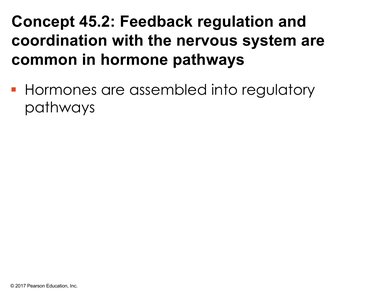
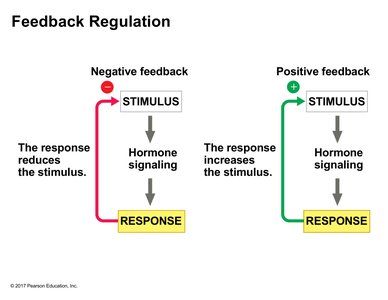
In a simple endocrine pathway, an endocrine cell responds to a stimulus by releasing a hormone into the bloodstream. The hormone travels to target cells, which have specific receptors, and elicits a physiological response. Negative feedback is common, where the response inhibits further hormone release, maintaining balance.
Example: Low pH in the duodenum stimulates S cells to release secretin, which acts on the pancreas to release bicarbonate, neutralizing the acid.
Negative Feedback: The response (bicarbonate release) reduces the initial stimulus (low pH), stopping further hormone release.
Simple Neuroendocrine Pathways
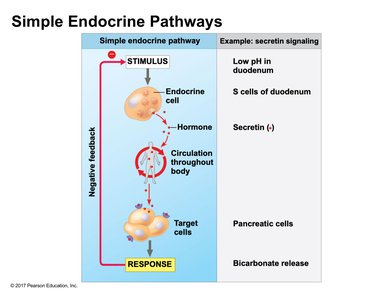
Neuroendocrine pathways involve neurosecretory cells (often in the hypothalamus) that release hormones in response to neural stimuli. These hormones are released into the bloodstream and act on target cells. Positive feedback can occur, where the response amplifies the initial stimulus.
Example: Suckling stimulates nerve endings, leading to oxytocin release from the posterior pituitary. Oxytocin causes milk release, which encourages further suckling and more oxytocin release until the stimulus stops.
Positive Feedback: The response (milk release) increases the stimulus (suckling), amplifying hormone release.
Types of Feedback Regulation
Feedback regulation is critical for hormone pathways:
Negative Feedback: The response reduces the original stimulus, maintaining homeostasis (e.g., regulation of blood glucose, body temperature).
Positive Feedback: The response increases the original stimulus, driving processes to completion (e.g., childbirth, milk ejection).
Hormonal Regulation in Invertebrates and Vertebrates
Hormonal Regulation in Invertebrates
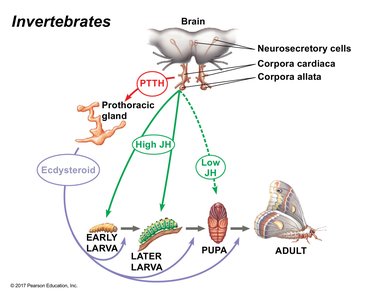
Invertebrates use hormones to regulate growth and development. Neurosecretory cells in the brain secrete PTTH (prothoracicotropic hormone), which stimulates the prothoracic gland to release ecdysteroid, triggering molting and metamorphosis. Juvenile hormone (JH) maintains the larval state; its decline allows progression to pupal and adult stages.
PTTH: Stimulates prothoracic gland to release ecdysteroid.
Ecdysteroid: Triggers molting and developmental transitions.
Juvenile Hormone (JH): Maintains larval state; low levels permit metamorphosis to adult.
Hormonal Regulation in Vertebrates: The Hypothalamus and Pituitary Gland
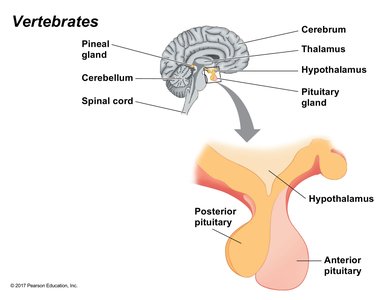
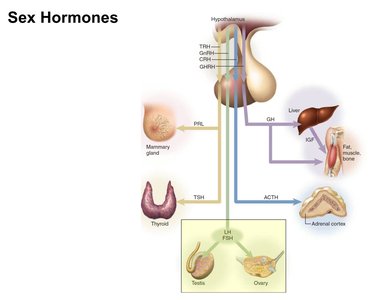
The hypothalamus and pituitary gland are central to vertebrate endocrine regulation. The hypothalamus receives neural signals and releases hormones that control the pituitary gland, which in turn regulates other endocrine glands throughout the body.
Hypothalamus: Integrates neural and endocrine signals; releases hormones that regulate the pituitary gland.
Pituitary Gland: Divided into anterior and posterior lobes, each with distinct functions and hormone targets.
Posterior Pituitary
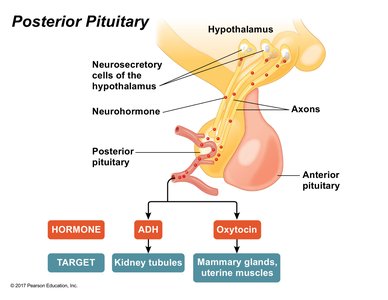
The posterior pituitary stores and releases hormones produced by the hypothalamus, specifically antidiuretic hormone (ADH) and oxytocin. These hormones are released into the bloodstream to act on target organs.
ADH: Targets kidney tubules to regulate water balance.
Oxytocin: Targets mammary glands and uterine muscles, involved in milk ejection and uterine contractions.
Anterior Pituitary
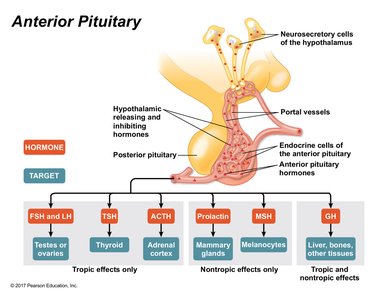
The anterior pituitary produces and releases its own hormones in response to releasing or inhibiting hormones from the hypothalamus. Many anterior pituitary hormones are tropic, meaning they regulate other endocrine glands.
Tropic Hormones: FSH, LH (gonads), TSH (thyroid), ACTH (adrenal cortex).
Non-tropic Hormones: Prolactin (mammary glands), MSH (melanocytes).
Growth Hormone (GH): Has both tropic and non-tropic effects, influencing growth and metabolism.
Hormone Cascade Pathways and Disorders
Thyroid Regulation: A Hormone Cascade Pathway
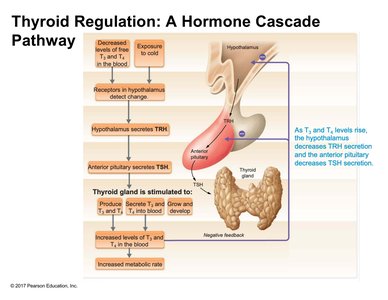
The hypothalamus, anterior pituitary, and thyroid gland form a hormone cascade pathway that regulates metabolism. Low levels of thyroid hormones (T3 and T4) or exposure to cold stimulate the hypothalamus to release TRH, which prompts the anterior pituitary to release TSH, stimulating the thyroid to produce and release T3 and T4. Negative feedback inhibits further hormone release when levels are sufficient.
TRH: Thyrotropin-releasing hormone from hypothalamus.
TSH: Thyroid-stimulating hormone from anterior pituitary.
T3 and T4: Thyroid hormones that regulate metabolic rate.
Disorders of Thyroid Function and Regulation
Imbalances in thyroid hormone production can lead to disorders:
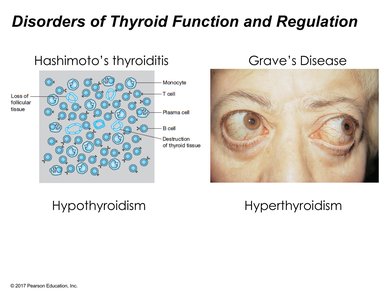
Hypothyroidism (e.g., Hashimoto's thyroiditis): Underproduction of thyroid hormone, often due to autoimmune destruction of thyroid tissue. Symptoms include weight gain, cold intolerance, and decreased metabolism.
Hyperthyroidism (e.g., Graves' disease): Overproduction of thyroid hormone, often due to immune system stimulation of the thyroid. Symptoms include weight loss, heat intolerance, increased metabolism, and sometimes bulging eyes (exophthalmos).
Hormonal Regulation of Growth
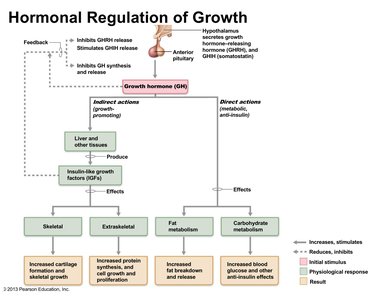
Growth hormone (GH) from the anterior pituitary regulates growth and metabolism. Its release is controlled by the hypothalamus. GH stimulates the liver and other tissues to produce insulin-like growth factors (IGFs), which promote protein synthesis, fat metabolism, and skeletal growth.
Indirect Effects: IGFs stimulate skeletal and extraskeletal growth.
Direct Effects: GH increases fat breakdown and blood glucose (anti-insulin effects).
Imbalances of Growth Hormone
Abnormal GH secretion leads to growth disorders:
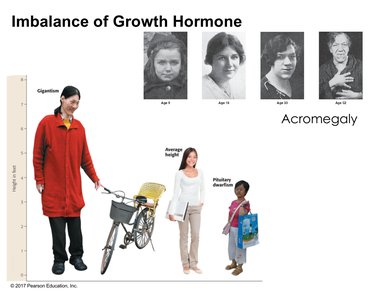
Gigantism: Excess GH before epiphyseal plate closure causes abnormal height and tissue overgrowth.
Acromegaly: Excess GH after plate closure causes tissue thickening, especially in the face and extremities.
Pituitary Dwarfism: GH deficiency before plate closure results in proportionate short stature.
Endocrine Glands and Homeostasis
Parathyroid Hormone and Vitamin D: Control of Blood Calcium
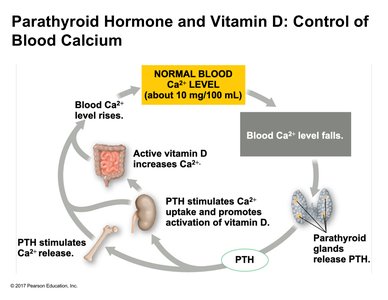
Parathyroid hormone (PTH) and vitamin D regulate blood calcium levels. When blood calcium falls, the parathyroid glands release PTH, which increases calcium by stimulating bone resorption, increasing calcium reabsorption in the kidneys, and promoting activation of vitamin D, which enhances calcium absorption in the intestine.
PTH: Raises blood calcium by acting on bones, kidneys, and intestines (via vitamin D).
Vitamin D: Promotes intestinal absorption of calcium.
Adrenal Hormones: Response to Stress
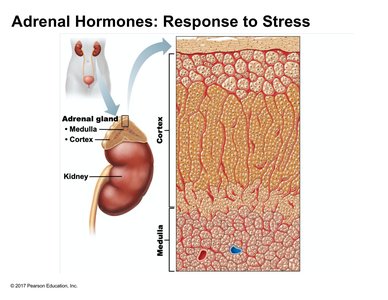
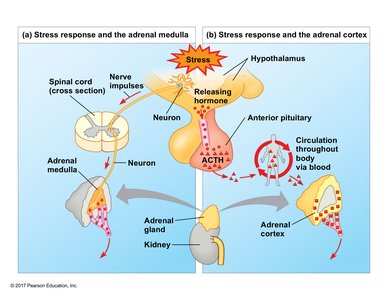
The adrenal glands, located above the kidneys, consist of the cortex (outer) and medulla (inner). They secrete hormones in response to stress:
Adrenal Medulla: Releases catecholamines (epinephrine and norepinephrine) for the "fight or flight" response.
Adrenal Cortex: Releases corticosteroids (glucocorticoids and mineralocorticoids) for long-term stress adaptation, regulating metabolism and salt/water balance.
Stress Response Pathways
The stress response involves two main pathways:
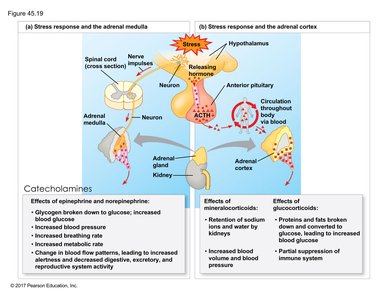
Adrenal Medulla Pathway: Nerve impulses trigger release of catecholamines, increasing blood glucose, heart rate, and blood flow to essential organs.
Adrenal Cortex Pathway: The hypothalamus releases a hormone that stimulates the anterior pituitary to secrete ACTH, which prompts the adrenal cortex to release corticosteroids, affecting metabolism and immune function.
Sex Hormones and Endocrine Disruptors
Sex Hormones
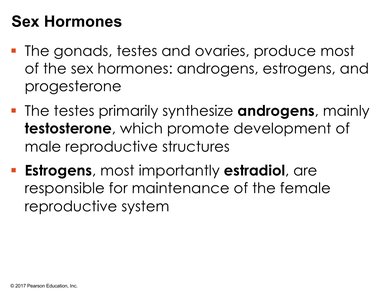
The gonads (testes and ovaries) produce sex hormones: androgens (e.g., testosterone), estrogens (e.g., estradiol), and progesterone. These hormones regulate reproductive development and secondary sexual characteristics. Both males and females produce all three types, but in different proportions.
Testosterone: Promotes male reproductive structures and secondary characteristics.
Estradiol: Maintains the female reproductive system and secondary characteristics.
Endocrine Disruptors
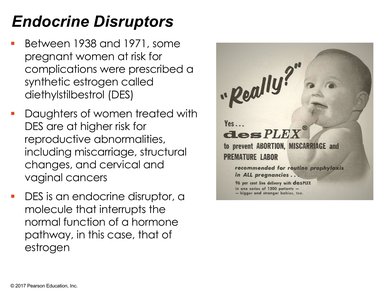
Endocrine disruptors are chemicals that interfere with hormone pathways. One example is diethylstilbestrol (DES), a synthetic estrogen once prescribed to pregnant women. DES exposure in utero increased the risk of reproductive abnormalities and cancers in daughters, highlighting the importance of careful regulation of substances that affect the endocrine system.
DES: Synthetic estrogen linked to increased cancer risk and reproductive issues in exposed offspring.
Endocrine Disruptor: Any molecule that interrupts normal hormone function.
Hormones and Biological Rhythms
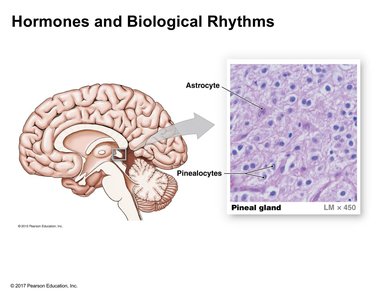
Pineal Gland and Melatonin
The pineal gland, located in the brain, secretes melatonin, which helps regulate biological rhythms such as the sleep-wake cycle. Melatonin release is controlled by the suprachiasmatic nucleus (SCN) in the hypothalamus, which receives light cues from the retina.
Melatonin: Hormone involved in regulating circadian rhythms.
SCN: Master clock that synchronizes biological rhythms with environmental light-dark cycles.
Melanocyte-Stimulating Hormone (MSH)
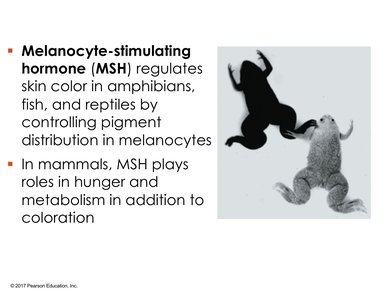
MSH regulates skin color in amphibians, fish, and reptiles by controlling pigment distribution in melanocytes. In mammals, MSH also plays roles in hunger and metabolism, in addition to coloration.
MSH: Hormone with diverse roles in different organisms, from pigmentation to metabolic regulation.