Back
BackHow Biological Diversity Evolves: Speciation, Macroevolution, and Classification
Study Guide - Smart Notes
 Tailored notes based on your materials, expanded with key definitions, examples, and context.
How Diversity Evolves
Humanity’s Footprint and the Anthropocene
Human activities have dramatically altered Earth's ecology and geology, marking the beginning of a new epoch known as the Anthropocene. This period is characterized by high extinction rates and rapid environmental changes due to:
Transport of organisms beyond their native ranges
Widespread agriculture and domestication
Production of synthetic materials (plastics, concrete)
Radioactive contamination from nuclear testing
Climate change from fossil fuel emissions
The Anthropocene highlights the profound impact humans have on biodiversity and evolutionary processes.
Speciation: The Origin of Species
Speciation is the evolutionary process by which one species splits into two or more distinct species, increasing biodiversity. The Galápagos Islands, with their unique species such as the marine iguana, provide classic examples of speciation in action.
What Is a Species?
The concept of a species is central to biology. The biological species concept defines a species as a group of populations whose members can interbreed in nature and produce fertile offspring. However, this concept does not apply to all organisms, such as asexual species and fossils. Alternative definitions include:
Physical traits (morphological species concept)
Molecular data (DNA barcoding)
Phylogenetic relationships (smallest group sharing a common ancestor)
Reproductive Barriers Between Species
Reproductive barriers prevent closely related species from interbreeding. These barriers are classified as:
Prezygotic barriers: Prevent mating or fertilization (e.g., temporal, habitat, behavioral, mechanical, gametic isolation)
Postzygotic barriers: Occur after fertilization, reducing hybrid viability or fertility (e.g., reduced hybrid viability, reduced hybrid fertility, hybrid breakdown)
For example, behavioral isolation is a prezygotic barrier because differences in mating behaviors prevent interbreeding.
Mechanisms of Speciation
Speciation can occur through different mechanisms:
Allopatric speciation: Geographic barriers physically isolate populations, leading to divergence and reproductive isolation.
Sympatric speciation: New species arise within the same geographic area, often due to polyploidy (extra chromosome sets), habitat complexity, or sexual selection.
Polyploidy is especially common in plants, resulting in many important crop species.
Island Showcases of Speciation
Islands like the Galápagos and Hawaiian chains are hotspots for speciation due to their isolation and diverse habitats. Colonizing populations may diverge from their ancestors, leading to adaptive radiation. The Galápagos finches are a classic example, with beak shapes adapted to different diets and environments.
The Fossil Record and Macroevolution
Fossils provide evidence of past life and document macroevolutionary changes. The fossil record is the ordered sequence of fossils in rock layers, revealing patterns of speciation and extinction. Radiometric dating, based on radioactive decay, is used to determine the ages of rocks and fossils.
Earth History, Plate Tectonics, and Biogeography
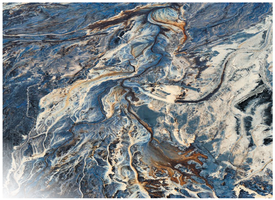
The theory of plate tectonics explains the movement of Earth's crustal plates, shaping continents and influencing the distribution of organisms (biogeography). Continental drift has repeatedly merged and separated landmasses, affecting evolutionary trajectories. For example, the isolation of Australia led to its unique marsupial fauna.
Mass Extinctions and Diversification
The fossil record reveals five major mass extinctions in the past 540 million years. These events, such as the Permian and Cretaceous extinctions, drastically reduced biodiversity but also created opportunities for surviving groups to diversify, as seen in the rise of mammals after the extinction of dinosaurs.
Mechanisms of Macroevolution: Evo-Devo
Macroevolutionary changes often result from small genetic changes that affect development (evo-devo). Genes that control the rate, timing, and spatial pattern of development can produce major structural differences among species. For example, changes in skull development distinguish humans from chimpanzees.
The Evolution of Biological Novelty: Exaptation
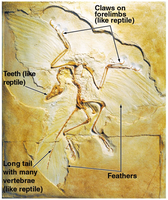
Complex structures often evolve by modifying existing features for new functions, a process called exaptation. For instance, feathers likely evolved first for insulation in dinosaurs and were later co-opted for flight in birds. This illustrates how natural selection can repurpose structures for new adaptive roles.
Classifying the Diversity of Life: Taxonomy and Phylogeny
Taxonomy is the science of naming and classifying organisms. Systematics extends taxonomy by reconstructing evolutionary relationships, often depicted as phylogenetic trees. These trees reflect hypotheses about the evolutionary history of species and their hierarchical relationships.
Homology: Similarity due to shared ancestry
Analogy: Similarity due to convergent evolution, not common ancestry
Cladistics groups organisms by common ancestry into clades, which include an ancestor and all its descendants.
Classification Systems
Classification systems have evolved from two kingdoms to five kingdoms, and now to a three-domain system (Bacteria, Archaea, Eukarya). The domain Eukarya is further divided into kingdoms, though the exact number is debated.
Evolution in the Anthropocene
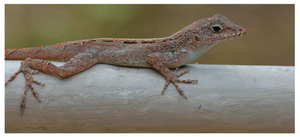
Human-altered environments provide natural laboratories for studying rapid evolutionary adaptation. For example, urban anoles in Puerto Rico have evolved more adhesive scales for gripping artificial surfaces, and urban blackbirds sing at higher pitches to be heard over city noise.