 Back
How Cells Harvest Chemical Energy: Cellular Respiration and Fermentation
Study Guide - Smart Notes
 Tailored notes based on your materials, expanded with key definitions, examples, and context.
How Cells Harvest Chemical Energy
Introduction to Cellular Respiration
Cellular respiration is a fundamental metabolic process by which cells extract energy from organic molecules, primarily glucose, to produce ATP, the energy currency of the cell. This process is essential for both plant and animal cells and involves a series of redox reactions that ultimately transfer electrons to oxygen.
Oxygen is a key reactant in cellular respiration, enabling the breakdown of sugars and the generation of ATP and heat.
Brown fat cells can "short-circuit" cellular respiration, generating heat instead of ATP.
Photosynthesis and Cellular Respiration: Energy Flow in Ecosystems
Energy Transformations
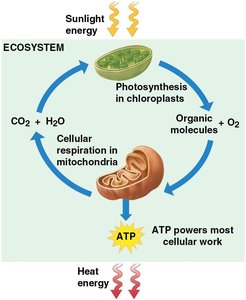
Life depends on the flow of energy, which in nearly all ecosystems originates from the sun. Photosynthesis and cellular respiration are complementary processes that cycle energy and matter through ecosystems.
Photosynthesis uses sunlight to convert CO2 and H2O into glucose and O2.
Cellular respiration consumes O2 and organic molecules, releasing CO2 and H2O, and capturing energy as ATP.
Equation for Cellular Respiration
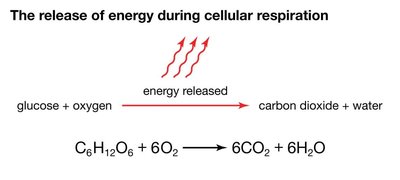
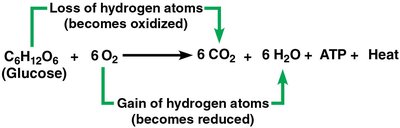
The overall chemical equation for aerobic cellular respiration is:
Breathing and Cellular Respiration
Gas Exchange and Cellular Respiration
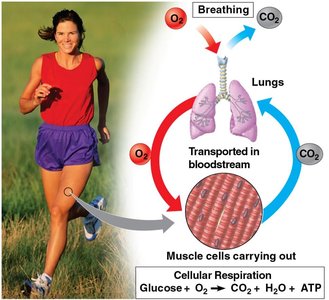
Respiration, commonly referred to as breathing, is the exchange of gases (O2 and CO2) between an organism and its environment. Cellular respiration uses the O2 obtained from breathing to oxidize organic molecules, producing ATP, CO2, and H2O.
ATP: The Energy Currency of the Cell
ATP Production and Usage
ATP produced by cellular respiration powers all cellular activities, including muscle contraction, active transport, and biosynthesis. The process is exergonic, releasing energy stored in glucose.
Exergonic reactions release energy, which is captured in ATP molecules.

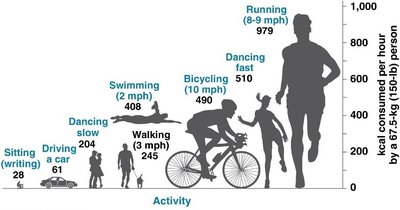
Energy Expenditure in the Human Body
The human body uses ATP for both involuntary (maintenance) and voluntary (activity) processes. The amount of energy expended depends on the type and intensity of activity.
Redox Reactions in Cellular Respiration
Oxidation and Reduction
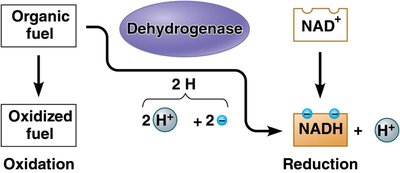
Cellular respiration involves the transfer of electrons from fuel molecules (such as glucose) to oxygen. This transfer occurs through redox reactions:
Oxidation: Loss of electrons (or hydrogen atoms) from a molecule.
Reduction: Gain of electrons (or hydrogen atoms) by a molecule.
Electron Carriers: NAD+ and FAD
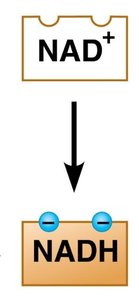
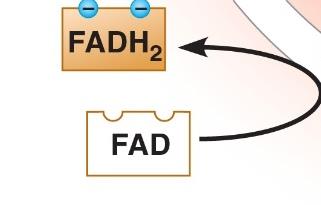
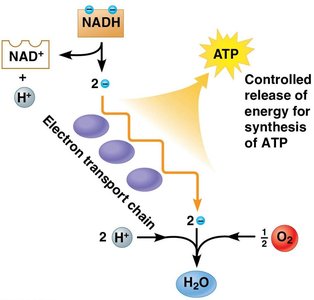
Electrons removed from fuel molecules are transferred to electron carriers such as NAD+ and FAD, forming NADH and FADH2. These carriers shuttle electrons to the electron transport chain, where most ATP is produced.
The Electron Transport Chain
Electrons "fall" from carrier to carrier in the electron transport chain, ultimately reducing oxygen to water and releasing energy used to synthesize ATP.
Stages of Cellular Respiration
Overview of the Three Main Stages
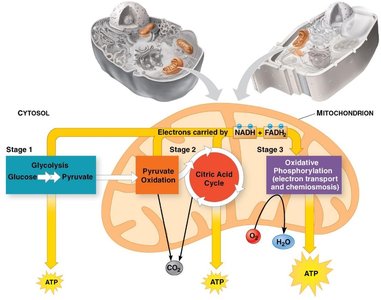
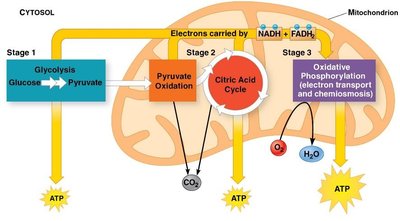
Cellular respiration occurs in three main stages:
Glycolysis (cytosol)
Pyruvate Oxidation and the Citric Acid Cycle (mitochondria)
Oxidative Phosphorylation (mitochondria)
Stage 1: Glycolysis
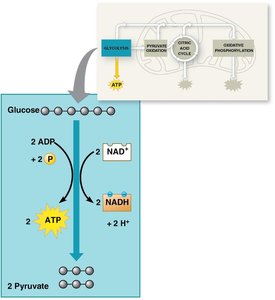
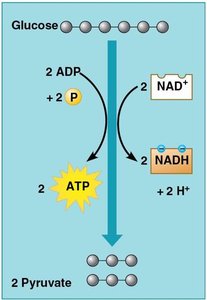
Glycolysis is the first step in cellular respiration, occurring in the cytosol and not requiring oxygen. It splits one glucose molecule into two pyruvate molecules, producing a small amount of ATP and NADH.
Location: Cytosol
Reactants: 1 glucose
Products: 2 pyruvate, 2 ATP (net), 2 NADH
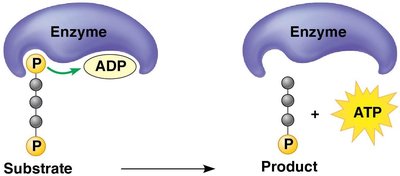
ATP Formation: Substrate-level phosphorylation
Glycolysis: Energy Investment and Payoff Phases
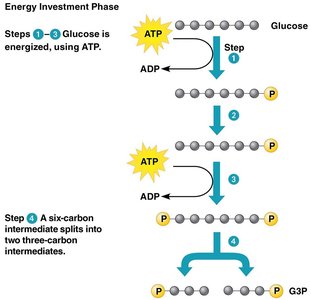
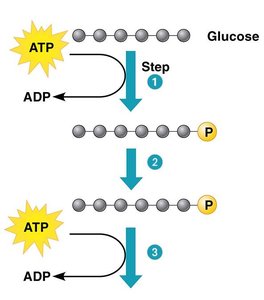
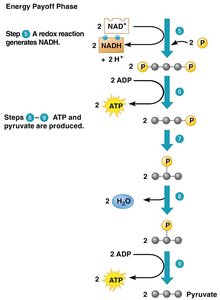
Energy Investment Phase: 2 ATP are used to phosphorylate glucose, which is then split into two three-carbon intermediates.
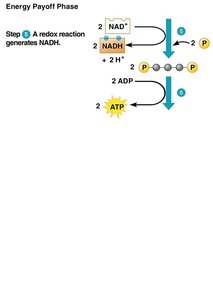
Energy Payoff Phase: 4 ATP and 2 NADH are produced as the intermediates are converted to pyruvate.
Stage 2: Pyruvate Oxidation and the Citric Acid Cycle
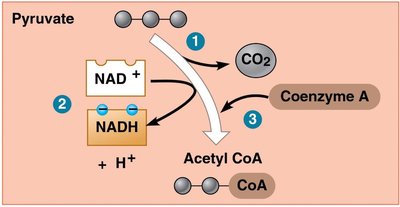
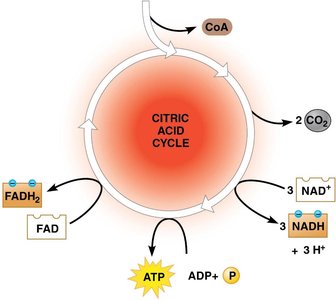
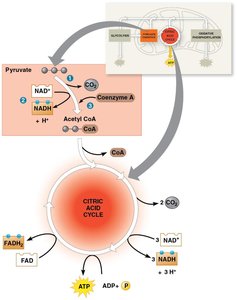
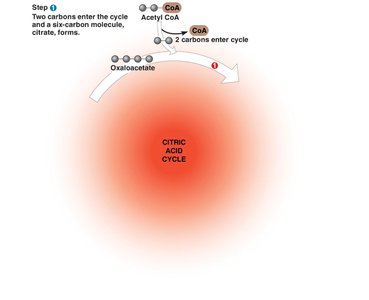
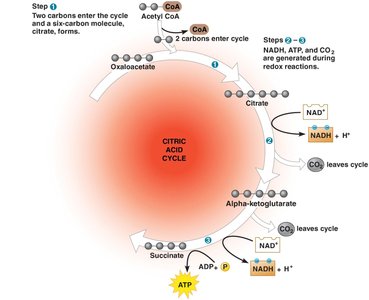
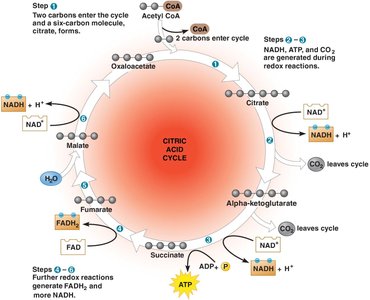
Pyruvate produced in glycolysis is transported into the mitochondria, where it is oxidized to acetyl CoA, releasing CO2 and generating NADH. Acetyl CoA enters the citric acid cycle, which completes the oxidation of organic molecules.
Pyruvate Oxidation: Each pyruvate yields 1 acetyl CoA, 1 CO2, and 1 NADH (per glucose: 2 of each).
Citric Acid Cycle: For each acetyl CoA, 3 NADH, 1 FADH2, 1 ATP, and 2 CO2 are produced (per glucose: double these values).
Stage 3: Oxidative Phosphorylation
Oxidative phosphorylation is the final stage of cellular respiration, occurring in the inner mitochondrial membrane. It includes the electron transport chain and chemiosmosis, producing the majority of ATP.
Electron Transport Chain: Electrons from NADH and FADH2 are transferred through protein complexes, ultimately reducing O2 to H2O.
ATP Synthesis: The energy released pumps H+ ions into the intermembrane space, creating a gradient. H+ flows back through ATP synthase, driving ATP production (chemiosmosis).
ATP Yield: About 28 ATP per glucose.
Fermentation: Anaerobic Harvesting of Energy
Fermentation Pathways
Fermentation allows cells to produce ATP without oxygen by using glycolysis followed by pathways that regenerate NAD+. Two common types are lactic acid fermentation and alcohol fermentation.
Lactic Acid Fermentation: Pyruvate is reduced to lactate, regenerating NAD+.
Alcohol Fermentation: Pyruvate is converted to ethanol and CO2, regenerating NAD+.
Evolutionary Perspective: Glycolysis as an Ancient Pathway
Universality and Simplicity of Glycolysis
Glycolysis is found in nearly all organisms, occurs in the cytosol, does not require oxygen, and does not depend on membrane-bound organelles. These features suggest it is an ancient metabolic pathway that evolved early in the history of life.
Connections Between Metabolic Pathways
Other Organic Molecules as Fuel
Cells can use carbohydrates, fats, and proteins as fuel for cellular respiration. These molecules enter the pathway at various points, allowing flexibility in energy metabolism.
Fats and proteins can be converted into intermediates that enter glycolysis or the citric acid cycle.
Biosynthesis and Storage of Organic Molecules
Intermediates from cellular respiration are also used for biosynthesis of other organic molecules. Excess caloric intake can lead to the conversion of carbohydrates into fats for storage.
Summary Table: Stages of Cellular Respiration
Stage | Location | Reactants | Products | ATP Yield (per glucose) |
|---|---|---|---|---|
Glycolysis | Cytosol | Glucose | 2 Pyruvate, 2 NADH | 2 |
Pyruvate Oxidation | Mitochondria | 2 Pyruvate | 2 Acetyl CoA, 2 NADH, 2 CO2 | 0 |
Citric Acid Cycle | Mitochondria | 2 Acetyl CoA | 6 NADH, 2 FADH2, 4 CO2 | 2 |
Oxidative Phosphorylation | Mitochondria | NADH, FADH2 | ATP, H2O | ~28 |
