 Back
BackHow Genes Are Controlled: Mechanisms of Gene Expression in Prokaryotes and Eukaryotes
Study Guide - Smart Notes
 Tailored notes based on your materials, expanded with key definitions, examples, and context.
Control of Gene Expression
Overview of Gene Expression
Gene expression is the process by which genetic information flows from genes to proteins, ultimately determining an organism's phenotype. The regulation of gene expression allows cells to respond to environmental changes and is essential for cellular differentiation and function.
Gene regulation refers to the turning on and off of genes in response to internal and external signals.
Regulation ensures that the correct proteins are produced at the right time and in appropriate amounts.
Gene Regulation in Prokaryotes
Operons and Regulatory Proteins
In prokaryotes, genes involved in related functions are often organized into operons, which are regulated together. Regulatory proteins interact with specific DNA sequences to control gene expression.
Operon: A cluster of genes under the control of a single promoter and operator, allowing coordinated regulation.
Regulatory proteins (such as repressors) bind to control sequences (operators) to turn genes on or off.
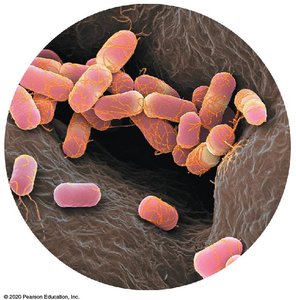


Example: The lac Operon
When lactose is absent, a repressor binds to the operator, blocking RNA polymerase and preventing transcription of lactose-utilization genes.
When lactose is present, it inactivates the repressor, allowing RNA polymerase to transcribe the genes needed for lactose metabolism.

Comparison: The lac operon is inducible (turned on by the presence of lactose), while the trp operon is repressible (turned off by the presence of tryptophan).
Gene Regulation in Eukaryotes
Chromosome Structure and Epigenetic Modifications
In eukaryotes, gene expression is influenced by the structure of chromatin and chemical modifications to DNA and histone proteins. These modifications can be inherited without changes to the DNA sequence (epigenetic inheritance).
Chromatin is composed of DNA wrapped around histone proteins, forming nucleosomes.
DNA packing can block gene expression by preventing access of transcription machinery to DNA.
X-chromosome inactivation is an example of gene regulation by DNA packing in female mammals.
Epigenetic inheritance involves heritable changes in gene expression not caused by changes in the DNA sequence.


Transcriptional Control in Eukaryotes
Transcription in eukaryotes is regulated by complex assemblies of proteins, including transcription factors and activators, which interact with DNA and each other to control gene expression.
Transcription factors are proteins that promote the binding of RNA polymerase to a gene's promoter.
Enhancers and other regulatory sequences can increase or decrease transcription rates.

RNA Processing and Alternative Splicing
After transcription, eukaryotic RNA transcripts can be processed in multiple ways, allowing a single gene to produce multiple mRNA variants and, consequently, different proteins.
Alternative RNA splicing allows for the generation of different mRNAs from the same pre-mRNA by including or excluding certain exons.
More than 90% of human protein-coding genes undergo alternative splicing.



Example: The human genome contains about 21,000 genes but can produce over 100,000 polypeptides due to alternative splicing.
Post-Transcriptional and Translational Regulation
Gene expression can also be regulated after transcription, during translation, and after protein synthesis.
The lifetime of mRNA in the cytoplasm affects how much protein is produced.
Proteins may require activation (e.g., cleavage, folding) to become functional.
Proteins are eventually degraded by the cell, regulating their activity and abundance.

Noncoding RNAs and Gene Silencing
Most of the eukaryotic genome does not code for proteins. Noncoding RNAs, such as microRNAs (miRNAs), play important roles in regulating gene expression by targeting mRNAs for degradation or blocking their translation.
Only about 1.5% of the human genome codes for proteins; the rest includes noncoding RNAs and regulatory sequences.
miRNAs can bind to complementary sequences on mRNA molecules, leading to mRNA degradation or inhibition of translation.



Multiple Mechanisms Regulate Gene Expression in Eukaryotes
Summary of Regulatory Mechanisms
Gene expression in eukaryotes is regulated at multiple levels, including chromatin modification, transcription, RNA processing, translation, and post-translational modifications. These mechanisms ensure precise control over cellular function and development.
Regulation can occur in both the nucleus (e.g., chromatin modification, transcription, RNA processing) and the cytoplasm (e.g., mRNA stability, translation, protein modification).
Some regulatory mechanisms are shared with prokaryotes, such as transcriptional control and mRNA degradation.
Table: Comparison of Gene Regulation Mechanisms in Prokaryotes and Eukaryotes
Regulatory Level | Prokaryotes | Eukaryotes |
|---|---|---|
Chromatin modification | No | Yes |
Transcriptional control | Yes | Yes |
RNA processing | No | Yes |
mRNA degradation | Yes | Yes |
Translational control | Yes | Yes |
Protein modification | Yes | Yes |
Additional info: Epigenetic changes, such as DNA methylation and histone modification, can be reversible and are influenced by environmental factors, contributing to phenotypic diversity without altering the underlying DNA sequence.
